 Retro Replay Retro Gaming History, Reviews & Emulation
Retro Replay Review
Gameplay
Journey’s strongest move is refusing to turn its opening into a tutorial checklist. You wake in a huge desert, see a mountain far away, and naturally start walking toward it. There is no HUD filling the screen with prompts and no explicit route marker demanding your attention. For some gamers, that first stretch will feel wonderfully uncluttered; for others, it may initially feel like being asked to wander until the game decides to explain itself. Give it a little patience. The rules arrive through exploration rather than instruction.
Your whistle is the key early on. A brief call or a longer burst produces a symbol and can activate glyphs around you, turning a small action into a way of testing the environment. The movement is equally straightforward: guide the robed figure across sand, climb onto low platforms automatically, and look for routes that open onward. Progress comes from noticing bridges to activate or paths that lead farther ahead, not from surviving lethal traps. That makes the game more relaxing than demanding, though a player who needs crisp objectives may occasionally wonder which piece of scenery matters next.
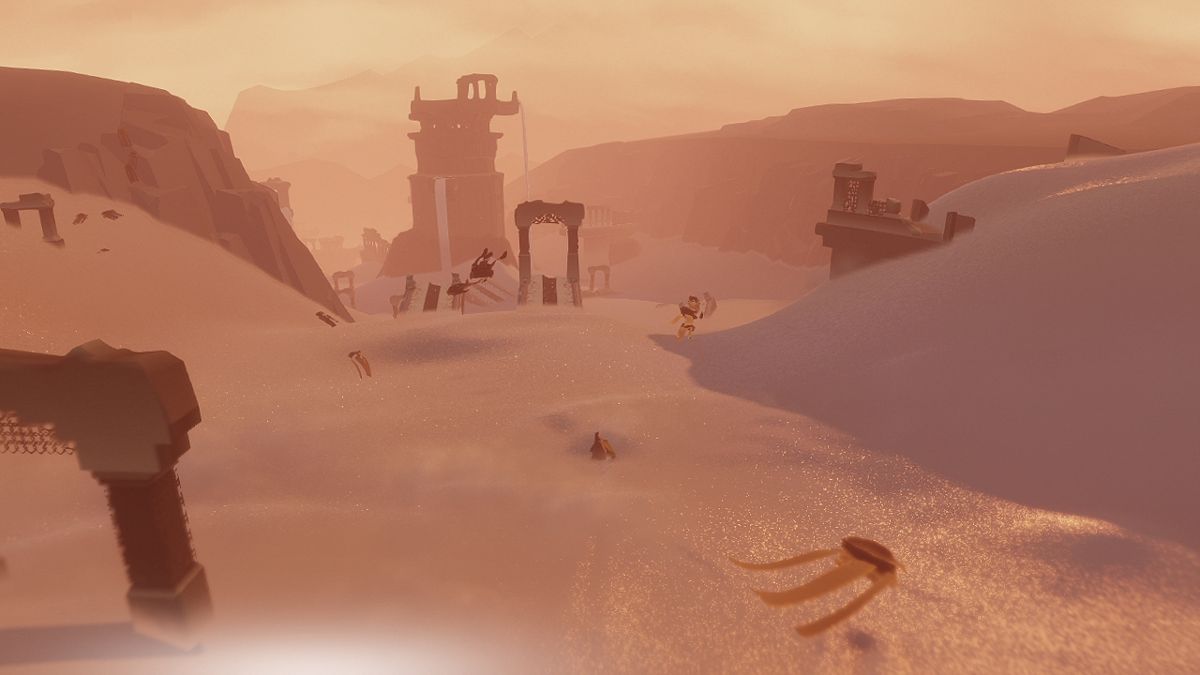
Flying is where Journey starts to feel genuinely special. Activating floating cloth lifts you up, then lets you float, glide down dunes, and eventually use a limited set of midair bursts once charged. The gradual improvement of these abilities gives the trip a satisfying sense of growth without turning it into a complicated platformer. Gliding over sand is simple, but it has enough freedom to make you look for height and momentum rather than merely march from point to point.
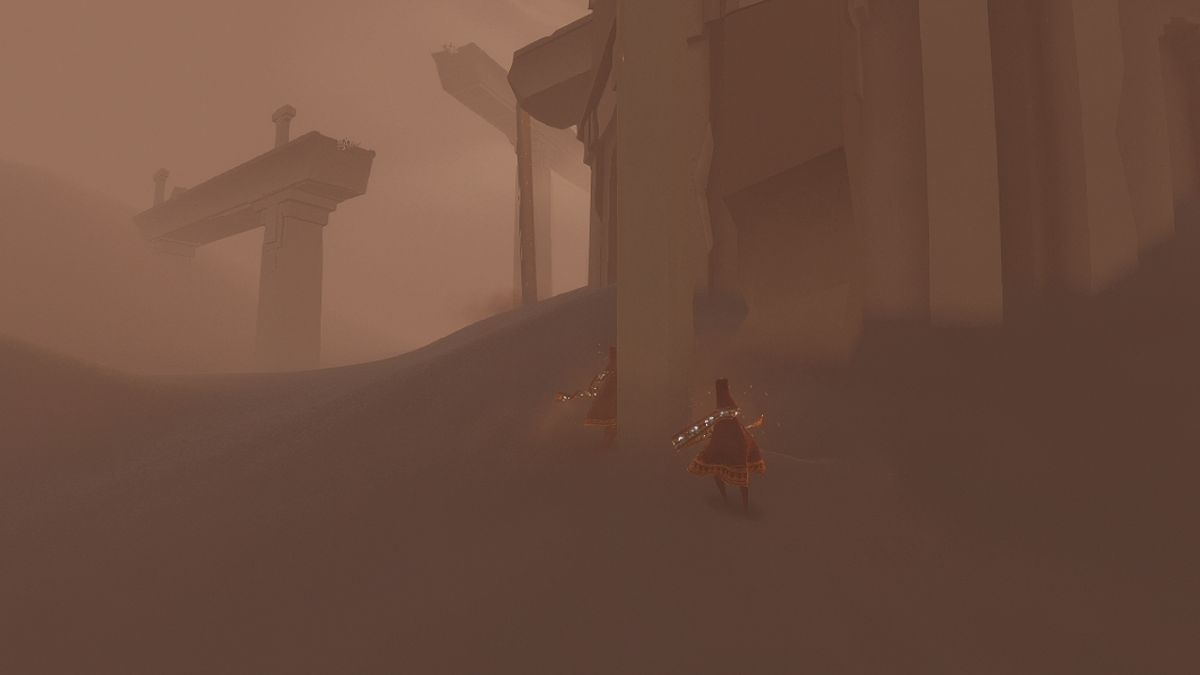
The online component is quiet in exactly the right way. Another person can appear in the same area, and neither of you can speak directly; you communicate through movement and whistling, travel together for as long as you like, or drift apart without ceremony. Staying close automatically charges your companion with a single flight boost, but cooperation is not required to clear obstacles. That is important: this is companionship, not a co-op puzzle obligation. The names revealed after finishing give those wordless meetings a small, welcome afterglow.
Graphics
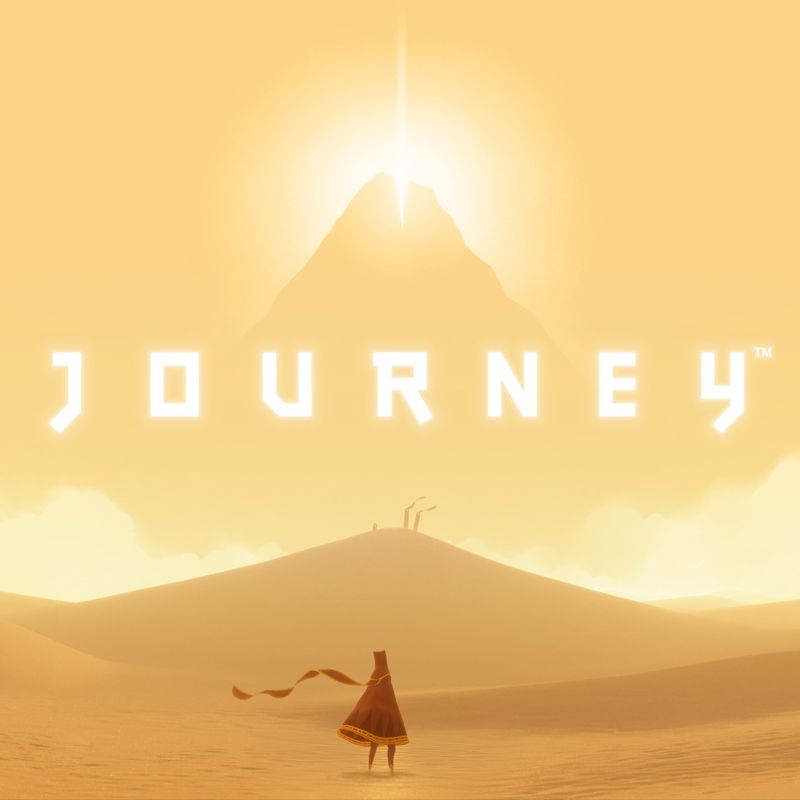
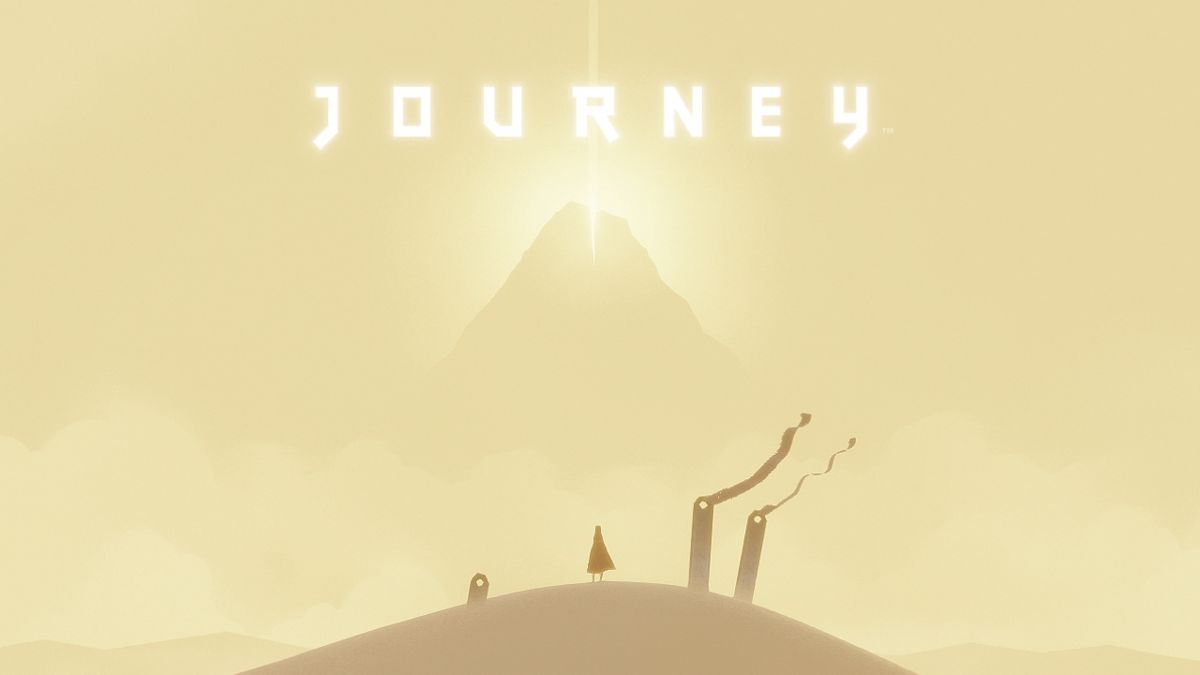
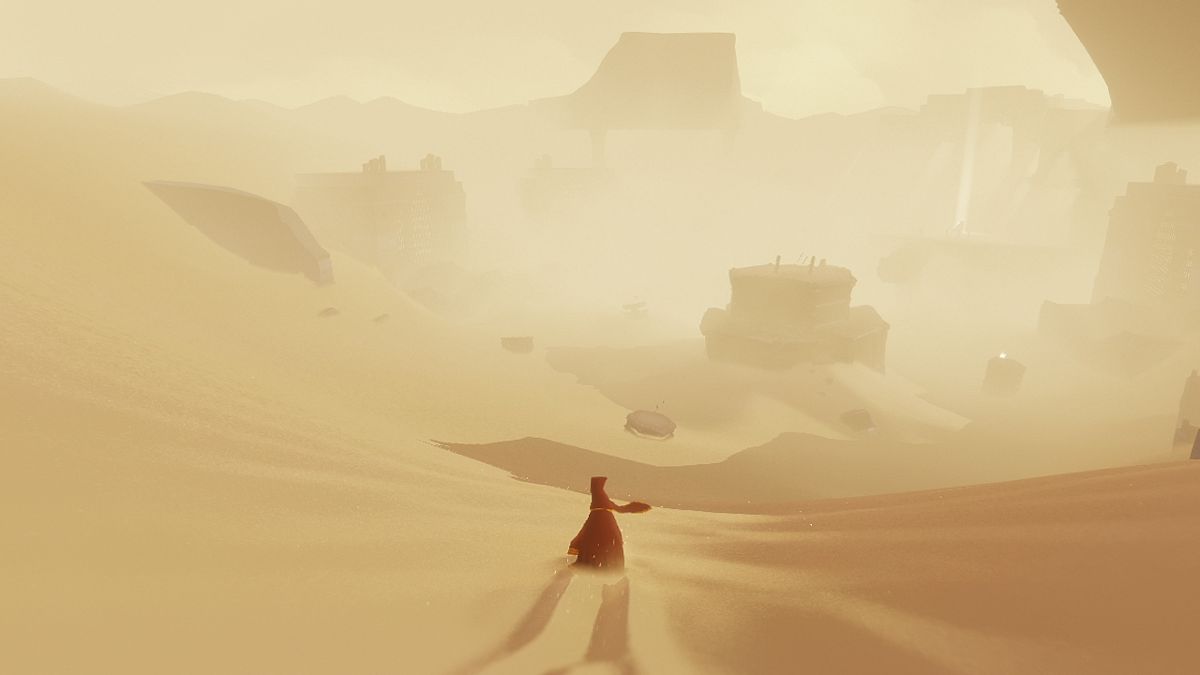
Journey puts a small robed figure against broad desert spaces, with the mountain held in the distance as a constant visual destination. Floating cloth and environmental glyphs give the sparse landscape movement and points of interest, while the behind-the-character view keeps your attention on the terrain ahead and the slopes you can glide across.
Story
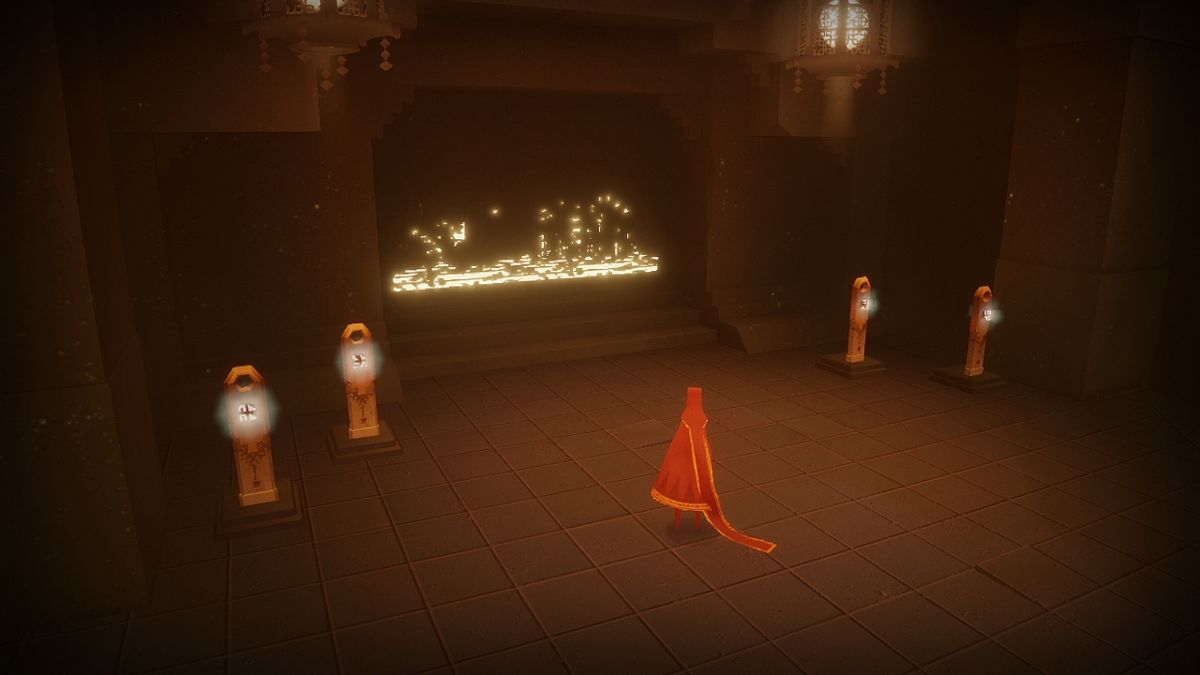
This is a story told through direction and feeling rather than exposition. The mountain is the clear destination, but the game does not stop to explain the journey in conventional terms. You make meaning from the distance traveled, the places you pass through, and the small discoveries that help you continue.
That restraint will either be liberating or frustrating. If you want named characters, clear plot turns, and answers delivered in dialogue, Journey deliberately leaves you with little to hold onto. Its narrative asks you to participate by reading your own significance into the trek instead of supplying a detailed account.
The anonymous multiplayer meetings add the most human note. A stranger may become a temporary guide, a fellow explorer, or simply a silhouette alongside you on the way forward. Because neither of you can explain yourselves, even a few whistles and shared flights can feel more personal than they have any right to. Seeing companion names only after the ending neatly preserves that mystery.
Overall Experience
Journey earns its reputation because it commits fully to a short, focused trip and does not dilute it with failure states, combat pressure, or busywork. The lack of danger means the tension comes from uncertainty and forward motion: where is the route, what will this glyph awaken, and how far can this new flight ability carry you? It is an action-platform game in the loosest sense, but its real pleasure lies in wandering with purpose.
You should play it if you enjoy games that leave room for silence and are willing to follow environmental hints instead of explicit instructions. The hidden glyphs offer extra places to seek out, though they do not change how the game plays, so completion-minded exploration is a personal choice rather than a major reward track. Don’t go in expecting a deep challenge; go in ready to let the journey set the pace.
Its biggest limitation is also its defining strength. Journey can feel slight if you measure value through mechanical variety or demanding objectives, and its open areas may briefly stall you when the next route is not obvious. Yet the payoff is the unusual clarity of the experience: movement becomes more graceful, the distant goal steadily pulls you onward, and an anonymous companion can transform a quiet walk into a shared memory. It is brief, gentle, and confident enough not to overexplain itself.



Reviews
There are no reviews yet.