 Retro Replay Retro Gaming History, Reviews & Emulation
Retro Replay Review
Gameplay
The first few minutes are pleasantly direct. You arrive at the “whole workshop” menu and can move toward music, sky-themed activities, mini-games, dancing, gifts, and basic learning prompts without asking a preschooler to decode written instructions. That matters more than it might in a game for older kids: this is built for children who have not learned to read, so the activities can meet them at their own level rather than turning a parent into a full-time menu navigator.
Its best quality is variety with a clear educational purpose. Numbers, letters, names, colours, shapes, rhythms, sounds, musical instruments, and familiar objects are all part of the mix. The music workshop sounds especially useful for a child who responds to doing rather than listening, since the PooYoos play instruments and ask them to follow the rhythm. Dance mode similarly gives restless energy somewhere productive to go instead of demanding that a young child stay seated and focused for long stretches.
The two interaction levels are a smart inclusion. Young PooYoo and Big PooYoo let you steer a younger child toward simpler interaction or give a more developed preschooler a little more to engage with. This is not the kind of game you hand over in search of a long independent session; it works better as a collection of short shared visits, with an adult nearby to celebrate a rhythm, name a shape, or turn a discovered toy into a conversation.
Graphics
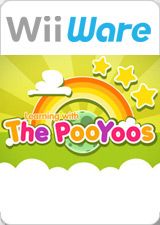
The PooYoos are colourful baby-animal characters—rabbits, pigs, tortoises, pandas, elephants, cats, and more—and that immediate friendliness is exactly right for the age group. The workshop framing makes the menu feel like a place for a child to explore, while gifts reveal playful treasures such as flying balloons and paper boats.
Story
Learning with the PooYoos does not push a big narrative. Instead, it uses a simple playroom-like setup: friendly animal characters invite your child into activities, and each session can become its own tiny story of discovery.
Present mode is the closest thing to an ongoing thread. The PooYoos need help opening gift boxes, and every opened box reveals a new toy or fantastic treasure. For a preschooler, that small anticipation can be more motivating than a complicated plot would be; there is a clear, happy reason to try again and see what is inside.
The social angle is gentle rather than preachy. Helping the characters with presents gives the game a chance to touch on sharing, excitement, and interaction without interrupting the playful tone. It is a modest framework, but it fits a game designed around early developmental learning.
Overall Experience
This is a well-aimed preschool game, not a dressed-up worksheet. Its activities cover several early-learning areas while keeping the focus on touching, listening, moving, and discovering. If your child lights up at music, colourful animals, or the surprise of opening a present, there is enough here to make learning feel inviting.
It is most likely to click with children at the younger end of its three-to-six range, or with any child who benefits from a low-pressure introduction to letters, numbers, colours, and sounds. Older or more advanced kids may outgrow the simpler prompts, but the Big PooYoo level helps it stretch beyond a single developmental stage.
Bring it home for a child who enjoys guided play and short activities, especially if you want something you can join in with instead of merely supervising. Learning with the PooYoos: Episode 1 earns its place by treating preschool learning as something tactile, musical, and cheerful—and by remembering that the first lesson is often simply wanting to come back and play again.


Reviews
There are no reviews yet.