 Retro Replay Retro Gaming History, Reviews & Emulation
Retro Replay Review
Gameplay
The first few minutes make their case through excess. Dual weapons let you pair up the Minigun, Shotgun, Stakegun, and Electrodriver in single-player or co-op, and that is exactly the sort of blunt-force upgrade a Painkiller expansion should prioritize. If you already enjoy the base game’s first-person shooting, the prospect of doubling up on familiar hardware is an immediate, satisfying pull.
The new Meat Mine fits that same proudly trashy spirit. Alongside new enemies such as Loki, Ninja, and Leper Monk, it gives encounters a little more variety without changing the central reason you are here: moving through hostile spaces and turning monsters into a problem for your oversized arsenal. The Lepers, described as medieval zombies, add another suitably unpleasant face to the opposition.
Its most worthwhile content is the level work. Asylum and Bridge are expanded, while Town receives a reworking, so this is more than a handful of combat modifiers. The gameplay tweaks and upgrades, plus the Health Stealer tarot card, round out a package aimed at returning players who want fresh ways to push through Painkiller’s established shooting loop.
Frustration can set in if you wanted an add-on that changes the game’s fundamentals. Meat Night is emphatically an expansion of the existing formula, built around more firepower, more enemies, and altered spaces. For someone already cold on Hell & Damnation, its additions are unlikely to reverse that opinion; for a fan, its directness is the point.
Graphics
The first-person view keeps the focus on weapons and incoming enemies, and the named locations give the add-on a grim horror-tour route: an asylum, a bridge, and a town. The new Lepers bring medieval-zombie imagery to the enemy roster, while the Meat Mine continues the DLC’s deliberately ugly, meat-and-monsters flavor.
Story
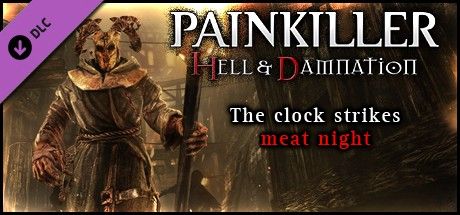
The Clock Strikes Meat Night frames its action with a title that tells you the intended mood before a shot is fired: loud, nasty, and knowingly absurd. Its horror comes through enemy names, the Leper character set, and places like Asylum rather than through a delicate dramatic setup.
That makes the DLC easy to slot into a return visit. You are not being asked to learn a new premise before the shooting starts; the added material gives familiar Painkiller territory more hostile bodies and more tools for dealing with them.
If you value a shooter add-on for narrative escalation, the hook here is atmosphere and momentum rather than a major new dramatic direction. The expanded and reworked maps are the more tangible reason to care, with the horror dressing keeping the carnage pointed in the right direction.
Overall Experience
This is a good fit for the Hell & Damnation regular who wants more of its nastiest instincts, not a conversion package for the unconvinced. The dual-weapon power-up has immediate appeal, the new tarot card and enemy types add replay value, and the map changes give the DLC more substance than a pure weapon pack.
Co-op gets to share in the dual-weapon upgrade, which matters because it lets the add-on’s most obvious new toy carry across both ways of playing. Solo players still get the expanded maps and combat additions, so neither side feels like an afterthought.
The payoff is worth it when your idea of a good Painkiller session is uncomplicated: load in, test louder weapons against uglier enemies, and revisit areas with more to do. Meat Night knows that lane and stays in it. It is not subtle, but its extra firepower and expanded stages make it a worthwhile slice of more Painkiller for committed fans.



Reviews
There are no reviews yet.