 Retro Replay Retro Replay gaming reviews, news, emulation, geek stuff and more!

Retro Replay Review
Gameplay
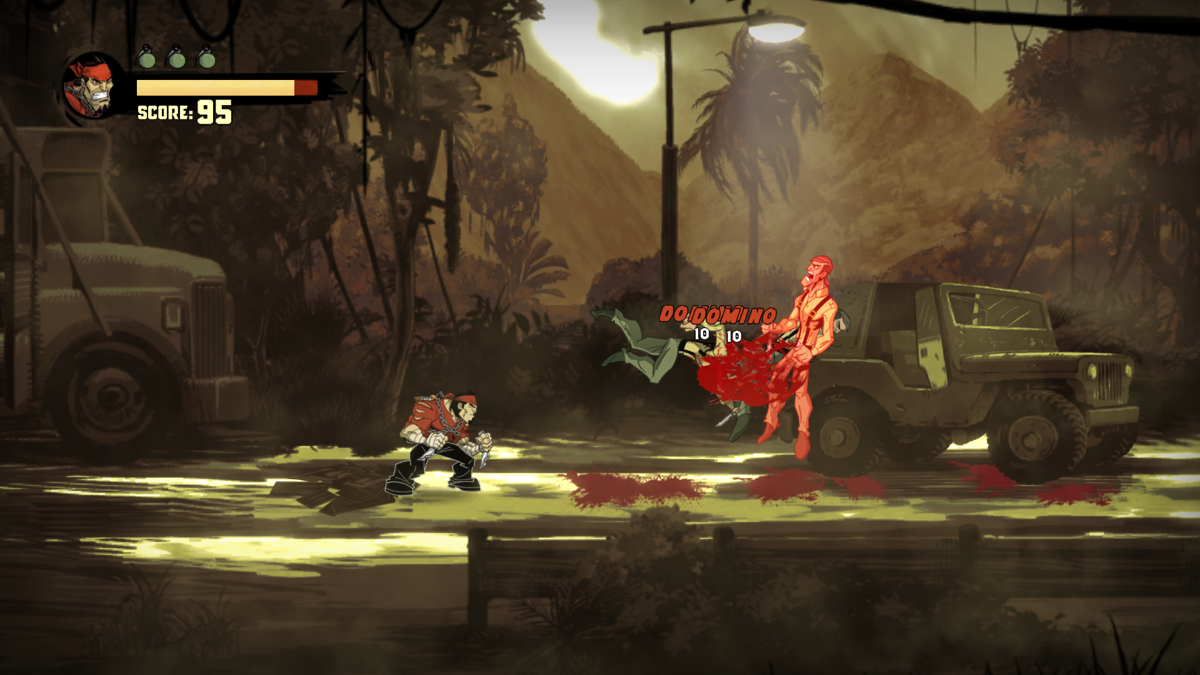
Shank 2 is at its strongest when a straightforward walk to the right turns into a frantic attempt to control a screen full of attackers. You can slash with knives, fire revolvers and a shotgun, bring out a chainsaw or baseball bat, then toss grenades or mines into the pile. That is a familiar brawler toolbox, but it has a satisfyingly reckless flow because melee and ranged attacks are meant to be chained together rather than treated as separate styles.
The biggest improvement is the emphasis on movement and reaction. Blocking has been replaced with a dodge roll, which makes incoming danger feel less like something to absorb and more like something to evade at the last moment. Watch for the red exclamation mark over an attacking enemy, time the response, and Shank can grapple them into a weapon-specific instant kill. At first, that demand for timing can make crowded fights punishing; once it clicks, counters become a welcome way to cut through a mob instead of merely trading hits with it.
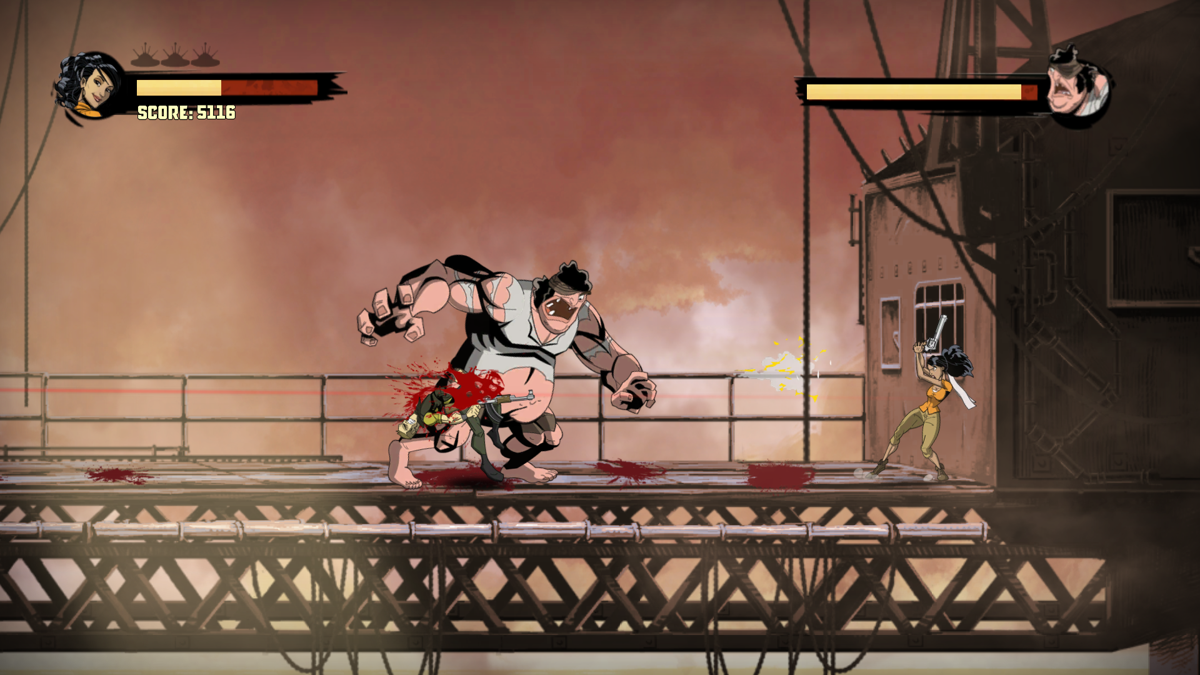
Quick weapon switching, including swaps in mid-air and during combos, gives the fighting a flexibility the original’s basic premise needed. The fixed loadout for each run can be adjusted after death, so a bad fit does not have to become a long-term annoyance. Environmental tools, turrets, decoys, and even a wild boar add welcome moments of chaos, though the core satisfaction remains the simple act of keeping a combo alive while enemies close in from every direction.
Survival mode is the better reason to return once the campaign is finished. Its wave-based fights work offline or online with a second player across three levels, and its 16 characters bring different abilities, health bonuses, discounts, and damage modifiers. It replaces the first game’s local co-op campaign, a trade that may disappoint anyone who wanted to share the story mode on one couch, but the competitive urge to last one more wave suits this combat well.
Graphics
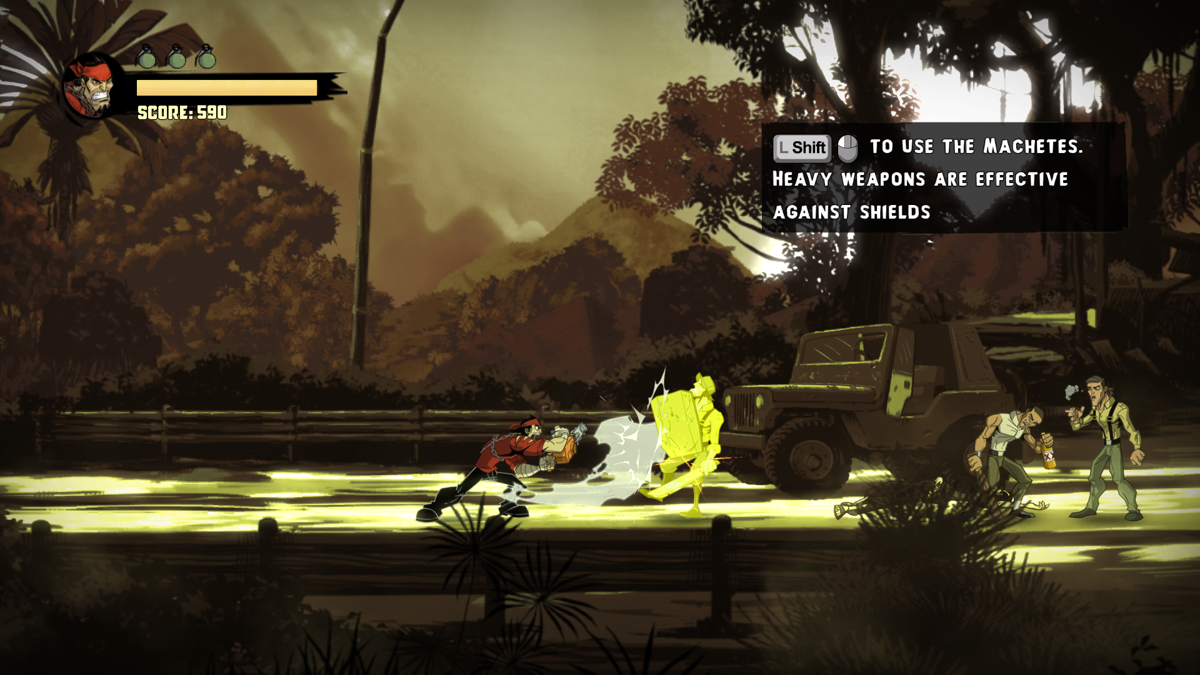
The 2D side view keeps the action clear even when Shank is surrounded, and the cartoon-like violence leans hard into exaggerated gore rather than restraint. Weapons such as the chainsaw, shotgun, and grenades give fights a deliberately loud, brutal look that matches the game’s pulpy tone.
Story
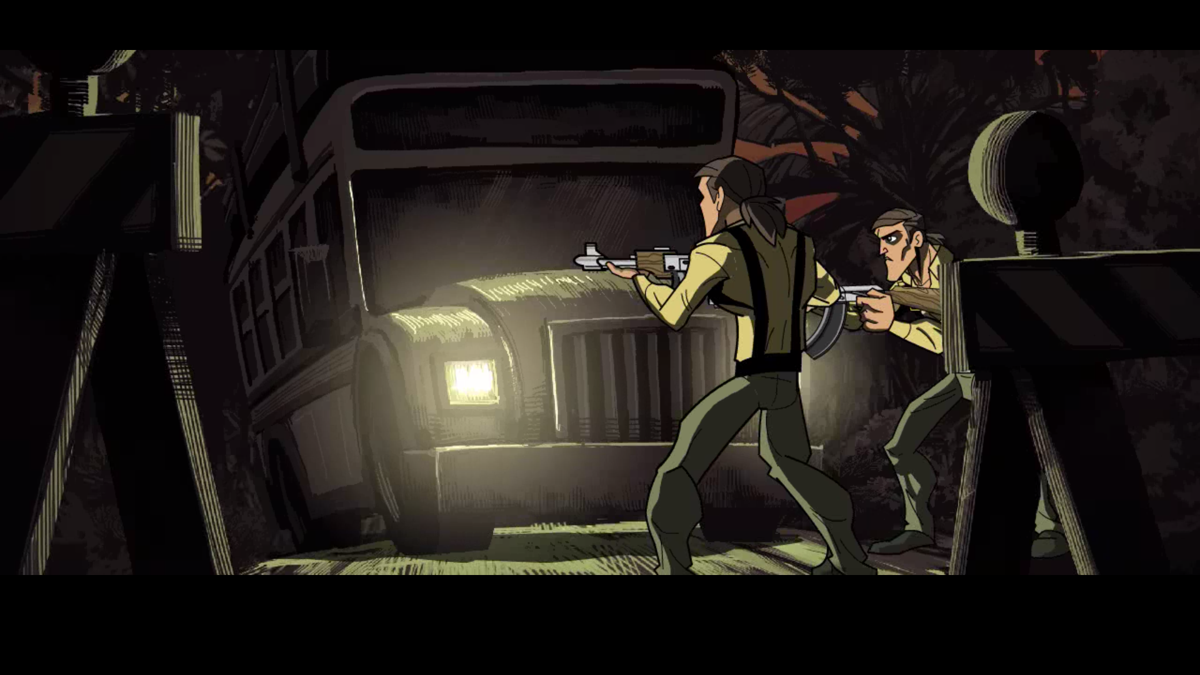
The plot has the kind of direct, revenge-adventure momentum this series needs. Shank heads into a South American-inspired country to find Linda, the woman who raised him, after ruler Magnus kidnaps her for a heart transplant. A halted bus and several fights with Magnus’s men leave locals believing Shank has joined their rebellion, giving the journey a useful political backdrop without taking the focus away from brawling.
There is more melodrama here than nuance: a cruel ruler, cartels, rebels, and a kidnapping are all pushed into place to keep Shank moving toward his target. That is not a flaw when the game is moving. The story works as fuel for the next confrontation, and the collected rebel intelligence offers extra material for anyone who wants to dig into the conflict between missions.
If you want broader background on its release and place in the series, the Shank 2 overview is a useful companion. In the game itself, the narrative is most effective when it stays out of the way and lets the escalating fights carry the momentum.
Overall Experience
Shank 2 is a good action sequel because it focuses on making the moment-to-moment fighting faster and more responsive instead of burying its strengths under unnecessary complication. Rolling through danger, spotting counter opportunities, and swapping from a gun to a close-range weapon mid-combo produces a rhythm that feels much better than simply hammering attacks.
Frustration can set in when the screen gets crowded and your timing is off, especially before you learn to read those enemy warnings. But that pressure is also where the game finds its identity. Success feels earned when you stop reacting randomly and start using the right tool, the right dodge, or a well-timed counter to regain control.
Give it a chance if you enjoy compact, over-the-top side-scrolling brawlers and do not need a sprawling campaign to feel satisfied. The two difficulty levels make room for a more relaxed first pass or a tougher revisit, while Survival gives the combat enough longevity to outlast the story. It is lean, aggressive, and occasionally rough around the edges, but its best fights make a strong case for coming back.


Reviews
There are no reviews yet.