 Retro Replay Retro Gaming History, Reviews & Emulation


Retro Replay Review
Gameplay
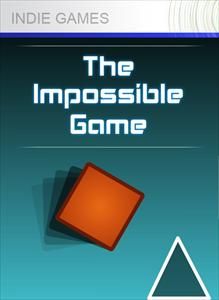
The Impossible Game wastes no time asking whether you can handle its attitude. Your square is always moving forward, and you have one meaningful action: jump. Triangles, lethal floor sections, and raised black blocks arrive in a fixed route, so the first few attempts are less about exploration than getting clipped by a hazard you did not yet know was coming. It sounds brutally limited, yet that limitation is exactly why the game works. Every death is immediate, legible, and hard to blame on anything except a mistimed button press.
At first, restarting from the beginning can feel needlessly severe. A run ends in an instant, often after you had finally begun to feel comfortable, and the game demands that you replay familiar ground before another shot at the section that stopped you. But repetition gradually changes the experience. You stop reacting to individual obstacles and start learning a sequence: when to tap, when to hold your nerve, and when a seemingly safe landing will carry you into the next danger.
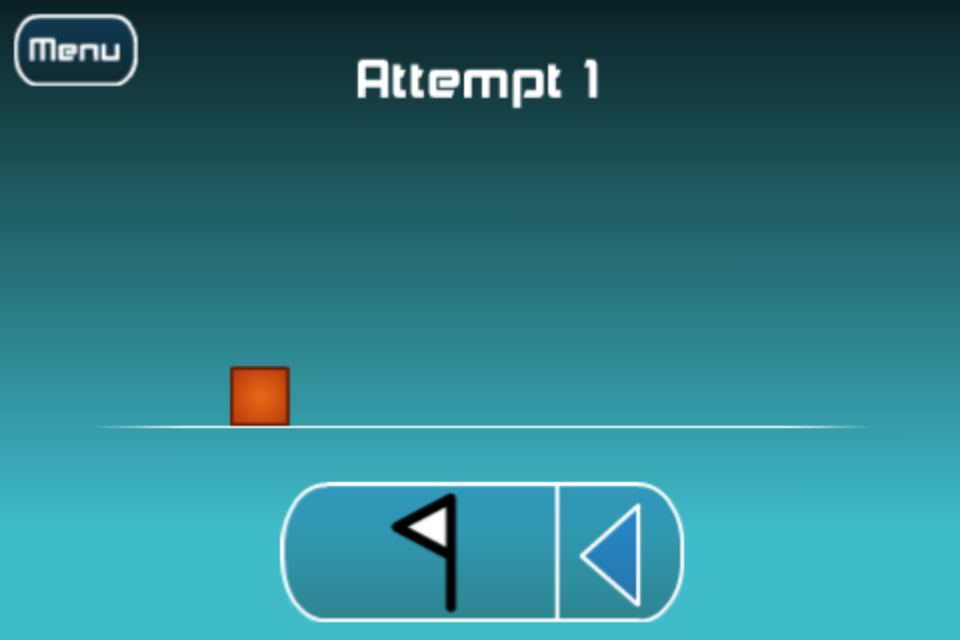
The flags are the crucial concession. Placing one lets you return to that point for practice, which makes the harder passages feel conquerable rather than merely punishing. Use them generously when a stretch starts draining your patience. The satisfaction here comes from drilling a problem until your hands know the answer, then carrying that confidence into a longer attempt. In-game awards add a few more targets for anyone who needs a reason to keep refining runs.
Graphics
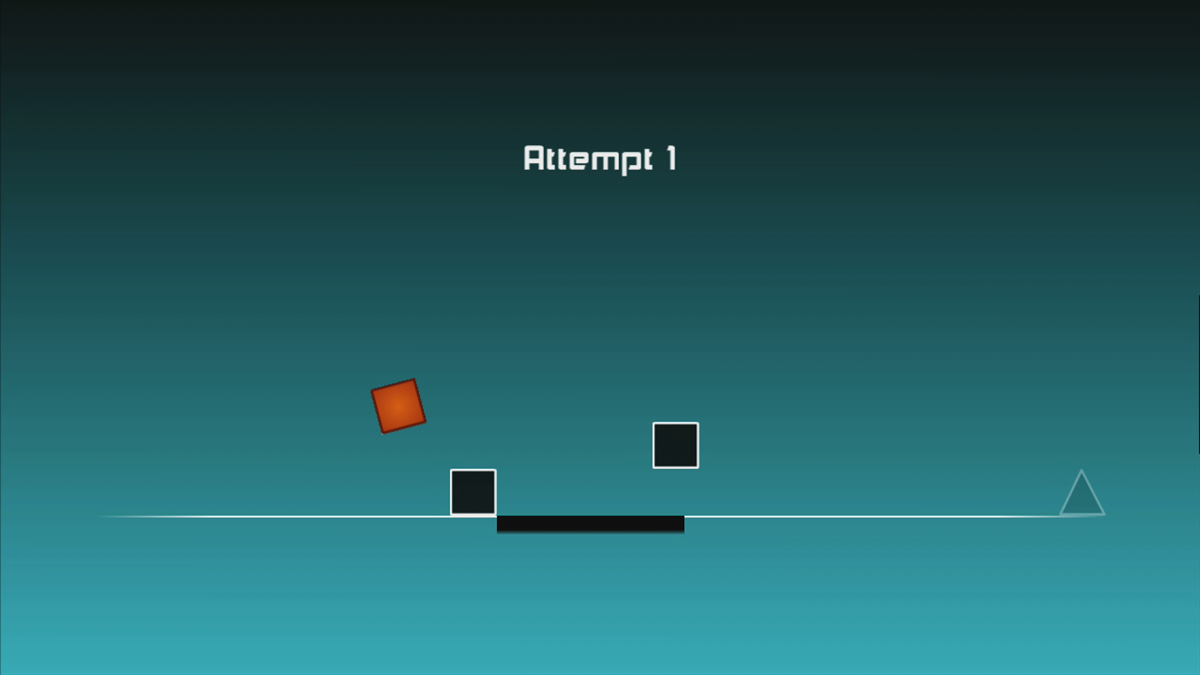
This is a stripped-down 2D side-scroller built around clear shapes: your square, pointed triangle hazards, black platform blocks, and deadly floor. That clean look is useful because the game moves quickly; you can read what will kill you at a glance, even when your timing is not ready for it.

Story
There is no story pulling you onward, and there does not need to be. The route itself supplies the tension: every new obstacle pattern becomes a tiny problem, and every restart asks whether you have learned enough to get a little farther.
That means the game lives or dies on your appetite for repetition. If you need narrative context, changing objectives, or a sense of discovery beyond mastering the course, its single-minded structure will wear thin quickly. The only real drama is the gap between a run that collapses instantly and the one where you finally clear the section that had been humiliating you.
For the right kind of player, that bare-bones setup is part of the charm. The Impossible Game does not decorate failure or soften it with excuses. It turns persistence into the entire story, one clean jump at a time.
Overall Experience
The Impossible Game is a focused, old-school test of timing and patience. Its forward motion and one-button jumping make it easy to understand within seconds, while its harsh restarts ensure that understanding the rules is nowhere near the same thing as succeeding. The first hour can be infuriating, especially if you expect steady progress, but it becomes far more compelling once you accept that repeated failure is the method rather than the punishment.
The 7.2 score feels fair. The game is not broad, flexible, or interested in meeting you halfway; it is a tightly wound arcade platformer with a very particular idea of fun. Flags make its difficulty more manageable without removing the need to execute, and that balance is why it remains satisfying instead of simply exhausting.
Give it a chance if you enjoy memorizing demanding routes, practicing troublesome sections, and earning progress through precision. Skip it if restarting after a single mistake makes you angry rather than determined. For everyone else, its directness is refreshing: one square, one jump, and a long road to getting it right.


Reviews
There are no reviews yet.