 Retro Replay Retro Gaming History, Reviews & Emulation

Retro Replay Review
Gameplay
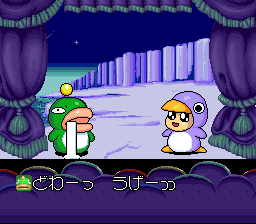
Hebereke’s Popoitto earns your attention by taking a rule you understand almost instantly—connect four or more matching blocks to clear them—and making the board misbehave. Blocks fall from above and must be guided into place before they land, but the blocks you are trying to erase are already moving across the playfield. In the first hour, that creates a pleasantly hectic adjustment: a match that looks obvious can drift apart, while a target you had written off suddenly slides into the perfect position.
The game is less about building an immaculate stack than reacting before the shape of the board changes again. You still need to place falling pieces cleanly, especially because a badly positioned block can cut off an easy route to a match. Yet the moving targets demand that you leave room, watch their direction, and capitalize when several like blocks bunch together. It feels more improvised than a traditional falling-block puzzler, and that unpredictability is the point.
Frustration arrives when your intended setup is invalidated by a drifting target or when a falling block lands before you can turn a near-match into a clear. If you want complete control over every arrangement, this can feel messy rather than clever. But once you stop treating each level like a static board to solve and start treating it as a live situation to manage, the game’s oddball hook starts to click.
The tournament structure gives the action a straightforward reason to keep pushing ahead as Hebereke faces his friends. More importantly, the level-by-level goal of clearing the existing character blocks prevents the game from becoming an endless score chase. Each board gives you a concrete mess to clean up, and the moving pieces ensure that the same basic matching rule stays tense.
Graphics
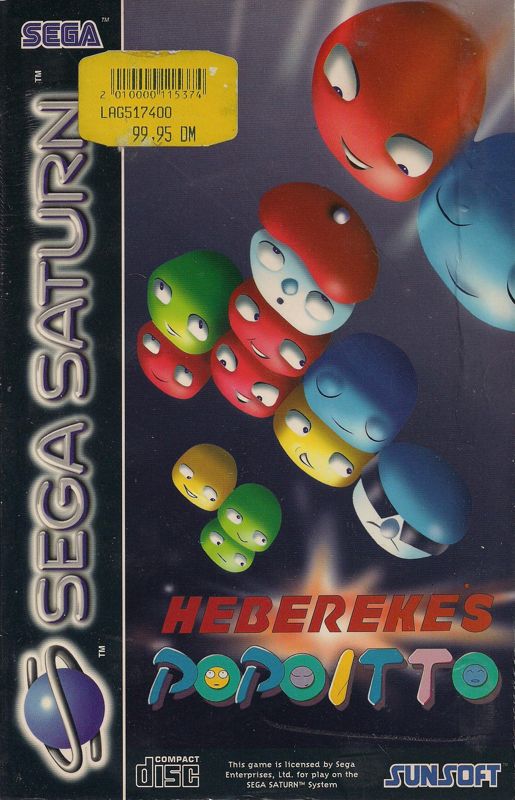
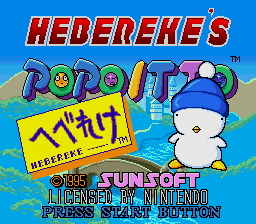
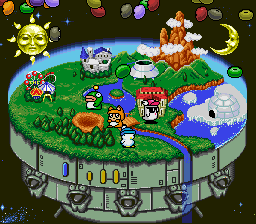
The playfield centers on falling and roaming blocks that represent characters from the Hebereke series, so the puzzle pieces carry more personality than anonymous colored tiles. On the PlayStation, SNES, and Saturn, the essential visual task is clear: you need to spot matching character blocks and track where the moving targets are headed amid the falling pieces.
Story
There is not much narrative weight here, and that is appropriate. Hebereke enters a tournament against his friends, giving the puzzle action a playful competitive frame without getting in the way of it.
The character-block theme matters most as a bit of flavor. Instead of clearing plain symbols, you are clearing the series’ familiar cast, which makes the match-making objective feel tied to the tournament rather than pasted onto it. It is a light excuse, but a useful one.
Do not come for a layered plot or big dramatic stakes. Come for a cartoonish contest between friends where the story’s job is simply to move you from one puzzling confrontation to the next.
Overall Experience
Hebereke’s Popoitto is a curious 1995 puzzle detour: recognizably rooted in Tetris-style falling blocks, but willing to disrupt the usual comfort of static targets. Its moving character blocks create the kind of small, urgent reversals that can make a routine drop suddenly matter. You will either enjoy adapting on the fly or wish the board would sit still long enough to execute a proper plan.
That division makes the recommendation fairly simple. Give it a chance if you like real-time puzzle games that turn tidy pattern-building into a reactive scramble, particularly if the Hebereke cast already charms you. Skip it if your favorite part of the genre is carefully engineering a stable stack with minimal interference.
The payoff is not a reinvention of falling-block puzzles; it is a compact variation with a genuinely different rhythm. A 6.5 feels right: uneven when the moving targets foil a good setup, but distinctive enough to deserve more than a passing glance. For background on the game’s history across its console releases, the Hebereke’s Popoitto entry is a useful follow-up.


Reviews
There are no reviews yet.