 Retro Replay Retro Gaming History, Reviews & Emulation


Retro Replay Review
Gameplay
The first hour is mostly about accepting that Coco is not going to become a great magician because you wish it hard enough. You set schedules for her three-year education, choose when she studies and when she rests, and live with the statistical consequences. That makes the game feel less like a fantasy quest and more like tending a delicate project: every choice is modest on its own, but the accumulated direction matters.
What starts to click is the relationship between activities, Coco’s stats, and her magical advancement. Study is the obvious route forward, but vacations are part of the rhythm rather than empty downtime. The pleasure comes from trying to build a routine that develops her without treating every day as an identical grind. If you like simulations where progress is earned through planning instead of reflexes, this is the central hook.
Its restraint will also be the dividing line. The game resembles Princess Maker, but it removes that series’ RPG element and free movement in locations. Visits to the capital and surrounding areas let you speak with people, yet they do not turn into open exploration. That focus can make CoCo feel pleasantly direct, or overly narrow if you need combat, wandering, or frequent surprises to stay invested.

Graphics
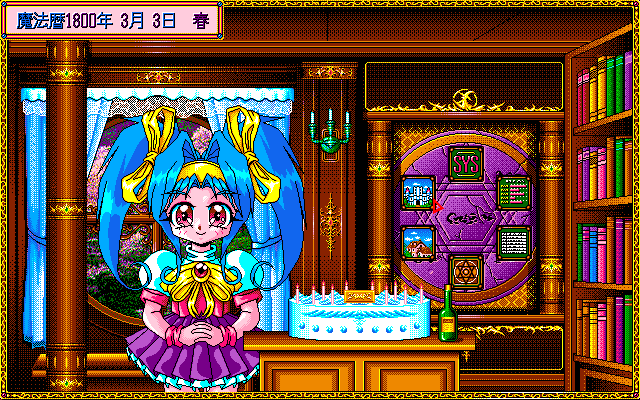
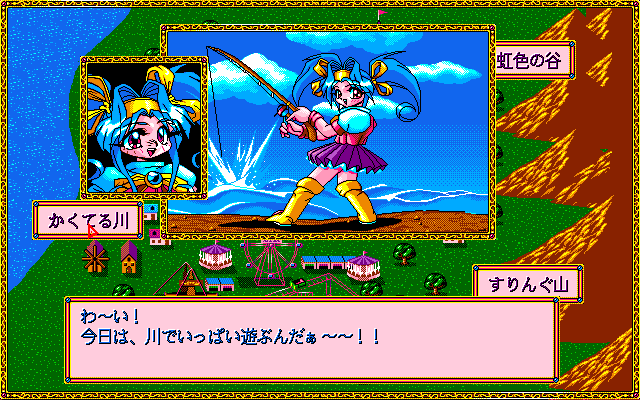
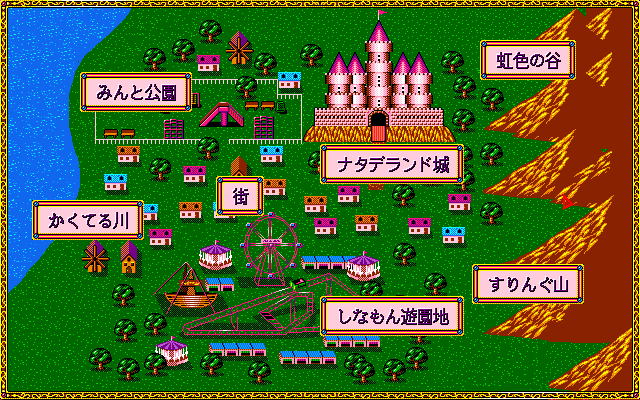
The game uses anime-style fantasy imagery for Coco and her magical-kingdom setting. Town visits and nearby excursions are shown as still images, so these moments read more like illustrated stops between scheduling decisions than places you physically explore.
Story
The story has a simple but effective pressure point: Coco is a young princess, and the king expects her to study shape-shifting magic for three years before she can prove herself a worthy heir. It gives all that calendar work a personal stake. You are not merely raising numbers; you are deciding whether she grows into the role waiting for her.
That setup fits the game’s simulation structure well. Coco’s success is explicitly in your hands, so the premise turns scheduling into a test of judgment. A princess learning magic is familiar fantasy material, but the heir-to-the-throne deadline gives the routine a clear finish line.
Do not come in expecting a sprawling fantasy narrative. Conversations during visits add some contact with the kingdom beyond Coco’s training, but the game keeps its attention on her development and eventual qualification. For this kind of raising sim, that is the right priority: the story is there to make your decisions feel accountable.
Overall Experience
Mahō Shōjo Fancy CoCo is a specialized simulation with a cozy premise and a disciplined structure. It understands that raising-game tension comes from making a plan, revising it as the results arrive, and wondering whether you have pushed too hard or not hard enough. The three-year goal gives that loop a welcome sense of consequence.
Frustration can set in if you expect the magical kingdom to open outward into an RPG. It will not. Its town visits are static-image encounters, and the absence of free movement means the game repeatedly returns to its schedules and stats. That can feel limiting, but it also avoids pretending to be a broader adventure than it is.
Give it a chance if the idea of carefully guiding an anime princess through magical schooling sounds satisfying on its own. Fans of Princess Maker who can live without RPG excursions may find a compact alternative here. Everyone else may admire the premise more than they enjoy the routine, but for the right mindset, Coco’s path to the throne has a quiet, persistent pull.


Reviews
There are no reviews yet.