 Retro Replay Retro Gaming History, Reviews & Emulation
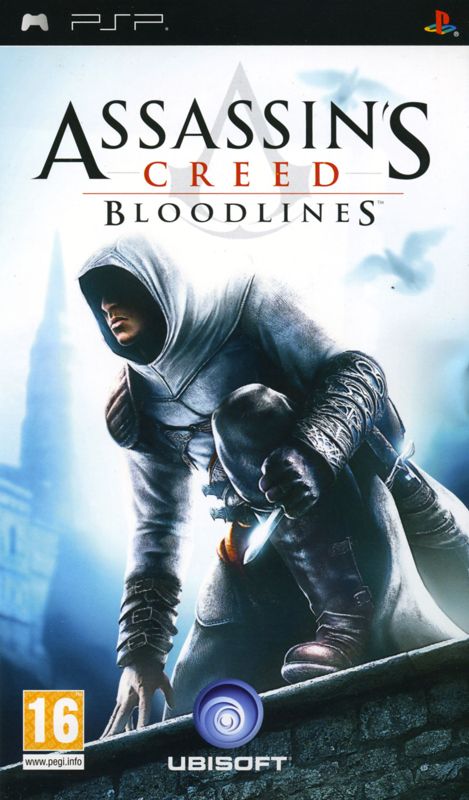

Retro Replay Review
Gameplay
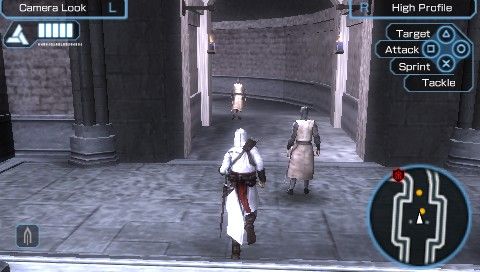
Bloodlines is built on the original Assassin’s Creed formula rather than reducing Altaïr to a strictly linear portable adventure. Limassol and Kyrenia provide open city spaces where the appeal comes from choosing a route, using the rooftops, and deciding whether discretion or force best suits the immediate objective.
The stealth approach has the right series identity: Altaïr can move through the cities, sneak up on targets, and exploit parkour to gain position. The alternative is deliberately more direct, letting you enter at street level and fight your way through instead. That flexibility is the game’s strongest asset, as it makes infiltration feel like a choice rather than a single prescribed solution.
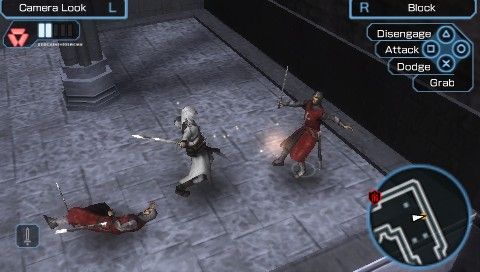
Combat is framed around a clear, limited arsenal. Fists support usually non-lethal melee encounters, while the signature sleeve sword and longsword cover lethal work. Players looking for the portable version of the first game’s blend of navigation, stalking, and sword-based confrontation will find the intended foundation here; players wanting a major mechanical departure will not.
Graphics
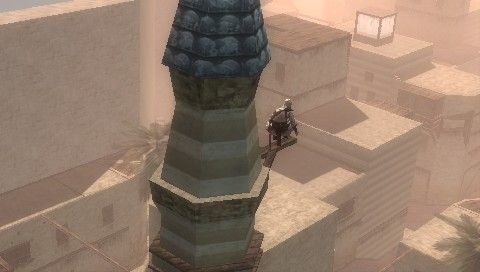
The presentation is most effective when it supports the game’s two-city structure. Limassol and Kyrenia give Altaïr distinct urban spaces to cross, and the emphasis on freely moving through those environments is central to how the game establishes its place within the series.
Its visual priorities are functional rather than ornamental. The important thing is readability: streets provide the direct route, while the city layout supports rooftop travel and stealth-minded positioning. That focus suits an action game in which traversing the environment is as important as confronting enemies.
As a PSP production, Bloodlines is best appreciated for bringing the original game’s open-city premise to a handheld format. The presentation serves that ambition by keeping Altaïr and his available approaches at the center, rather than treating the portable setting as an excuse for a disconnected spin-off.
Story
The campaign begins one month after the first Assassin’s Creed. The Templars have relocated to Cyprus, and Altaïr follows them to uncover their plans and eliminate them if the chance arises. It is a direct continuation, not a parallel tale with an unrelated protagonist.
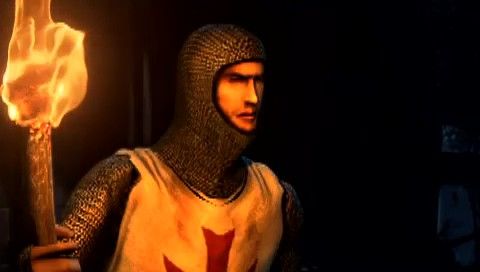
Armand Bouchart, the Templars’ grand master, is the central antagonist. His pursuit of the Apple of Eden gives the conflict an appropriately high-stakes focus: possession of the artifact would allow him to control the minds of anyone he chooses.
The story’s greatest value is connective. It continues Altaïr’s thread from the first game while building toward Assassin’s Creed II, giving the adventure a clear place in the wider series chronology. That makes it particularly worthwhile for players who want the narrative bridge, even if they primarily come for the stealth-action structure.
Overall Experience
Assassin’s Creed: Bloodlines is a focused portable continuation for players who value the first game’s broad template: open city traversal, stealthy target work, and the option to abandon subtlety for open combat. Its commitment to that structure distinguishes it from a more constrained handheld adaptation.
The PSP-to-PS3 connection adds a notable extra for players pairing it with Assassin’s Creed II. Six weapons can be unlocked for the sequel and used in the PSP game, while collected Templar coins carry over and Codex pages provide health increases. These links give exploration and collecting a useful series-wide incentive.
This is best recommended to Assassin’s Creed followers interested in Altaïr’s continuing conflict and in a game that bridges the first two major entries. Its 6.3 score reflects a solid but not exceptional chapter: the familiar mix of parkour, stealth, and swordplay is intact, while its strongest appeal lies in how deliberately it connects that gameplay to the broader saga.

Reviews
There are no reviews yet.