 Retro Replay Retro Replay gaming reviews, news, emulation, geek stuff and more!
Retro Replay Review
Gameplay
The first thing that grabs you here is sheer momentum. Final Fantasy IV does not ask you to spend ages wandering around before it starts making demands; it gets into a brisk, character-led RPG rhythm and keeps the turn-based combat moving. Its real-time battle element adds urgency without turning every command into a panic. You are still choosing attacks, magic, and priorities, but you need to stay alert rather than treating each fight like a completely frozen board game.
The original game is the easy recommendation and the heart of the collection. It is focused, satisfying, and built around a party-based combat flow that still feels good when you want a traditional Final Fantasy without a huge amount of modern friction. If you are coming from the Nintendo DS version, this is a different way to revisit it: this collection leans on enhanced high-resolution graphics, new music, and CG material rather than simply being that version transplanted whole. For more on that related release, see Final Fantasy IV on Nintendo DS.
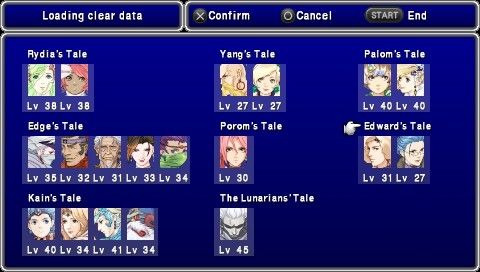
The After Years is where the package becomes a commitment rather than a neat nostalgia trip. It extends the experience across multiple character tales, and that structure will naturally land better if you already care about Final Fantasy IV’s world and cast. The PSP collection gives dedicated players extra teeth to chew on: each tale’s Challenge Dungeon has an exclusive enemy, and the Lost Babil post-game encounter is a real endgame assignment, requiring three separate parties across three fights. That is a smart reward for a group-building RPG, but it is aimed squarely at players who enjoy preparation and persistence.
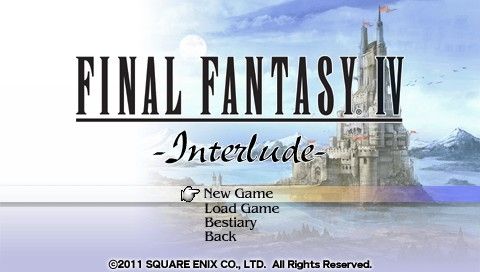
Interlude is a valuable inclusion because it bridges the original story and The After Years from the main menu, rather than leaving the collection as two disconnected games. Set about a year after the first game’s plot, it helps the transition feel intentional. This is a compilation with a sensible play order: start with Final Fantasy IV, use Interlude as the palate cleanser it is meant to be, then decide whether your appetite for a much larger return trip carries you into The After Years.
Graphics
The PSP screen suits the enhanced high-resolution artwork well. This is a top-down, anime-styled fantasy RPG, and the upgraded look gives its character and world art a cleaner home than a bare archival re-release would have. The CG movies, drawn from the DS remake for Final Fantasy IV and newly added for The After Years, add a more cinematic contrast to the regular game view.
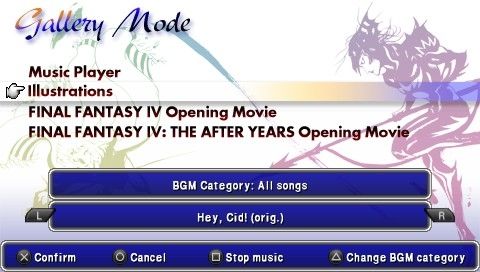
A gallery lets you revisit the CG movies and artwork, which is a small but genuinely pleasant extra for anyone who likes lingering over Final Fantasy art instead of rushing straight back into battle.
Story
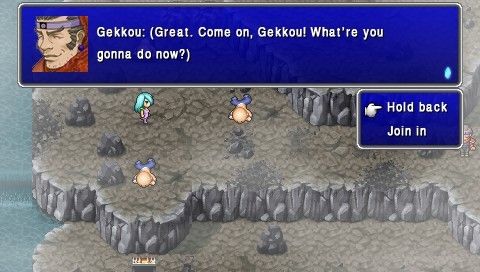
Final Fantasy IV earns its long-standing reputation by pushing you forward through its characters, not merely through the promise of the next dungeon. That is why the original still carries this package so comfortably: there is enough narrative drive in it to make an older RPG format feel immediate instead of dutiful. You are not here only to watch numbers rise; you are here to see where the journey takes its cast.
The After Years has a tougher job. It follows an adventure that already feels complete to many fans, so its value depends on how strongly you want a return visit. Its tale-based structure makes that return feel broader, while Interlude provides the missing connective tissue by taking place roughly a year after the original plot. Playing the three pieces in sequence gives the collection a much more coherent arc than treating The After Years as a random bonus.
This is not the best entry point if your interest is only in sampling the series’ history as quickly as possible; it is a substantial investment centered on one era of Final Fantasy. But if Final Fantasy IV has ever stuck with you, the collection understands the pleasure of staying with a world beyond its first ending. The additional chapters turn that affection into a fuller, more continuous RPG journey.
Overall Experience
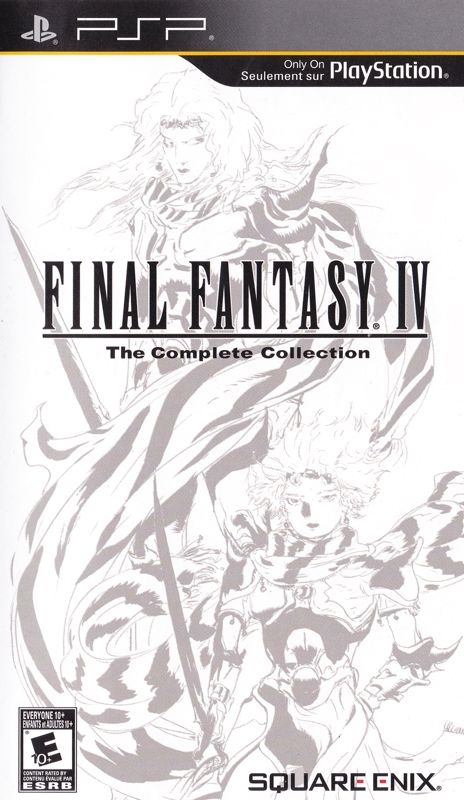
Final Fantasy IV: The Complete Collection is generous in the way a good compilation should be. It does not merely bundle Final Fantasy IV and The After Years; it places Interlude between them, upgrades the audiovisual package, includes a gallery, and adds meaningful late-game material for committed After Years players. On a PSP, that makes for an unusually complete portable home for this corner of the series.
Its unevenness is also honest. Final Fantasy IV is the sharpest and most immediately satisfying piece, while The After Years asks you to bring more affection, patience, and interest in extended RPG side material. If the original clicks for you, that is not much of a problem—you have a large continuation waiting. If it does not, no amount of extra bosses and bonus chapters will transform the collection’s core old-school RPG sensibility.
At 7.7, this is an easy recommendation for Final Fantasy IV fans and a good one for anyone who wants a deep, portable turn-based RPG package with a clear narrative order. Start with the original, do not rush Interlude, and save the Lost Babil challenge for when you are ready to build and manage three capable parties. For release background and collection history, this overview of Final Fantasy IV: The Complete Collection is useful, but the real takeaway is simpler: this remains a rewarding way to live in Final Fantasy IV’s world for a very long time.


Reviews
There are no reviews yet.