 Retro Replay Retro Gaming History, Reviews & Emulation
Retro Replay Review
Gameplay
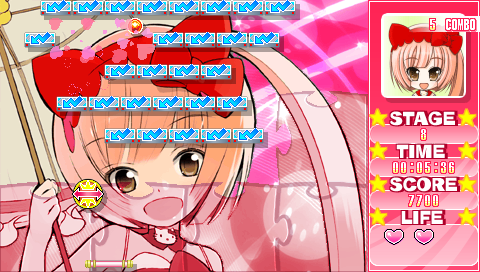
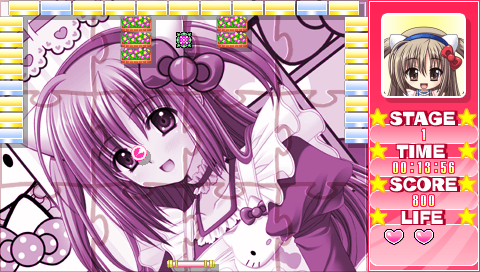
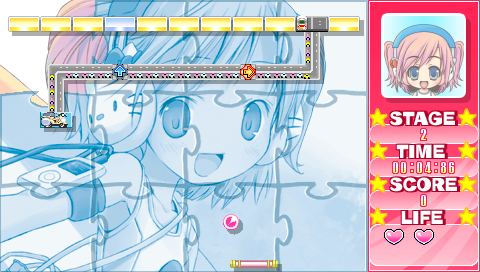
The first few minutes are easy to understand in the best possible way. You guide a paddle, return a ball, and chip away at every block on the board. There is no long warm-up before the game tells you what it is. If you enjoy the clean, compulsive loop of Breakout, Block Crash 123!! gets to that loop immediately.
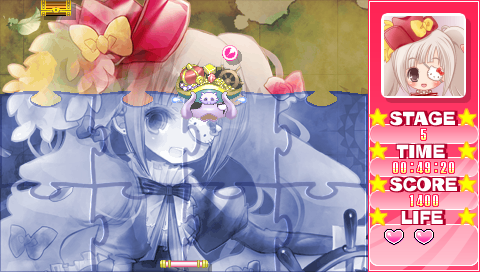
What keeps it from feeling like a single board repeated forever is the character structure. You can pick any of the ten characters from the outset, but must clear that character’s 12 stages in sequence. Since each set has its own theme and gameplay twists, choosing a character is more than picking a portrait. One set includes blocks that creep downward, forcing you to clear space before the screen becomes too cramped; another turns the system sideways, changing how you read the familiar paddle-and-ball action.
Power-ups add welcome volatility. Destroyed blocks can drop temporary effects for the ball or paddle, and not every pickup is helpful. That makes each falling item a quick decision rather than an automatic prize. It also means a run can unravel when a bad effect arrives at the wrong moment, especially because exhausting your lives sends you back to the start of the stage.
That restart rule is where the game can become abrasive. The basic controls are approachable, but clearing a difficult board only to lose progress to a late miss asks for more persistence than the cute license suggests. The changing stage ideas soften the repetition, though, and the central action remains satisfying when you are locked into the ball’s rhythm and carving through a stubborn cluster of blocks.
Graphics
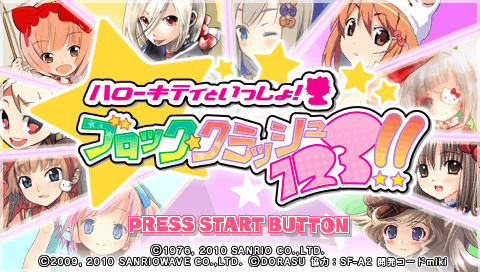
The main draw is the artwork: ten characters represent illustrations by artists including okama, KEI, Teruhiko Imaizumi, Poyoyon Rock, Keito Koume, Shimeko, Kohaku Kuroboshi, Aoi Nishimata, Eiji Komatsu, and POP. Finishing every stage for a character unlocks that character’s illustration, giving the game a stronger art-collection angle than most paddle breakers.
Story
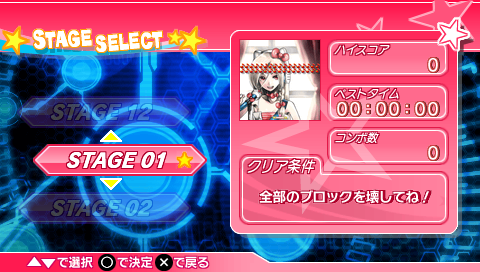
There is no sprawling story pushing you from stage to stage. Instead, progression is built around the selected character and the promise of unlocking that character’s illustration after completing all 12 stages.
That light framing fits the arcade format. You are not here to follow a plot between matches; you are here to master boards, see the next themed set, and earn another piece of art. The character choices give those goals a little personality without interrupting the pace.
Completing every character opens a bonus stage, which gives the full roster a shared endpoint. It is a straightforward completion goal, but it is enough to make the ten separate routes feel connected rather than like isolated collections of levels.
Overall Experience
Hello Kitty to Issho! Block Crash 123!! is a sturdier game than its name might lead you to expect, provided you already have some affection for Breakout. Its core is old-fashioned and unforgiving at times, yet the themed stage sets stop it from settling into pure routine. The sideways play and descending blocks are the sort of small changes that can make you reconsider habits you barely notice in a standard brick breaker.
The strongest reason to stick with it is the combination of arcade progression and collectible art. Clearing all 12 stages for a character unlocks an illustration, and the clock and calendar mode lets you build a custom clock from unlocked artwork and visual designs. That is a genuinely pleasant payoff for a game built around replaying compact stages.
Give it a chance if you want a cute but demanding paddle game with artist-driven rewards and enough board variation to keep the basics lively. Skip it if stage restarts after running out of lives sound more irritating than motivating. For the right mood, it is a focused little score-chaser with a surprisingly persistent pull.


Reviews
There are no reviews yet.