 Retro Replay Retro Gaming History, Reviews & Emulation
Retro Replay Review
Gameplay
The first hour has the right kind of RPG momentum. You are dropped into a murder investigation rather than handed a vague save-the-world errand, and the need to poke around Trinsic gives your early exploration a purpose. Britannia’s isometric viewpoint and scrolling world invite you to roam, while the puzzle elements help break up the straightforward searching.
The biggest adjustment is combat. This version turns battles into an action-based routine where you repeatedly click an enemy to win. That makes fights immediately understandable, but it also strips away the tactical texture associated with managing a group. You are on your own here, so there is no party to organize or support in battle; victories hinge more on persistence than clever coordination.
That simplification cuts both ways. If the original game’s sprawling density sounds intimidating, this is a more direct route through the same basic adventure. If you came looking for a deep role-playing sandbox, though, reduced cities, fewer pick-up items, and pared-back interiors make Britannia feel less like a place where every corner might hold a surprise. The investigation and puzzles carry the experience better than the combat does.
Graphics
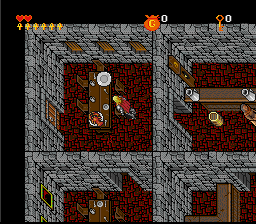
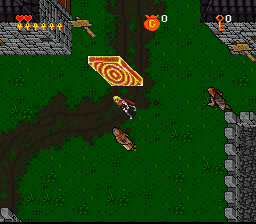
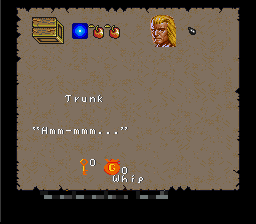
The game uses a 2D, diagonal-down isometric view, with scrolling towns and outdoor areas seen from above. That angle suits exploration and makes it easy to track where you are moving, even if the scaled-back locations cannot match the richness of the larger PC version.
Story
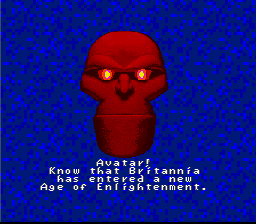
The ritual murders in Trinsic are an excellent opening problem because they give you a concrete reason to care before the larger threat takes over. The Fellowship’s growing influence adds a more unsettling thread: something ideological is spreading through Britannia, not merely another monster problem waiting outside town.
The core story remains that of Ultima VII: The Black Gate, and its central mystery is the strongest reason to stay with this port. You are not simply marching from battle to battle; you are investigating what has gone wrong in a familiar fantasy land and following the clues toward the Fellowship.
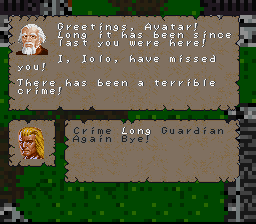
The catch is that dialogue has been greatly reduced or simplified. That matters in a game whose original strength came from spending time with its world and inhabitants. The plot still has a worthwhile spine, but the shorter conversations and reduced locations leave less room for Britannia’s people and places to develop their character.
Overall Experience
This is a compromised but recognizable console adaptation of a major RPG. Its mystery is engaging, its isometric exploration has a steady pull, and its streamlined scope may suit you if you want a brisker fantasy investigation than the famously expansive PC original.
Frustration sets in when you feel what was traded away. Solo travel and click-heavy combat make the game less tactically interesting, while the reduced dialogue, cities, and object detail weaken the sense that Britannia is a lived-in world. These are not minor trims; they reshape the texture of the whole journey.
Give it a chance if you are curious about a 16-bit reinterpretation of The Black Gate and can accept a simpler, more action-oriented RPG. For everyone else, it is more interesting as an alternate version of a great premise than as the definitive way to experience it. The mystery is worth seeing through, but the payoff comes with clear compromises.


Reviews
There are no reviews yet.