 Retro Replay Retro Gaming History, Reviews & Emulation
Retro Replay Review
Gameplay
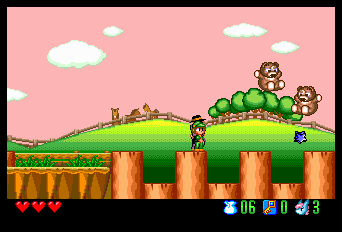
Aoi Blink starts in comfortable territory: run right, make careful jumps, shoot enemies, and search through side-scrolling stages. Then the character swapping begins to matter. You can change among three characters on the fly, and their different strengths turn simple-looking stretches into small decisions. A high jump can open a route that another character cannot reach, while better firepower makes a hostile section less punishing. It is an immediately understandable idea, and it gives the game more texture than a straightforward licensed platformer.
The world-map structure is another strong choice. Each of the five levels is broken into separate areas, with branching paths leading onward as you clear them. That makes progress feel less like marching through one long corridor and more like working your way through a compact platforming board. The key requirement for each boss area is especially effective: a master key hides in every area, so you need to explore rather than merely survive the route to the exit.
That search can also be where irritation creeps in. Missing a hidden key means the boss route stays closed, and the game expects you to pay attention to every area rather than rush ahead. The shared health pool raises the stakes further. Swapping characters does not give you three separate safety nets; damage follows the whole team, and empty hearts cost a life. Since defeated enemies leave money that restores hearts, combat is tied directly to staying alive instead of being a distraction you can always skip.
The result is a platformer that rewards deliberate play. You are not just picking a favorite character and sticking with them; you are constantly weighing mobility, attack strength, enemy placement, and your remaining health. Five levels is not a huge journey, but Aoi Blink gets useful mileage from its map routes and three-character setup.
Graphics
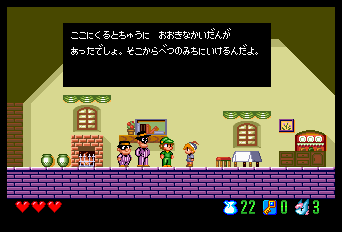
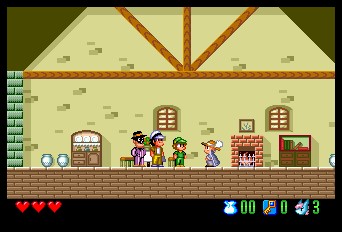
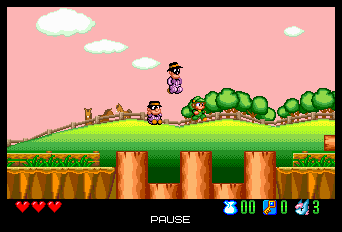
This is a side-view 2D scrolling platformer built around distinct areas on a branching map. The changing cast from level to level gives the action some variety, and the game keeps the focus on clear platforming spaces and enemies you can avoid or shoot.
Story
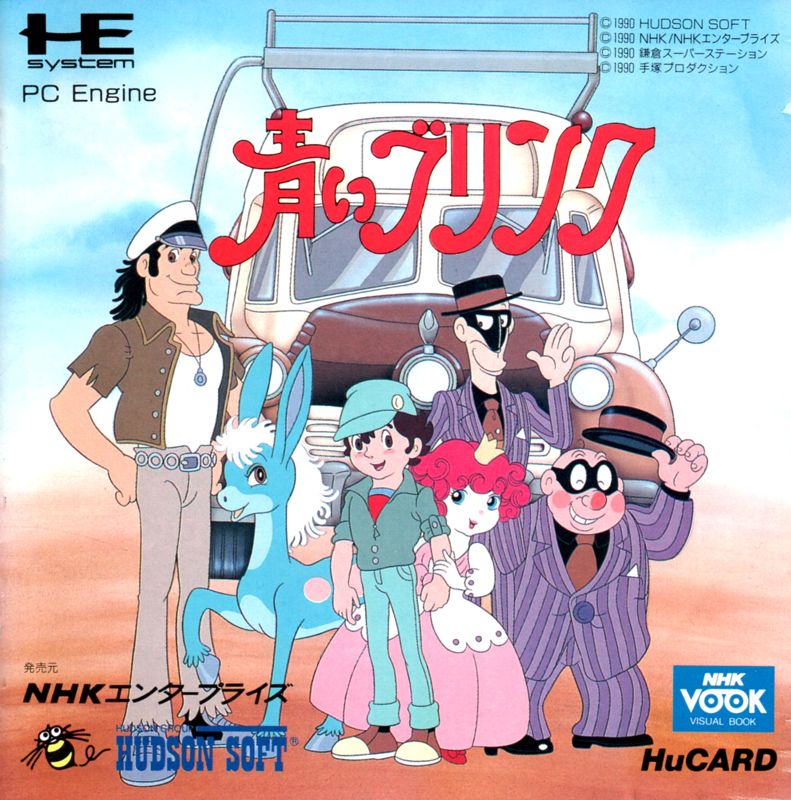
Aoi Blink draws its characters from the TV anime of the same name, but its story role is light compared with the action. The important dramatic throughline is the changing three-character team: each level brings a different set of anime characters, and their abilities shape how you tackle the terrain.
That makes the license feel more functional than decorative. Rather than simply putting familiar faces into a generic platformer, the game uses the rotating cast to change your options from level to level. You should not come in expecting an elaborate narrative adventure; this is a game where the characters matter most in the moment-to-moment challenge.
For fans of the series, recognizing that each team changes may add some charm. For everyone else, the game still communicates what matters cleanly: this character jumps higher, that one handles enemies better, and you need all of them to find keys and press forward.
Overall Experience
Aoi Blink is a good fit if you enjoy older platformers that ask for more than reflexes. The first hour’s hook is the freedom to swap characters whenever you need a different answer, and that idea continues to carry the game because the level maps and hidden keys give it a reason to exist. It is a modest premise executed with enough structure to stay engaging.
The shared-health rule is the feature that will divide people. It creates tension and makes healing money valuable, but it also means a mistake with one character endangers the entire group. If you want a carefree platformer where experimentation has little cost, that pressure may wear on you. If you enjoy managing risk while probing for alternate paths, it is part of the fun.
At 7.3, Aoi Blink lands as a worthwhile, focused TurboGrafx-16 platformer rather than an essential landmark. Its best moments come when you spot a problem, switch heroes, and realize the path forward was there all along. The anime connection is a bonus; the real reason to play is the tidy combination of branching progression, key hunting, and flexible three-character action.


Reviews
There are no reviews yet.