 Retro Replay Retro Gaming History, Reviews & Emulation
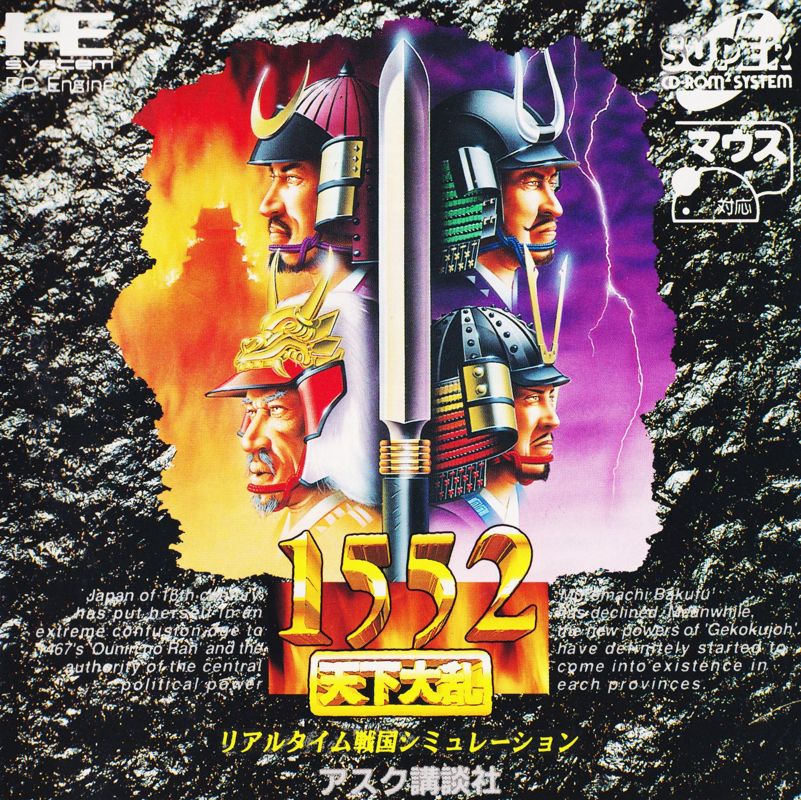
Retro Replay Review
Gameplay
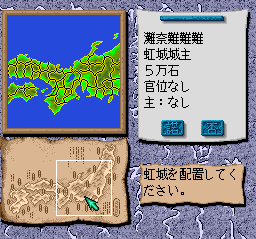
The first hour of 1552 Tenka Tairan is built around a satisfying kind of pressure: you are a daimyo in a crowded, hostile Japan, trying to grow without leaving your own castle exposed. You manage an army, advance troops, take neighboring provinces, and defend what is already yours. None of that is unusual in a war game, but the Sengoku setting gives the struggle a sharp edge. You are not simply coloring a map; you are trying to outlast ambitious rivals in an era defined by lords overthrowing lords.
Its most interesting decision is the way time keeps moving even when the game pauses to let you choose an action. That puts it in an uneasy middle ground between deliberate command and real-time strain. You get a moment to consider your options, yet you cannot leisurely treat every move as if the wider war has stopped for you. Once that rhythm clicks, planning a few steps ahead becomes more important than reacting to one immediate border problem.
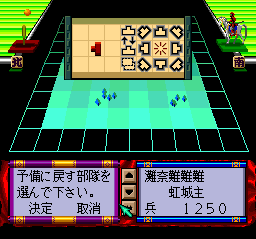
Battles move to separate screens, where troop positioning and manoeuvring take center stage. That is where the strategic promise has to be earned: conquest is not just a matter of pointing armies toward a province, but of using them intelligently once fighting begins. Players who like to think about formation, movement, and battlefield placement will get more from it than anyone looking for a quick, streamlined march through Japanese history.
Character creation is a nice personal wrinkle. Rather than forcing you to select only a historical figure, the game lets you make a general through an Ultima-style question sequence, with the answers determining statistics. It gives a campaign an immediate personal stake, especially if you would rather enter this unstable period as your own rising warlord than inherit someone else’s reputation.
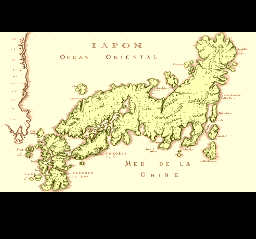
Graphics
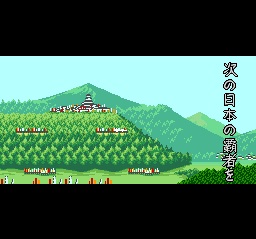
The game uses a top-down viewpoint, while battles receive their own dedicated screens. That practical layout suits a strategy game centered on moving troops and contesting provinces: the important thing is being able to follow the shape of a fight and act on it.
Story
This is history used as a war-game framework rather than a single fixed tale. The three scenarios begin in 1552, 1582, and 1600, letting you tackle different points in the Sengoku period’s long struggle for dominance.
The central dramatic idea is gekokujou: ambitious daimyo overturning their superiors and destabilizing the country. It is a strong fit for a conquest game because every expansion feels naturally tied to the era’s social and military turmoil. Your goal is not abstract empire-building; it is surviving a country where rank and territory are always up for grabs.
Choosing a historical leader or creating a new one changes the flavor of that premise. A known figure puts you into an established historical contest, while a custom general makes the campaign feel more like a personal bid for power. Either way, the setting has enough built-in tension to give your territorial decisions weight.
Overall Experience
1552 Tenka Tairan is compelling because it refuses to make the business of conquest entirely comfortable. The ongoing clock creates tension, and the separate tactical battles ask you to do more than merely push an army across a border. Its pace will feel demanding, but that demand suits a game about seizing control during a chaotic civil-war era.
You should give it a chance if you enjoy historical strategy that balances a broader campaign with hands-on troop manoeuvring. The three dates offer distinct starting points, and the custom-general option adds replay value without diluting the focus on warlords, castles, armies, and provinces.
The payoff is the feeling of turning careful military decisions into a widening sphere of control. It is a concentrated Sengoku strategy game for gamers willing to handle pressure, think tactically, and accept that a pause to make a choice is not the same thing as safety.


Reviews
There are no reviews yet.