 Retro Replay Retro Gaming History, Reviews & Emulation
Retro Replay Review
Gameplay
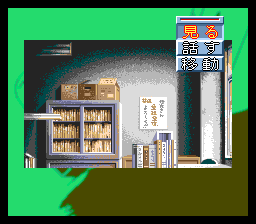
The first hour is easy to settle into because the game never makes you decode a complicated interface. Look, Talk, and Move are always there, and that clean three-command structure tells you exactly how to proceed: inspect the current place, speak with whoever is present, or head somewhere else. For a Japanese-style adventure built around story progression, it is an admirably unfussy setup.
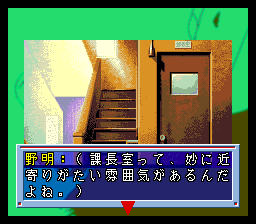
What starts to click is the rhythm of treating every new screen as a small conversation space. You are not sorting through an inventory or drilling into nested object lists; you are working with broad actions and following the thread of the scene. That makes it approachable, especially if you want to relax into a Patlabor episode-like pace rather than wrestle with adventure-game logic.
The trade-off is clear, though. This is a narrow interaction model, and it leaves little room for the kind of experimentation that makes the best adventure games feel surprising. If you came hoping to pilot a Labor in tactical encounters, this is not that sort of Patlabor game. The Labor action sits in the fiction, while your role is to examine, talk, and move the story ahead.
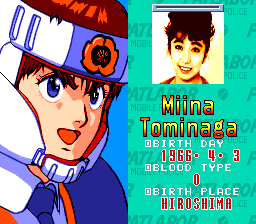
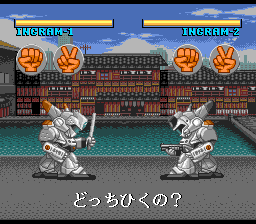
The main menu’s robot database and voice-actor interviews add welcome value for fans who enjoy lingering in a license rather than rushing straight through its plot. The rock-paper-scissors minigame starring different Labors is also a light, fitting bonus. None of those extras transform the core adventure, but they give devoted Patlabor followers a few more reasons to spend time with it.
Graphics
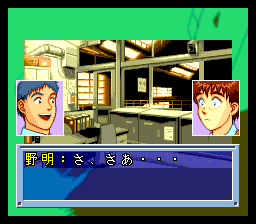
As a digital-comic take on an anime and manga property, the game keeps the focus on Noa Izumi, Special Vehicle Section 2, and the Griffon storyline rather than on a battlefield view. The persistent Look, Talk, and Move commands make the first-person adventure screens straightforward to navigate.
Story
This is where the game has its strongest hook: it places you with Special Vehicle Section 2, Division 2, in the near-future Tokyo where police officers use giant Labors against criminals. You play as Noa Izumi, a smart choice for a Patlabor adventure because it anchors the investigation-style format in a familiar central character.
More specifically, Chapter of Griffon follows the anime’s TV timeline and centers on the Labor Griffon. That focus matters. Rather than trying to summarize all of Patlabor, it commits to one recognizable strand of the series, which gives fans a clearer reason to seek it out.
Newcomers can still follow the basic setup, but longtime viewers are likely to get more from the character conversations and the pleasure of revisiting this corner of the series. The story is the reward for doing all that looking and talking; if the world and cast do not already interest you, the spare adventure mechanics have less to carry you forward.
Overall Experience
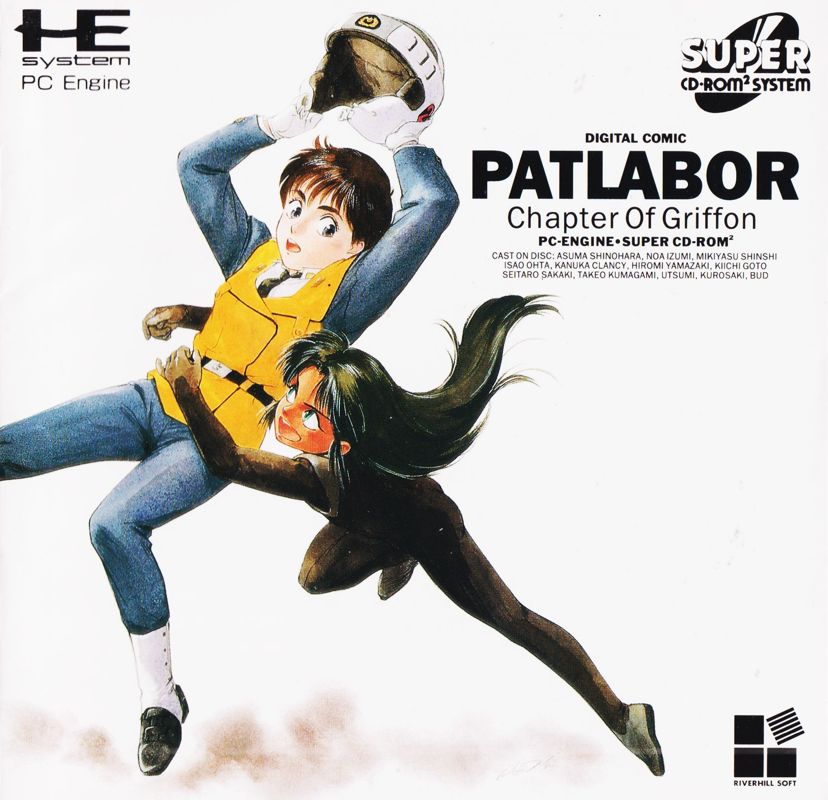
Digital Comic Patlabor: Chapter of Griffon is a modest, focused adaptation that understands its audience. It does not chase action-game thrills. Instead, it lets you inhabit Noa’s side of the Patlabor world through a simple investigation-and-conversation loop, then sweetens the package with fan-oriented extras.
Its biggest frustration is also its defining trait: the three-command design is so streamlined that the experience can feel more like guided story navigation than a puzzle-heavy adventure. That is fine when you are invested in the Griffon arc, but it makes the game a harder sell if you need intricate challenges or frequent mechanical variety.
Give it a chance if you are a Patlabor fan curious about an older interactive version of the TV continuity, or if a stripped-back Japanese adventure sounds comforting rather than limiting. Everyone else may appreciate the license and premise more than the actual play. The payoff is real, but it is largely the payoff of spending more time with Patlabor, not of uncovering a hidden genre classic.


Reviews
There are no reviews yet.