 Retro Replay Retro Replay gaming reviews, news, emulation, geek stuff and more!

Retro Replay Review
Gameplay
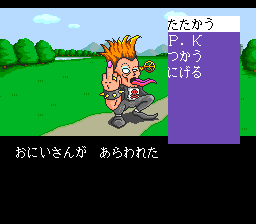
The first hour asks you to settle into Mitsubachi Gakuen’s deliberately hands-off style. Rather than dropping you into puzzles, it casts you as a teacher keeping track of students’ studies and activities. You navigate with a conventional verb menu—examine, talk, use inventory, move—and many actions open another list of things to inspect. That can feel stiff by modern standards, but it gives the game a methodical, desk-bound adventure-game rhythm that fits the role.
What starts to click is the focus on observation and conversation rather than clever item combinations. You can pull up dossiers for all twenty students at any point, and that reference material makes the academy feel more like a continuing workplace than a string of disconnected scenes. If you enjoy checking profiles, following personalities, and poking through dialogue options for the useful response, there is a modest but real pleasure in keeping everybody straight.
The trade-off is that there are no puzzles to break up the routine. Progress instead hinges on making the right choices at a few key moments, while other decisions can produce slight story branches. That makes it friendlier than an opaque adventure game, but also means much of the interaction can feel like working through menus until the plot accepts your answer. Come for a low-pressure narrative management game, not a demanding test of adventure-game logic.
Graphics
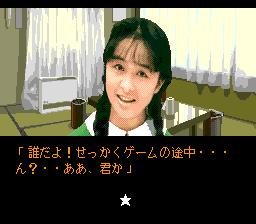
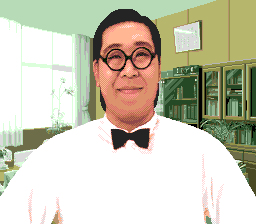
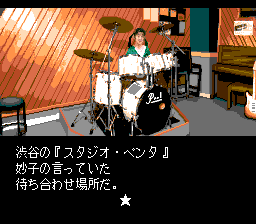
The standout visual choice is the use of digitized photographs of real people instead of anime-style character art. It gives the students a distinctly different look from many Japanese school adventures of its era, even if the surrounding interface is still built around functional command and object lists.
Story
Dividing the campaign into four seasons is Mitsubachi Gakuen’s strongest storytelling decision. Each season brings a separate subplot and a different team of five girls, so the game keeps moving without pretending every concern at the academy has to feed one huge mystery. The structure makes the twenty-student cast less intimidating: you deal with them in smaller groups rather than being asked to memorize everyone at once.
The individual conflicts are grounded in the academy’s push toward stardom. Preparing for a contest with another school, dealing with intrusive journalists, and worrying about possible spies all give the teacher role a little pressure beyond simply monitoring schoolwork. These are not grand adventure stakes, but they are a good match for a story about supervising young performers and protecting an institution’s reputation.
Because choices sometimes determine progress and sometimes alter the plot a little, your decisions have more weight than the otherwise puzzle-free format might suggest. Do not expect a wildly branching narrative; the branching is slight. Still, being responsible for the response at a tense moment helps the premise land better than a purely passive visual novel would.
Overall Experience
Mitsubachi Gakuen is easy to respect more than to recommend indiscriminately. Its teacher-at-an-idol-academy premise is specific, and its seasonal format gives it an episodic flow that suits short sessions. You get a game built around monitoring a large cast and navigating social complications, not one that distracts you with elaborate puzzles or action sequences.
Its biggest frustration is also its defining trait: so much of the game runs through nested menu choices. If you like classic adventures for the sensation of exploring spaces and discovering unexpected solutions, this can feel narrow. The absence of puzzles removes dead ends, but it also removes one of the genre’s usual sources of momentum.
Give it a chance if the setting and its unusual photo-based cast sound more interesting to you than a traditional challenge curve. The payoff is a focused period piece with a distinctive premise and a manageable episodic story, provided you can meet its slow, menu-driven pace on its own terms.



Reviews
There are no reviews yet.