 Retro Replay Retro Gaming History, Reviews & Emulation


Retro Replay Review
Gameplay
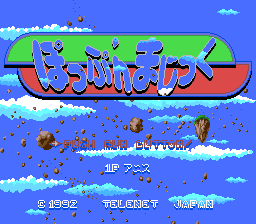
Pop’n Magic gets moving immediately. Each single-screen stage asks you to wipe out every monster, and your wand is the whole conversation: hit an enemy, turn it into a bubble, then destroy that bubble or use it against another one. It has the direct, repeatable rhythm you want from an arcade platformer, where a room can look manageable one moment and become a scramble the next.
The twist is that bubbles are not interchangeable. Monsters produce bubbles of particular colors, and bringing two matching colors together releases the monsters inside. That rule gives the action a mischievous edge. You cannot simply fill the screen and mash your way to victory; you have to watch where bubbles drift and decide whether a shot will clean up the room or make it more complicated. Throwing bubbles together for a stronger result is satisfying, especially once you stop treating every trapped enemy as an instant target.
Pressure builds if you linger, since tougher enemies begin appearing when a stage takes too long. That keeps the pace sharp, though it can also make a mistake feel expensive when the screen is already crowded. Solo play lets you settle into the rules at your own speed with either Anis or Lester. Co-op changes the mood: two wands mean more chances to create a useful chain, but also more bubbles and more opportunities for partners to disrupt each other’s setup. If you have a willing companion, the shared chaos is likely the main draw.
There are six worlds, each with nine regular stages and a boss stage, so Pop’n Magic has a clear arcade climb rather than an endlessly loose collection of rooms. The structure suits repeat play because the basic goal never becomes murky, while the bubble colors and rising danger keep demanding attention.
Graphics
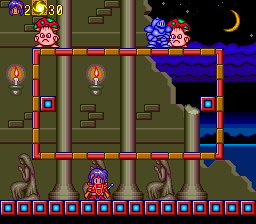
The fantasy setting puts young magicians Anis and Lester against invading demons on a floating island. The single-screen layout keeps the action contained, making it easy to track the enemies you have trapped and the bubbles that can suddenly release them if matching colors collide.

Story
The story is a simple excuse to start casting spells: demons attack a lovely floating island, defeat its guardian, and steal the protective crystals. Anis and Lester step up to stop the invasion. It is a clean arcade setup, not a tale that needs to carry much weight between stages.
That straightforward premise works because it gives the enemies, worlds, and bosses a shared destination: reclaim the island’s stolen protection. You are not asked to untangle competing motives or linger on long narrative detours. The stakes are visible from the outset, and the game stays focused on the rescue.
Choosing either magician in solo play gives you a small amount of ownership over the adventure, while co-op makes the premise feel more natural: the two young heroes literally join forces against the invasion. For more game-specific background and release context, see this Pop’n Magic history page.
Overall Experience
Pop’n Magic is strongest when you accept that its cute bubble-trapping setup has teeth. The first few rooms invite straightforward wand shots, but the color rule soon asks you to be more deliberate. That extra bit of friction is what separates it from a purely automatic clear-the-screen platformer.
Its frustrations are also tied to that same idea. Matching bubbles can release monsters instead of finishing them, and the arrival of tougher enemies makes slow play increasingly risky. If you want a relaxed, consequence-free romp, those rules may feel fussy. If you enjoy learning the small quirks that turn panic into control, they give each compact room more personality.
The payoff is a focused 1992 arcade game with a solid solo challenge and a more animated co-op option. Give it a chance if Bubble Bobble’s one-screen monster clearing sounds good but you want a color-based wrinkle that forces you to think before you pop. Pop’n Magic does not need a huge premise to hold your attention; its best moments come from rescuing a messy room with one well-judged bubble play.


Reviews
There are no reviews yet.