 Retro Replay Retro Gaming History, Reviews & Emulation



Retro Replay Review
Gameplay
The first hour of A World of Keflings has a pleasantly hands-on rhythm. You arrive as a towering Xbox Live avatar in a kingdom that needs rebuilding, then begin directing the tiny Keflings toward useful work. A job as ordinary as collecting resources becomes satisfying because you are constantly turning that labor into the next building, upgrade, or story quest. It is small-scale management with a physical, toy-box feel rather than a spreadsheet-heavy strategy game.
What starts to click is the chain of needs behind every bit of progress. You are not simply placing structures and watching numbers rise; you are steering workers around the map, gathering what a project requires, and deciding what deserves attention next. The game lets you issue orders at any time, which keeps you involved even when the work itself is simple. That direct control also makes the more whimsical assignments, including cannon jumping, feel like a welcome break from basic harvesting and upgrading.
The three lands give the quest structure room to breathe, and the named Keflings who hand out further requests give your rebuilding a clear direction. A witch who improves speed and gathering, for example, makes advancement more than a matter of adding another building. Still, this is a relaxed strategy game first and foremost. If you need tough opposition, elaborate planning, or punishing consequences for inefficient choices, the steady cycle of errands may begin to feel repetitive.
Co-op is a strong reason to play. Two people can maintain a kingdom together, turning the usual division of chores into the point: one person can chase materials while the other keeps construction and quests moving. Online multiplayer and item trading add another social layer, especially if you enjoy collecting useful objects and comparing what each kingdom needs. The game works best when you treat it as a shared, low-pressure project rather than a contest to optimize.

Graphics
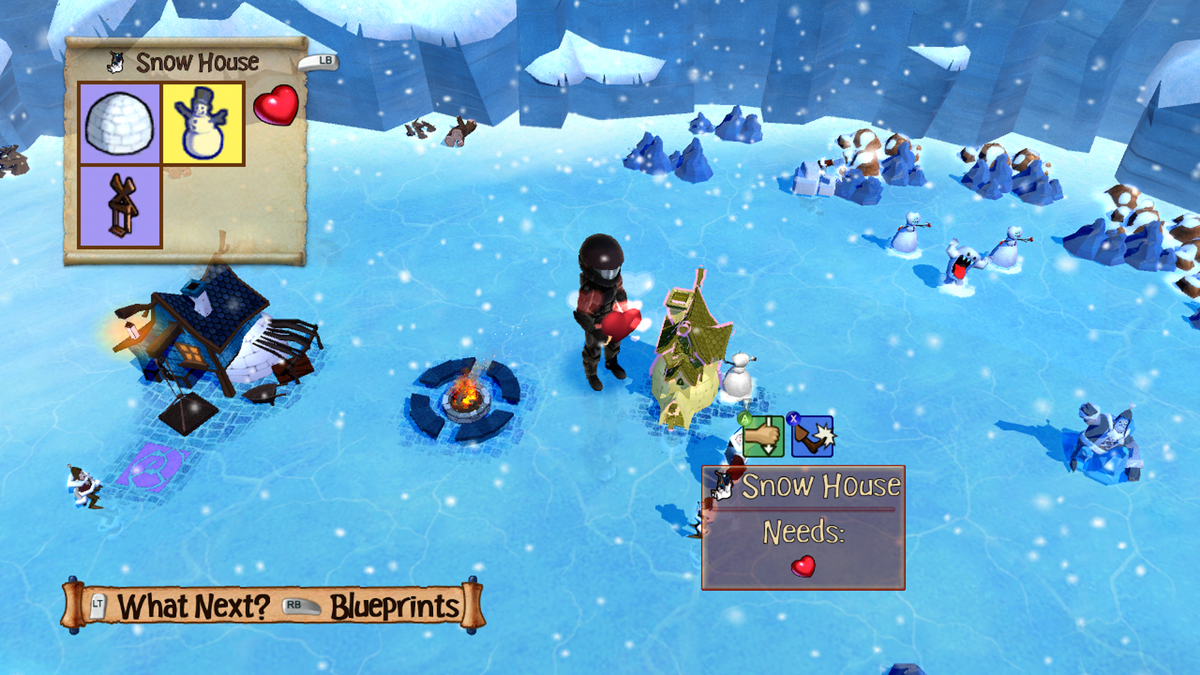
The central visual joke is easy to understand: your human-sized avatar looms over a world of tiny Keflings. That scale difference gives the building and worker management a playful charm, while the top-down view is well suited to tracking where your little workforce is headed across each kingdom.

Story
The story supplies a straightforward reason to keep building: a kingdom has been torn into three, and you are helping put its lands back in working order. It does not sound like a grand dramatic campaign so much as a structure for a long series of practical favors, which suits the game’s cheerful management focus.
Quest-giving Keflings are the useful part of that framework. They turn a general rebuilding assignment into specific goals and upgrades, giving you regular reasons to move from one task to another. The witch’s improvements to speed and gathering are especially welcome because they tie narrative errands directly to how quickly you can get things done.
Do not come in expecting the story to overpower the simulation. Its role is to make the next construction goal feel purposeful and to carry you between the three lands. For this kind of game, that is enough: the real payoff is seeing a struggling kingdom become active under your supervision.
Overall Experience
A World of Keflings understands the simple pleasure of being the big helper in a tiny place. It keeps asking for one more resource run, one more assignment, one more building project, and that modest momentum is difficult to dislike. The game is at its best when you have several jobs lined up and can see a clear path from your current chores to a healthier kingdom.
Its limits are equally clear. The real-time, top-down strategy label may suggest a deeper or more demanding tactics game than this is. Progress comes through guided quests and manageable worker direction, not tense battlefield decisions. That makes it approachable, but it also means the loop depends on whether you find its repeated gathering-and-building routine comforting or thin.
Give it a chance if you want a friendly building game with light strategy, a goofy sense of scale, and co-op that lets two people share the workload. Play it with someone if you can; dividing the kingdom’s chores makes the journey livelier. On your own, it remains a pleasant, modestly rewarding rebuild, just one that benefits from enjoying the process more than chasing complexity.



Reviews
There are no reviews yet.