 Retro Replay Retro Replay gaming reviews, news, emulation, geek stuff and more!

Retro Replay Review
Gameplay
The first few waves let you enjoy the basic tower-defense rhythm: study the route, place guns where they can work longest, and turn incoming troops into cash for the next decision. That rhythm is familiar, but iBomber Defense finds pressure in its changing paths. A strong arrangement for one wave can become inefficient in the next, so you cannot simply coast on the first choke point you spot.
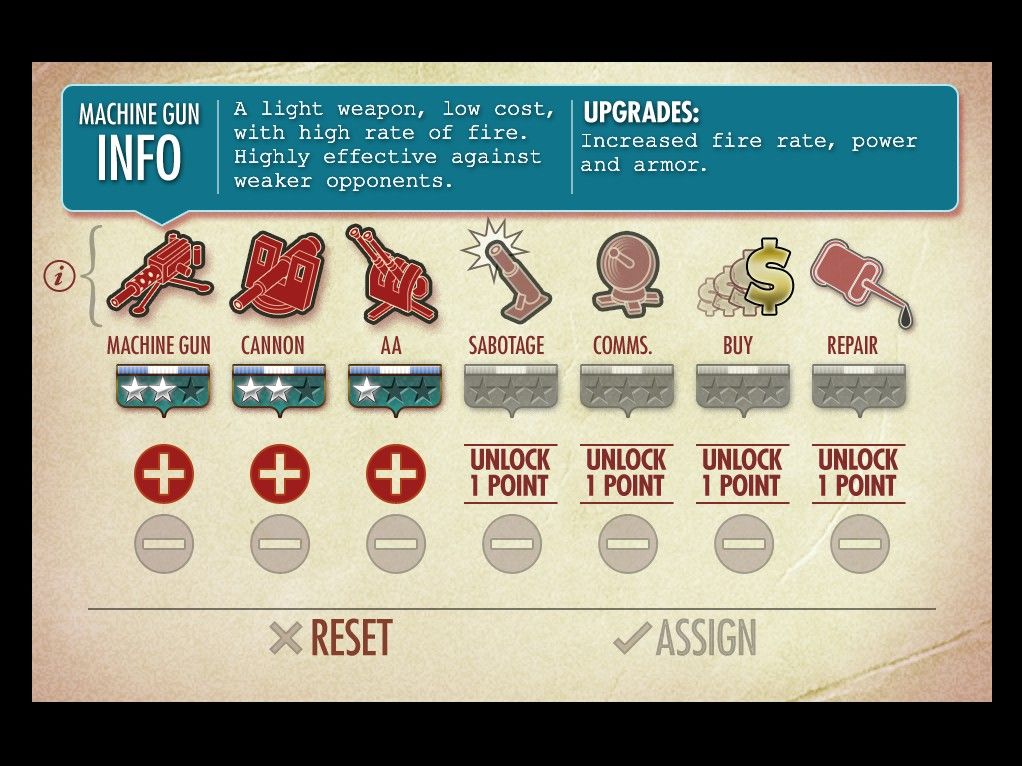
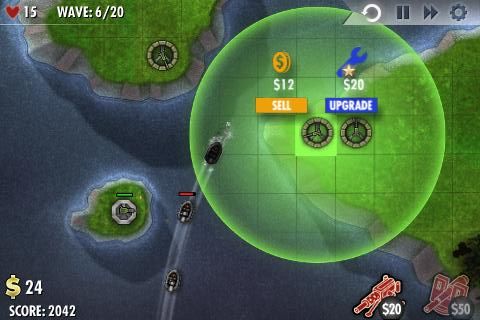
Its unit matchups are simple enough to understand quickly and important enough to respect. Machine guns handle light, fast targets; slower cannons earn their cost against armor; anti-aircraft artillery is mandatory once aircraft join the attack. Sabotage turrets slow enemies, while comms improve nearby defenses. The useful decisions come from combining those roles around the routes instead of treating every turret as an interchangeable damage number.
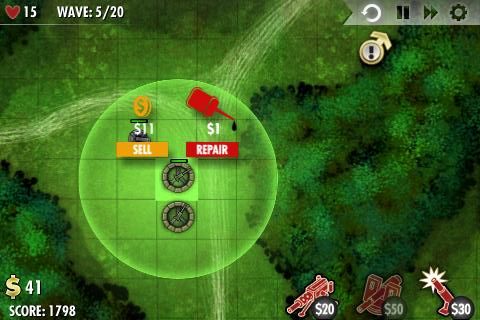
Return fire gives the game its sharpest twist. Enemy units can damage and destroy your emplacements, making repairs part of the battle rather than an afterthought. Money spent patching up a battered turret is money not spent on another gun or upgrade, and that can make a wave feel precarious in a satisfying way. Let more than 15 units reach the base and the level is lost, so a damaged section of your line can quickly become the problem you need to solve.
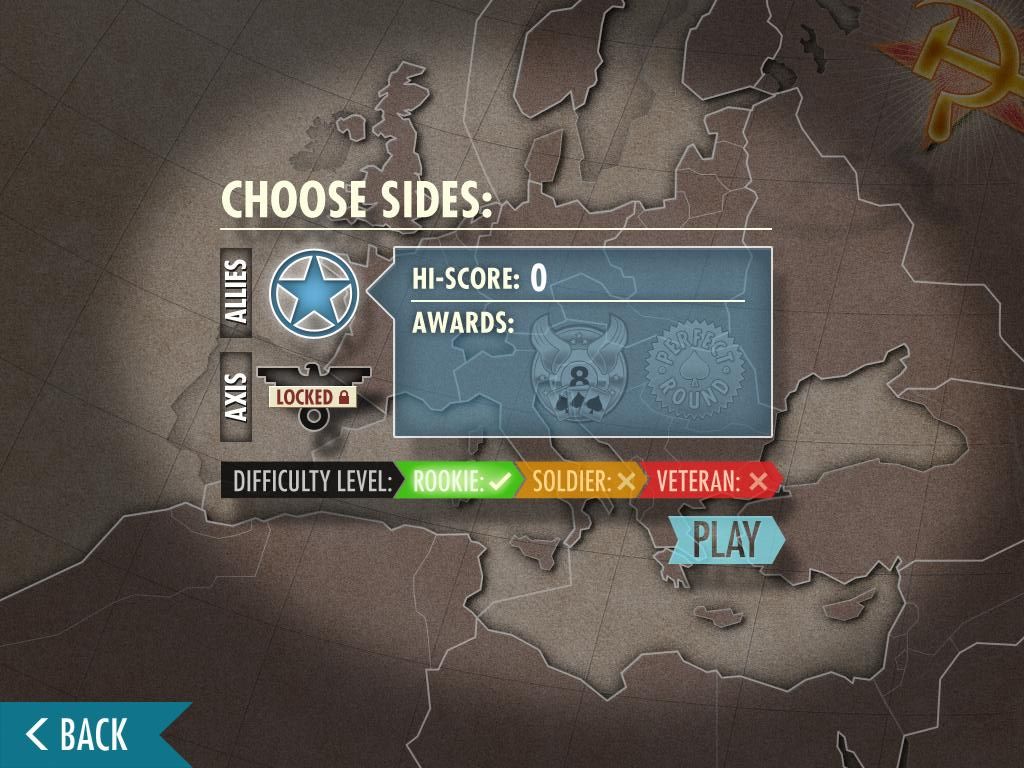
Two campaigns and quickplays give the formula some staying power. You begin with the Allies, then unlock the Axis campaign after finishing it, while victory points from completed levels feed into weapon upgrades. The counterattack stages, appearing after every three levels, revisit earlier maps for extra points. They are a sensible incentive to return to familiar ground with a stronger toolkit, though the structure stays firmly within traditional tower-defense territory.
Graphics
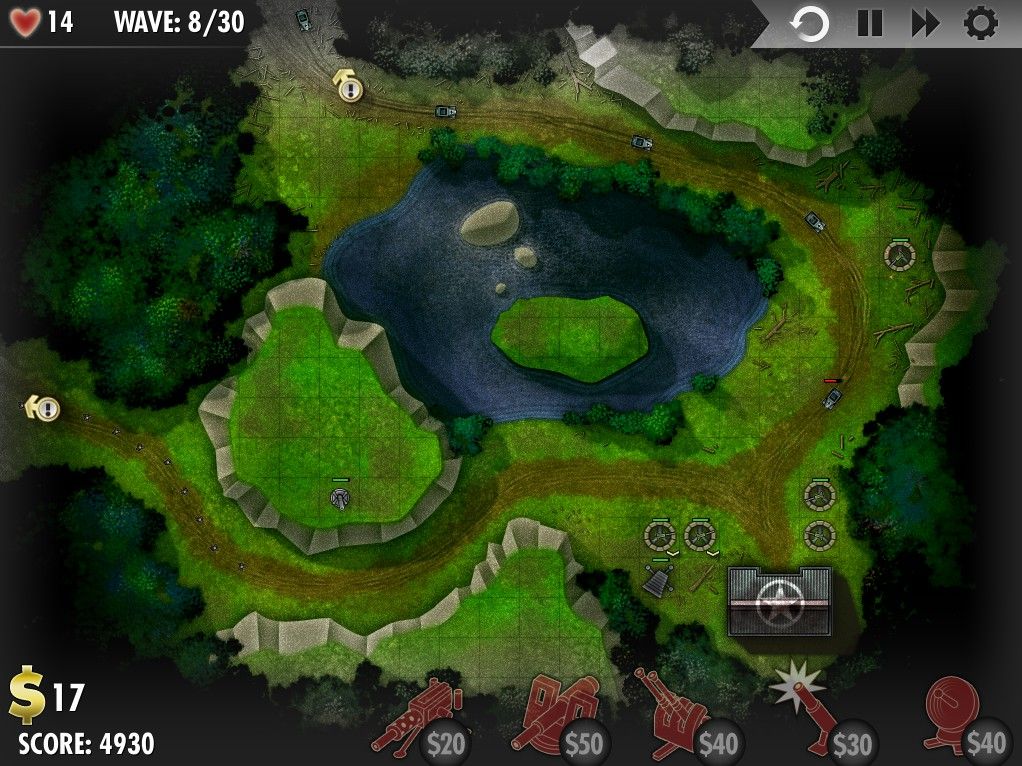
The World War II battlefield view is built around routes, turret positions, and incoming land, air, and sea units. That practical top-down layout suits a game where you need to keep track of shifting enemy paths and quickly notice which part of the defense is taking fire.
Story
iBomber Defense uses its World War II setting as a frame for campaigns rather than a story you will be rushing through for dramatic turns. You take the Allied side first, then move to the Axis campaign once it is unlocked.
That direct setup works because the battles carry the focus. The sides give the campaign progression a clear shape, but the meaningful drama comes from whether your defenses hold when the next wave changes direction or adds a new kind of target.
If you want character-driven missions or a detailed wartime narrative, this is not where the reward lies. Come for compact military-flavored tower defense, where faction progression and victory points are there to keep the tactical loop moving.
Overall Experience
iBomber Defense is most enjoyable when it forces you to rethink a plan you were confident about thirty seconds earlier. Route changes, enemy return fire, and the need to cover several target types prevent the usual tower-defense comfort zone from becoming completely automatic.
Frustration can set in if you prefer a forgiving game where every built tower remains safely in place. Repairs and replacements can be costly, and the 15-unit limit means a weak response to an awkward wave can end a level before your economy recovers. Still, that pressure is also what makes a successful defense feel earned.
This is a good recommendation for genre fans who want a conventional foundation with a few genuinely useful complications, especially the damage-and-repair economy. It does not need to be novel to be effective: the enemy types, turret roles, upgrades, and campaign unlocks form a sturdy loop that stays engaging when you are willing to adapt.



Reviews
There are no reviews yet.