 Retro Replay Retro Gaming History, Reviews & Emulation
Retro Replay Review
Gameplay
Kingdom Come: Deliverance starts by asking you to accept that Henry is not a hero yet. He is a survivor of a ruined village and a blacksmith’s son, not a trained knight, and the game makes you earn competence through repetition. That choice is initially frustrating, especially when a fight exposes how little Henry knows. Once his abilities start growing through use, though, the awkwardness becomes part of the point. A win feels earned because you and Henry have actually learned something.
The first-person melee combat is the game’s biggest hurdle and its strongest argument for patience. You choose directions for attacks and defenses while managing timing, stamina, and weapon choice. A sword, axe, polearm, or bow is not simply a different damage number. Equipment and stamina matter, and layered armor forces you to think about protection, mobility, durability, and cost rather than grabbing whatever looks strongest. It can be demanding in a way that feels more like practice than power fantasy, but landing on the right response after being outclassed is deeply satisfying.
Life outside a fight has the same insistence on effort. Hunger, fatigue, and untreated injuries affect how well Henry performs, so you cannot endlessly charge from one objective to the next. Alchemy asks for care and precision, while reading, crafting, lockpicking, dice, and archery contests give you other ways to spend time and build resources. Not every task is brisk, and the game’s commitment to routine can test your patience. Still, it gives progress a texture that many RPGs skip.
Questing is at its best when you use the tools available instead of assuming combat is the answer. Stealth, disguises, lockpicking, poisoning, persuasion, intimidation, and bribery can all change how an encounter plays out. Crime has consequences, and reputation influences how people and authorities treat you. That makes even a practical shortcut feel risky. You are not just selecting a dialogue option for a morality meter. You are dealing with the social cost of the person Henry is becoming.
Graphics
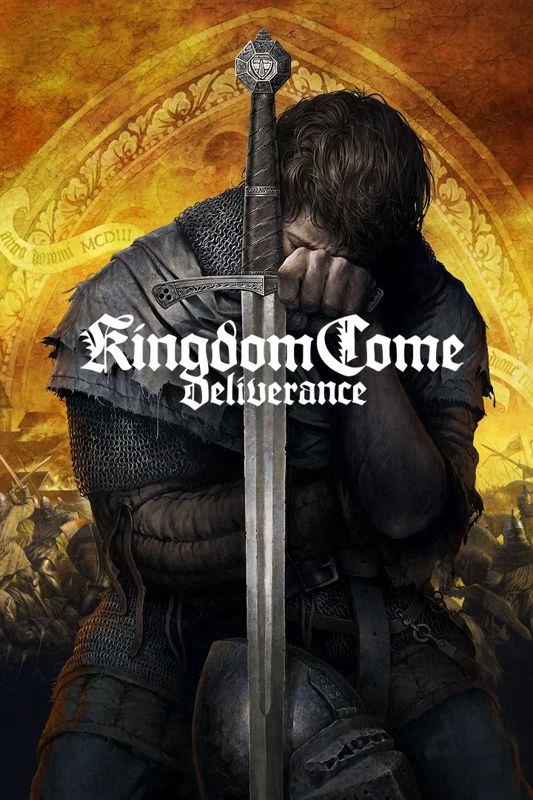
Kingdom Come: Deliverance keeps its focus on medieval human figures rather than fantasy spectacle. Henry and his opponents carry swords, axes, polearms, and bows, while layered armor gives armed encounters a grounded, weighty look. The first-person view keeps those weapons and protective layers close to the action, which suits a game so concerned with physical effort and vulnerability.
Story
The story begins with personal loss: Henry survives an invading force’s destruction of his village, then finds himself caught in a wider struggle among rival nobles. It is a strong setup because the political conflict is never entirely separate from Henry’s need for justice. His private grief gives the broader unrest a human entry point.
What works best is the game’s refusal to frame every decision as saintly or monstrous. Conversations can lean on persuasion, intimidation, or bribery, and outcomes affect relationships, reputation, and future opportunities. That practical tone fits a setting where social standing and a bad decision can matter as much as a sharp blade.
Henry is not dropped into the role of chosen savior. His path is shaped by skills, conduct, and the consequences he accepts while moving through a fractured Bohemia. That makes the narrative more grounded than grandiose. If you want dragons, prophecies, and clean moral victories, look elsewhere. If you want a medieval RPG where survival and social maneuvering carry narrative weight, this story has a convincing pull.
Overall Experience
Kingdom Come: Deliverance is memorable because it is willing to be inconvenient. Its systems demand attention, and its combat expects you to learn instead of mash your way through every problem. At times, that commitment can feel like the game is slowing you down simply because it can. The payoff arrives when those same demands make a successful duel, a careful conversation, or a well-prepared outing feel like your accomplishment rather than a scripted reward.
This is a particularly good fit if you enjoy RPGs where your character begins limited and gradually becomes capable through practice. Give it a chance if methodical first-person combat, survival pressure, and consequential reputation sound more exciting than exhausting. Skip it if you need immediate power, frictionless travel through quests, or a fantasy world full of supernatural threats.
Warhorse Studios built a historical RPG with real conviction, even when that conviction makes the experience stubborn. The base game’s best qualities are tied together: Henry’s inexperience, the weight of armor and wounds, the danger of crime, and the uncertainty of conversation all reinforce the same rough-edged medieval life. It is not always easy to love moment to moment, but it is easy to respect, and patient players will find a singular adventure beneath its resistance.


Reviews
There are no reviews yet.