 Retro Replay Retro Gaming History, Reviews & Emulation
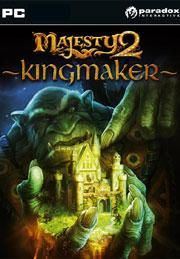
Retro Replay Review
Gameplay
Majesty 2: Kingmaker remains an indirect strategy game at heart. You do not select a unit and command it across the map; instead, you place rewards on desirable actions and rely on your heroes to decide whether the offered work is worth their time. That makes every objective a question of persuasion, planning, and available funds.
The expansion does not introduce a major new mechanical hook, so its gameplay value comes from extending an established formula. New monsters, buildings, and units broaden the pieces in play, while the eight-mission Return of Grum-Gog campaign provides a focused structure for using them.
Rewards must be adjusted to the experience level of your heroes. Experienced figures in Ardania require substantial sums before they will act, creating a useful tension between spending money to solve an immediate problem and retaining resources for the wider kingdom. Players who enjoy indirect control and emergent hero behavior will find that tension central to the appeal; players wanting precise tactical commands may still find it frustrating.
Graphics
Kingmaker’s presentation serves the same fantasy-kingdom framework as the main game, with its added buildings, units, and monsters contributing to the range of things your realm can contain and confront. The expansion is designed as an addition to that existing visual language rather than a wholesale reinvention of it.
Because much of the strategy is expressed through the state of your settlement and the behavior of autonomous heroes, readable distinctions between the new gameplay elements matter more than spectacle. The added content is most valuable when it makes the kingdom feel more varied as missions unfold.
Do not approach Kingmaker expecting a dramatic presentational overhaul. Its visual contribution is expansion and variety: more fantasy elements to populate the campaign and player-made scenarios, while retaining the look and structure familiar to Majesty 2 players.
Story
The new campaign is titled Return of Grum-Gog and spans eight missions. It gives Kingmaker a dedicated progression beyond standalone content, making the expansion more than a collection of units and map-making tools.
The campaign’s role is primarily to provide a sequence of mission-based challenges within the established Ardania setting. Its structure suits the game’s design, where each scenario can ask you to establish priorities and coax heroes toward objectives through rewards rather than direct battlefield control.
Anyone seeking a large narrative departure should keep expectations measured. The documented addition is a new campaign rather than a newly defined storytelling format, so the emphasis remains on mission play and the strategic situations it creates.
Overall Experience
Kingmaker is a straightforward expansion for players who already appreciate Majesty 2’s unusual approach to strategy. It offers more campaign material, more game elements, and a mission creator toolset without compromising the foundational idea that heroes are independent actors rather than obedient units.
That continuity is both its strength and its limitation. The reward system can produce satisfying decisions when you correctly price an objective and attract the right hero, but it will not win over anyone who disliked relying on AI-controlled adventurers in the first place.
The mission creator is a meaningful inclusion for players who want to build scenarios, while the eight-mission campaign gives everyone a defined reason to return. Kingmaker is best treated as an incremental, content-focused extension: a worthwhile fit for Majesty 2 fans who want more Ardania, but not a transformative answer to the base game’s design trade-offs.


Reviews
There are no reviews yet.