 Retro Replay Retro Gaming History, Reviews & Emulation
Retro Replay Review
Gameplay
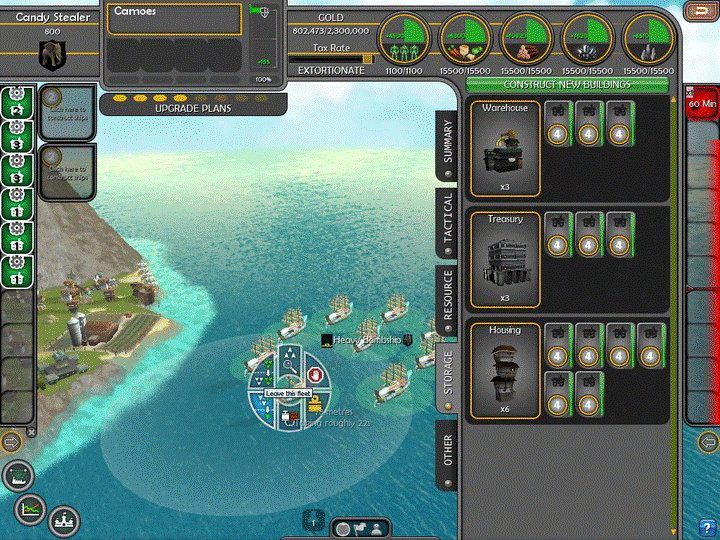
The opening pull in Picaroon is easy to understand: you begin with one island in a drowned world, then start colonising it so you can build ships and push into the surrounding sea. That familiar build-and-expand rhythm has real tension here because new islands are both opportunities and potential flashpoints. You are not simply filling in a map; every fleet and colony can help you protect your position, threaten somebody else’s, or make you a worthwhile ally.
There is more to do than straightforward conquest. You can build up, attack, defend, explore, negotiate alliances, or look for an advantage through roaming NPCs such as rogue pirates, travelling salesmen, and whirlpool wormholes. That variety is important in a multiplayer strategy game, because it gives you something useful to consider when a direct fight would be foolish. The strongest moments should come from reading the sea and the people on it: deciding whether an island is worth taking, whether a fleet is enough deterrent, and whether an alliance is buying security or merely delaying a betrayal.
The mode structure is a genuine strength. Skirmish games last roughly one to two hours, so you can get the concentrated clan-war version without committing your life to it. Classic games stretch across two to three weeks and support hundreds of competitors, while Persistent Picaroon is for anyone who enjoys the long, anxious work of maintaining an empire. Reputation ranks, from Powder Monkey to Picaroon Admiral, give that larger commitment a ladder to climb. If you only want a decisive winner and a clean finish, the shorter modes are the safer bet; the Persistent game asks you to keep defending what you have earned.
Special cards are where the game gets deliberately unruly. A volcano eruption, minefield, or temporary construction boost can reverse plans that looked secure a minute earlier, and finding or winning Specials gives exploration and quests extra purpose. You can also buy random decks with in-game gold raised by taxing settlers. The snag is that specific decks can be bought through microtransactions. In a competitive strategy game, that is hard to ignore: clever planning and diplomacy remain central, but paid access to targeted options can make a bad loss feel less like a tactical lesson.
Graphics
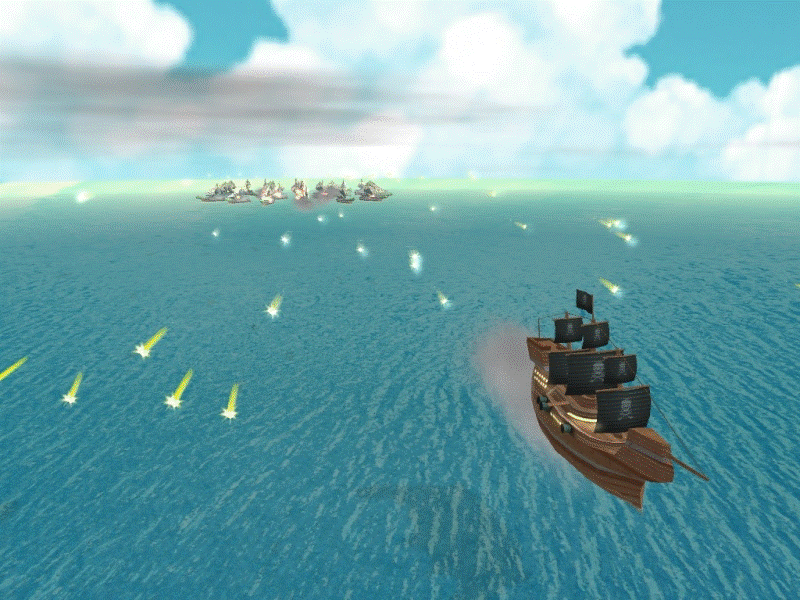
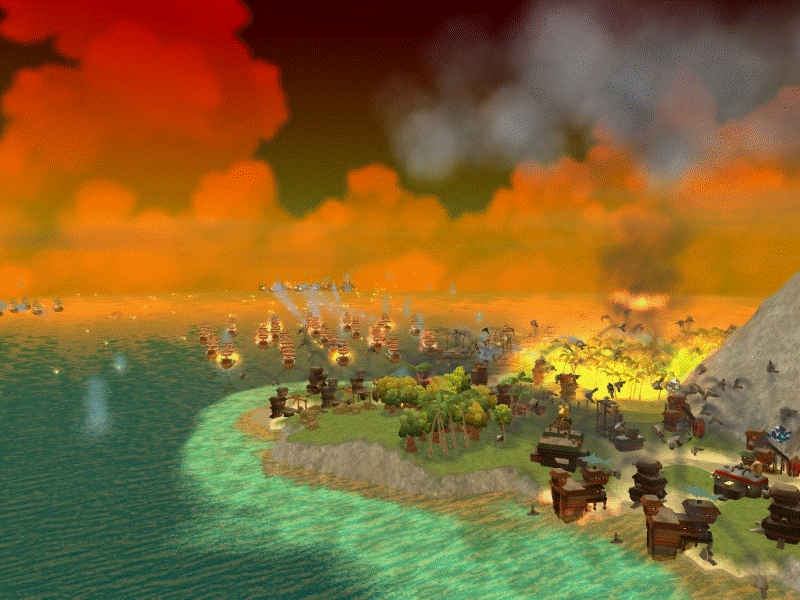
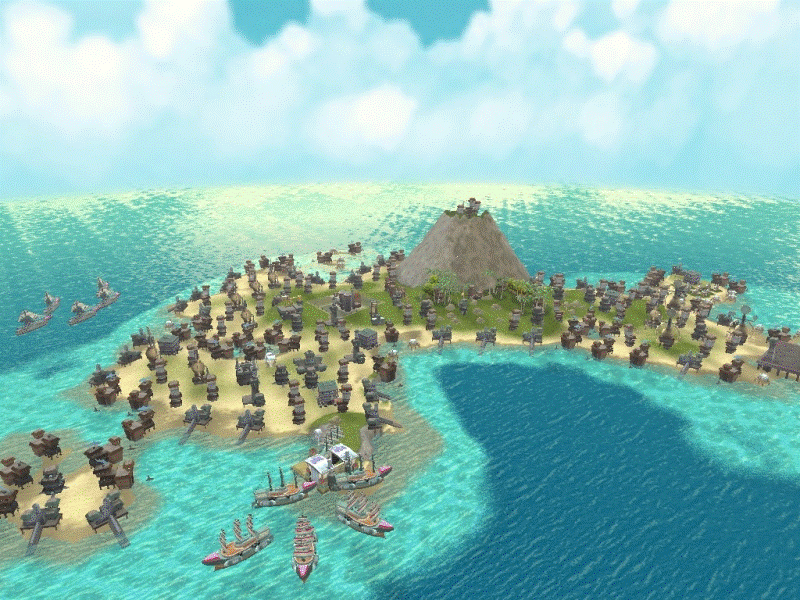
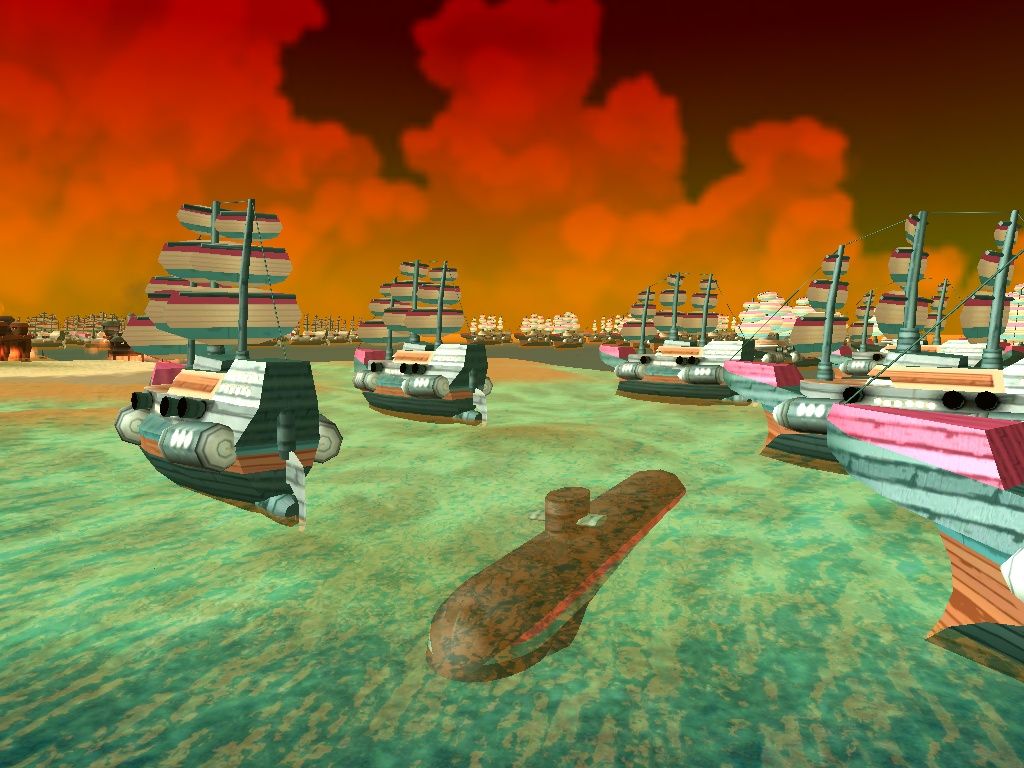
Picaroon’s imagery is built around a grim ocean world of islands, settlements, and fleets. Its endgame goes much bigger, with darkened skies, roulette wheels, mammoth ships appearing at sea, and submarines firing ancient nuclear-tipped missiles. That is a pleasingly excessive image for a strategy game about gradually growing a maritime empire.
Story
This is a setting-first strategy game rather than a character-led tale. Rising water has left players fighting over the scraps of land above sea level, and that premise gives ordinary expansion a harsher edge. An island is not just another resource point; it is habitable ground in a world where ground is scarce.
The narrative texture comes from the factions and hazards you encounter rather than a fixed campaign arc. Rogue pirates, strange wormholes, salesmen, alliances, and rival colonies make the ocean feel contested and unpredictable. You create the memorable stories yourself: the risky expedition that finds a useful island, the alliance that holds, or the attack that removes a colony you had counted on.
The endgame’s giant ships and missile-launching submarines suggest Picaroon is willing to trade sober survival fiction for loud, apocalyptic spectacle when a match reaches its climax. That shift fits a competitive game: the world exists to give your rivalries stakes, not to lead you through a carefully authored plot.
Overall Experience
Picaroon has a strong foundation for anyone who likes multiplayer strategy with room for both empire-building and human politics. The first stretch offers the comforting logic of settlement growth, but the larger game starts to click when you realise fleet strength alone is not enough. You need territory, timing, information, and people willing to stand with you—or people too worried to challenge you.
It also asks you to choose your commitment honestly. A one-to-two-hour Skirmish is a sensible place to test whether its real-time naval conflict suits you. Classic matches reward sustained attention, and the Persistent world is aimed squarely at the kind of strategist who finds maintenance, diplomacy, and constant risk more compelling than a final scoreboard. That breadth is impressive, but it means the game can become demanding long before it becomes relaxing.
The Specials system is the biggest caveat. Random disruptive effects can make matches lively, and earning cards through exploration, quest completion, and in-game gold gives you several routes into that system. Yet paid, specific decks complicate the competitive promise. Give Picaroon a chance if you enjoy social RTS games where alliances, territory, and sudden reversals matter as much as a clean battle plan; skip it if the thought of microtransactions influencing a competitive card pool sours the whole voyage.



Reviews
There are no reviews yet.