 Retro Replay Retro Gaming History, Reviews & Emulation


Retro Replay Review
Gameplay
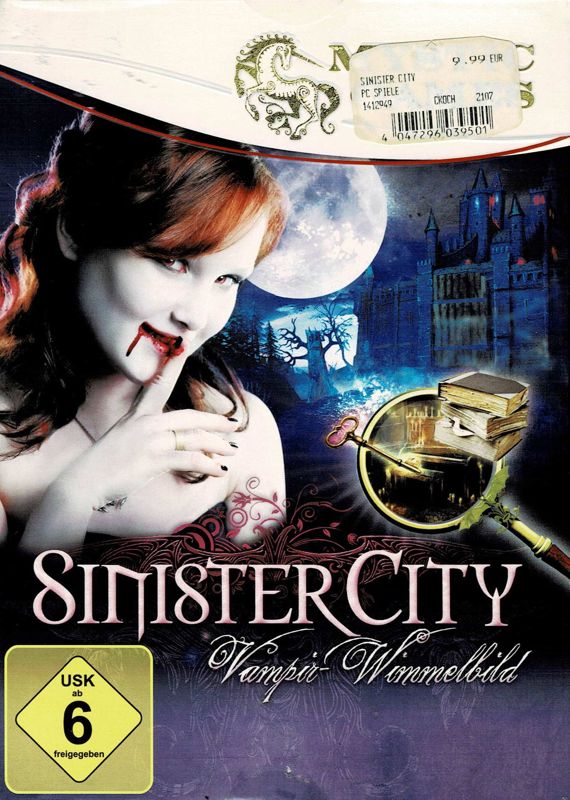
The first hour of Sinister City asks you to settle into a dependable rhythm: talk to someone, receive a list of objects, search through a handful of connected locations, then turn those finds into an inventory solution. If you enjoy clearing a cluttered scene with a concrete purpose in mind, it is easy to sink into. The game does not make you guess what kind of experience it is; it wants you looking closely, collecting patiently, and moving steadily toward Nina.
The point-and-click side gives the searches a little more structure than a string of isolated hidden-object screens. Items do not simply mark a checklist complete; once found, they move into the inventory and can be dragged onto interactive parts of the environment. That loop makes progress feel more tangible, especially when an object you found several rooms ago finally has an obvious use. Expect some backtracking between connected rooms, however. This is a game about thoroughness rather than momentum.
Its mini-games are the best change of pace. Connecting color-matched wires, rebuilding mechanisms, restoring a broken mirror, arranging gears, and fitting vampire-hunting tools into silhouetted spaces all ask for direct manipulation instead of more scavenging. None sounds especially radical, but that is not really the point: they break up the hunt before your attention starts to drift. Better still, you can skip them after a few minutes, a welcome escape hatch for anyone who wants the story moving again.
The hint system is useful without entirely removing the search. The large question-mark button points out a needed item, but its recharge time discourages leaning on it for every object. That makes Sinister City a comfortable fit for casual sessions. It can still frustrate you if you dislike scanning scenes for small, scattered things, since finding objects remains the bulk of the game, but it is not interested in punishing experimentation.
Graphics
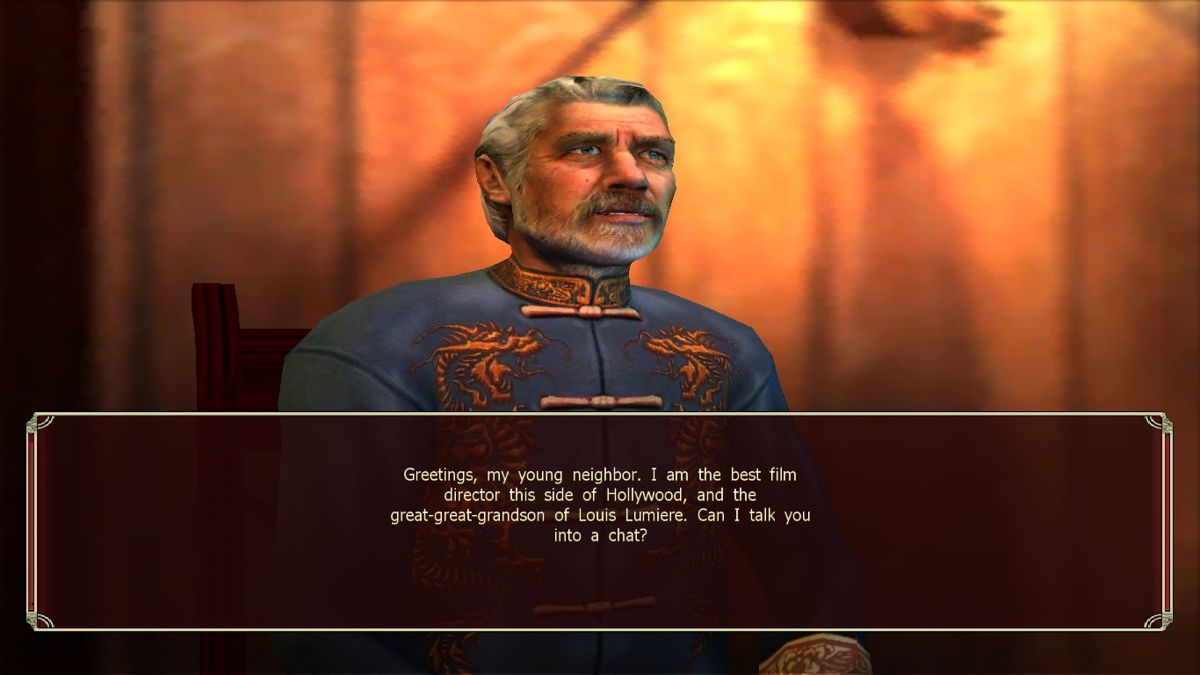
You view Sinister City through first-person location screens, moving from room to room and opening separate search areas within them. The clearest visual touch described here is the Count’s fragmented portrait, which you reassemble by sliding horizontal bands into place; it is a fittingly old-fashioned puzzle image for a vampire story.

Story
John’s search for Nina gives the game a simple, immediate reason to keep opening doors. The story quickly leaves ordinary missing-fiancée territory behind when a hypnosis machine sends his unconscious mind to the astral plane. That is an enjoyably melodramatic turn, and it gives Sinister City permission to be bizarre rather than merely spooky.
Count Orlak is the central threat, holding Nina captive while John looks for a route back to reality. It is a clean rescue plot, not one that asks you to untangle a crowded cast or dense mythology. That clarity works in the game’s favor: every new location and puzzle belongs to a single forward drive, even when the play itself is deliberately methodical.
The horror angle is more useful as flavor than as a source of fear. Vampire tools, a sinister Count, hypnosis, and an astral prison give the puzzles a coherent gothic frame. If you want a deeply layered supernatural narrative, this is likely too slight, but the premise has enough campfire-story energy to carry a few evenings of searching.
Overall Experience
Sinister City is a solid choice when you want a traditional hidden-object adventure with a goofy-gothic premise and a low barrier to progress. The hunt, inventory use, and mini-game rotation is familiar, but it is arranged sensibly. You are rarely far from a specific goal, and the optional skips keep an awkward puzzle from becoming a hard stop.
Its limitations are equally clear. Much of the journey depends on carefully spotting requested items in static search spaces, so the experience can feel repetitive if you need frequent mechanical surprises. The adventure elements add context and light puzzle-solving, but they do not transform the game into a demanding point-and-click mystery.
Still, there is something pleasant about its commitment to the format. You get a missing bride, a vampire villain, an astral detour, and enough clockwork-and-mirror puzzle work to keep the object lists from taking over completely. Give it a chance if a compact, uncomplicated supernatural scavenger hunt sounds relaxing; skip it if hidden-object searches already test your patience.

Reviews
There are no reviews yet.