 Retro Replay Retro Gaming History, Reviews & Emulation


Retro Replay Review
Gameplay
Spectromancer wastes little time before putting you in a proper mage duel. You take turns placing cards on the table, your summoned creatures attack opposing creatures, and spells offer a more immediate way to hurt the enemy. That clean loop is easy to grasp in the first hour, but it has enough tension to make seemingly simple turns matter. Do you add another creature, remove a threat before it attacks, or spend on direct damage and hope the board does not punish you for it?
What starts to click is the importance of damage and resistance types. Fire, water, air, and earth are not just decorative labels: creatures resist different kinds of damage, so a card that looks powerful on its own can be a poor answer to the board in front of you. The extra class-dependent damage type adds another wrinkle, and that makes reading your opponent’s class part of the match rather than mere flavor.
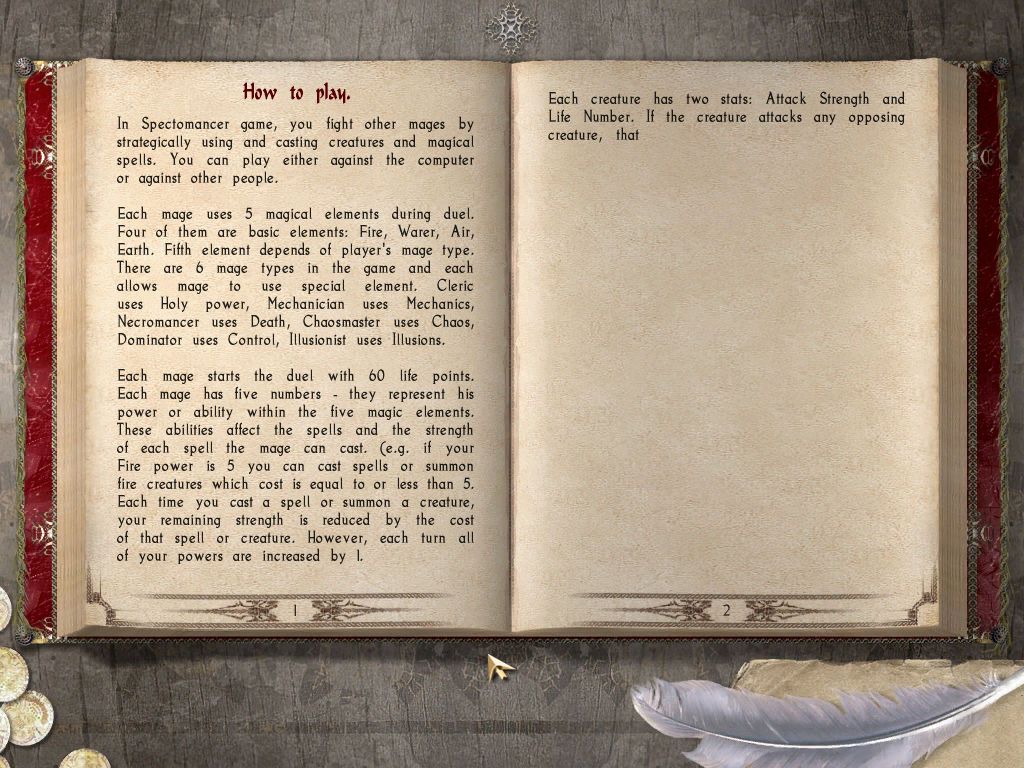
The six mage classes—Cleric, Mechanician, Necromancer, Chaosmaster, Dominator, and Illusionist—are the reason to stick around beyond a few duels. They give you distinct pools of spells and summons to work with, encouraging you to learn how each style approaches the same battlefield. Winning earns new cards, which gives the solo game a welcome sense of forward motion. Frustration can set in when a growing collection makes you feel like you need more options before you can answer every situation, but the reward structure also gives you a reason to improve rather than simply restarting another isolated match.
You can test those decisions against computer opponents or take the duel online. The AI is useful for learning how creature combat and resistances interact; online play is where the turn-based format has the most natural stakes, because every card placed can invite a response you did not anticipate.
Graphics
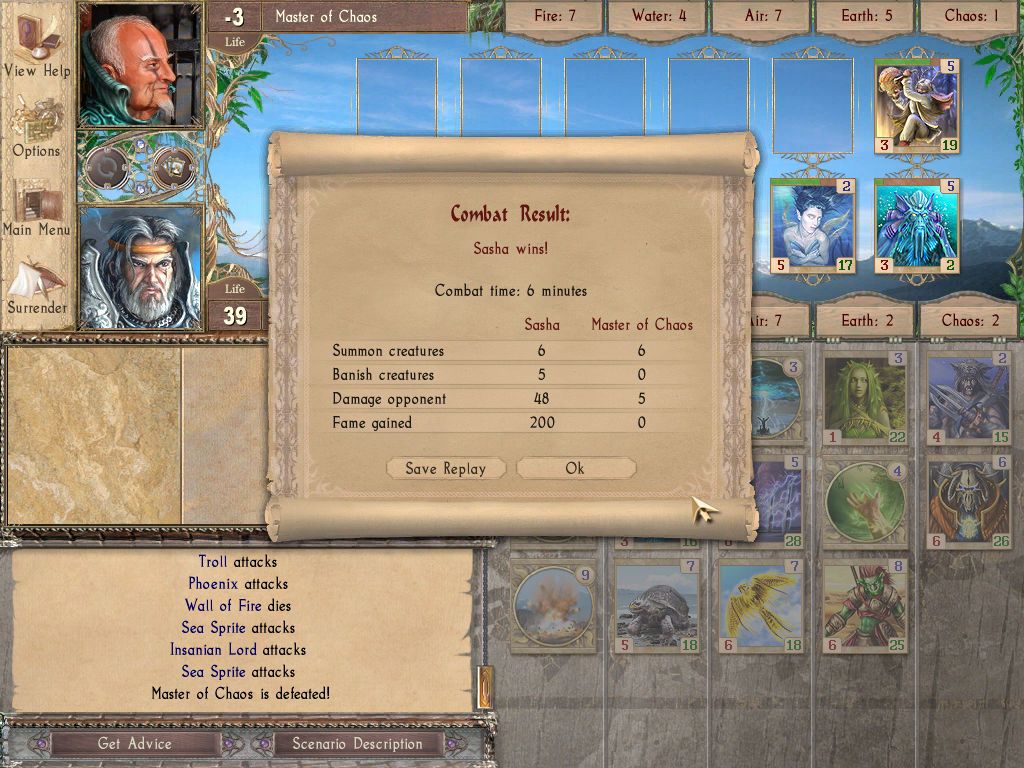
The action is centered on a virtual tabletop where cards become summoned creatures and spells. That board-focused view suits the game well: you can keep an eye on your creatures, the opposing line, and the ongoing clash without losing the thread of the duel.

Story
There is no sprawling narrative pulling you from battle to battle. Spectromancer frames its conflict through opposing mages and six fantasy classes, then lets the rivalries emerge from the cards and the tactical choices you make in each duel.
That stripped-back approach fits the game. A Necromancer fighting a Cleric or a Chaosmaster creates a clear fantasy hook, but the real drama comes from whether your next summon survives, whether a resistance turns an expected kill into a mistake, and whether a spell can swing the board before the enemy attacks.
If you need character arcs or a campaign story to motivate a strategy game, this will feel thin. If the idea of building your own small tales of comeback wins and disastrous misreads is enough, the match-to-match structure has its own kind of narrative momentum.
Overall Experience
Spectromancer is a compact, thoughtful card battler that understands how much drama can come from a shared board and a limited turn. Its strongest moments arrive when you stop judging cards by raw strength and begin treating them as answers to specific damage types, resistances, and threats. That transition turns each duel from a straightforward exchange into a satisfying tactical puzzle.
The collection element is a meaningful hook rather than a detached checklist: victories unlock cards, and new cards expand what you can try next time. It will suit you best if you enjoy gradually learning a card pool and accepting that some losses are lessons about timing and matchups. It is less likely to win over anyone who wants a story-led fantasy adventure or instant access to every tactical tool.
For strategy fans who like collectible-card progression but want their choices resolved through creature lines, spells, and elemental counters, Spectromancer remains an easy recommendation. It does not need a huge rules burden to create pressure. Give it a few duels, learn why your favorite attack type fails against the wrong target, and its simple table battles start revealing real bite.



Reviews
There are no reviews yet.