 Retro Replay Retro Gaming History, Reviews & Emulation
Retro Replay Review
Gameplay
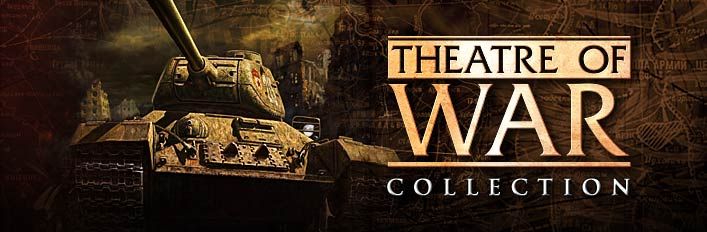
The first decision is also the most useful one: do not expect Theatre of War: Collection to introduce itself as one seamless game. You are choosing among four releases, and the best way in is to start with the setting or title that genuinely grabs you. Africa 1943 and Kursk 1943 give the package two immediately distinct historical points of entry, while Centauro is tied to Africa 1943 rather than standing as a clean starting point of its own.
That structure is both the collection’s strength and its friction. You get more than one route into the series, and there is real value in having the original Theatre of War alongside the later Theatre of War 2 material. On the other hand, there is no single escalating arc built by this collection itself. If you bounce between entries too quickly, the package can feel like a shelf of games you own rather than an experience you are steadily progressing through.
My advice is simple: choose one title, give it enough time to establish its own rhythm, and treat the rest as follow-up rather than homework. The payoff here is choice and volume, not a new unified mode or a carefully reordered edition. Gamers who like settling into a series will get more from it than anyone looking for one tightly curated campaign.
Graphics
This collection spans the original Theatre of War and later Theatre of War 2 releases, so it is not one single game with one set of images to judge. What you see depends on the entry you launch, and that makes the package feel more like a period library than a newly rebuilt release.
Story
There is no one story to review across Theatre of War: Collection, because the package combines separate games rather than presenting a single new narrative. Its broad throughline is World War II, with the named Africa 1943 and Kursk 1943 entries pointing you toward different historical settings.
That can be a benefit if you prefer military games that let their subject matter guide your choice. Africa, Kursk, and the original Theatre of War give you different doors into the collection without requiring that every buyer care about the same scenario. It is a better fit for someone drawn to the era than someone hoping for one self-contained tale with a definitive ending.
Centauro deserves to be approached as part of Africa 1943, not as an equal fourth pillar. The collection includes it, which improves the completeness of that branch, but its presence does not turn the package into a single connected story. Think of it as extra material for the Africa 1943 side of the set.
Overall Experience
Theatre of War: Collection earns its place through completeness. It puts the original game, Africa 1943, Centauro, and Kursk 1943 under one roof, which is far more inviting than tracking down the series piece by piece. If you already know you want to spend time with this corner of World War II gaming, that breadth is meaningful.
Its weakness is inseparable from that same breadth: the collection has to be curated by you. There is no reason to assume every included title will matter equally to every gamer, and the package does not become more focused simply because it is sold together. A little selectiveness goes a long way; begin with the entry whose setting interests you most, then expand only if you want more.
I would recommend it to a series-minded World War II fan who values having a substantial set in one purchase. It is harder to recommend as a casual impulse buy, because the real reward comes from committing to at least one of its component games rather than admiring the size of the bundle. Buy it for the chance to explore the series, not for the illusion that four separate releases automatically make one essential game.


Reviews
There are no reviews yet.