 Retro Replay Retro Gaming History, Reviews & Emulation

Retro Replay Review
Gameplay
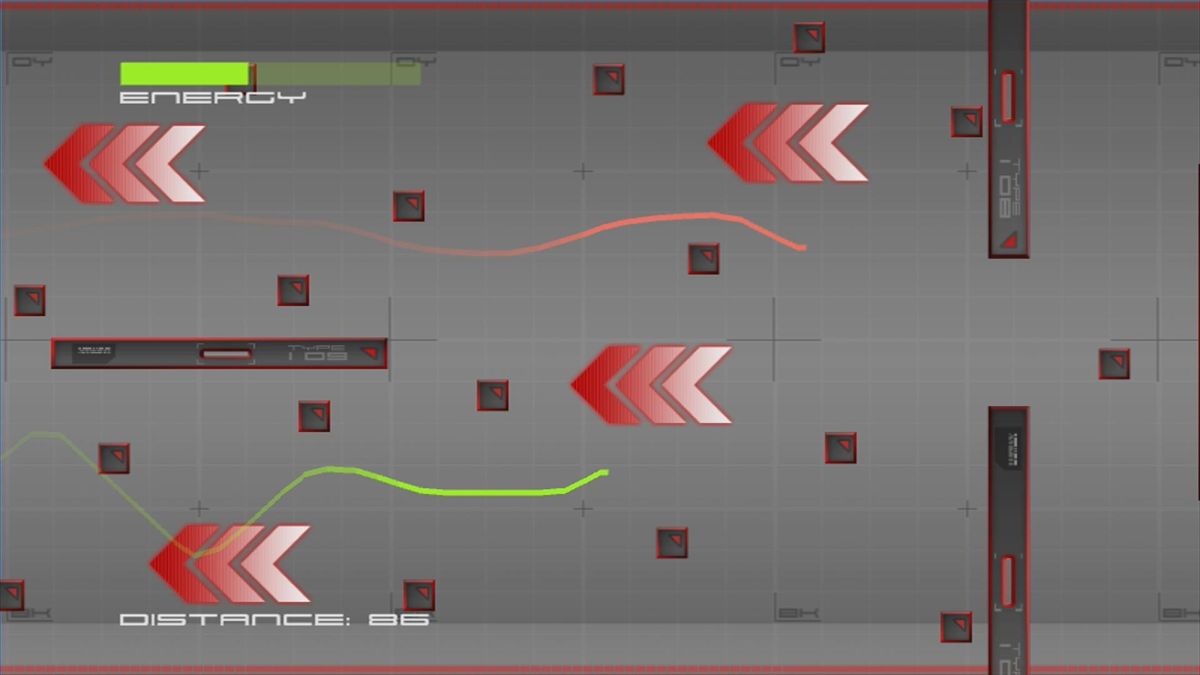
StreamLine starts immediately with the kind of rule set you understand in seconds but can still mishandle under pressure. Your line moves forward on its own, so there is no leisurely settling into a course. You are racing computer-controlled lines while trying to thread past obstacles that drain the same energy reserve needed for boosting. That shared resource gives even a basic sprint some bite: a boost can turn a close race, but reckless use can end it outright.
What clicks is the push-and-pull between speed and survival. Boosting is not simply a reward for aggression; it is a wager that the next stretch will be clean enough, or that you can reach a recharge area before your reserve disappears. Recharge zones, boost pads, and slow pads give the courses a little more texture than a straight race, forcing you to react to the road rather than merely hold a lead.
The frustration comes from how quickly an error can compound. Clip obstacles, spend too much energy trying to recover, then fail to refill in time, and the run can unravel fast. That harshness is also where the game finds its tension. You will likely get more out of it if you enjoy shaving mistakes off repeated attempts than if you expect a forgiving arcade racer.
Winning advances you to the next course, keeping the focus squarely on beating the immediate challenge. There is something refreshingly direct about that structure, though it also means the central energy-management loop has to carry nearly all of the experience. Fortunately, it is a solid loop: stay composed, preserve enough reserve to capitalize on an opening, and do not let the race dictate every decision for you.
Graphics
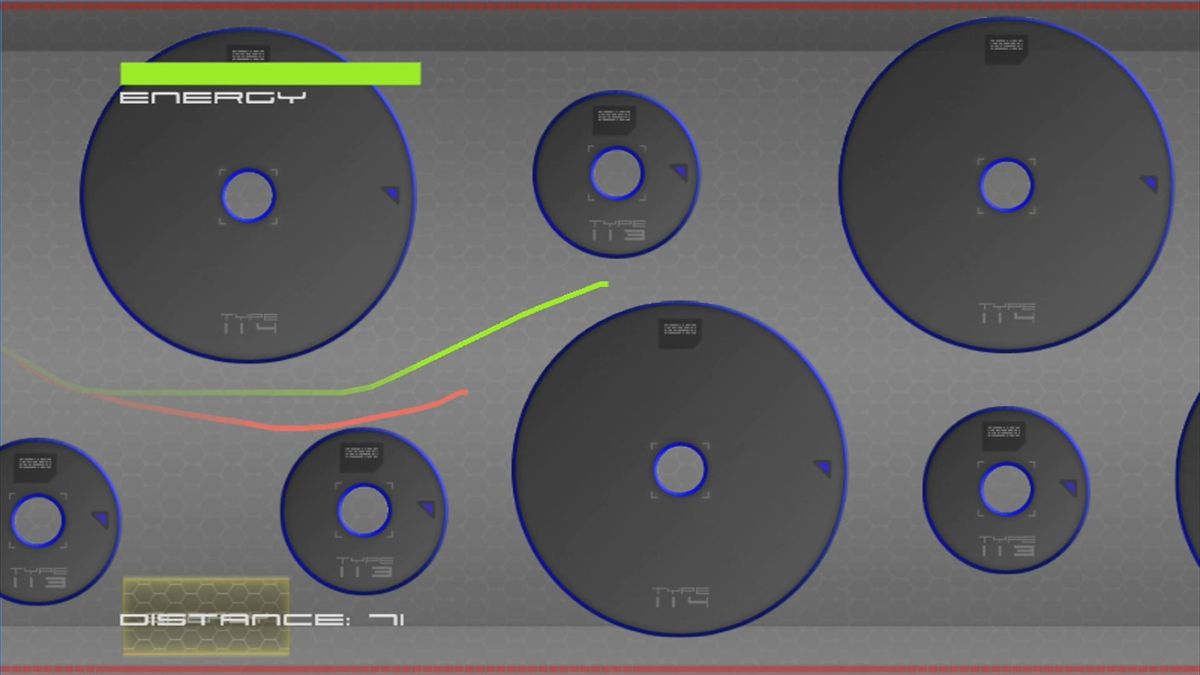
The action is viewed from the side, with the player represented by a moving line racing against other lines across obstacle-filled courses. It is a deliberately minimal, futuristic setup, and that simplicity fits the need to spot hazards, recharge areas, and course pads while moving at speed.
Story
There is no need for a grand dramatic frame here; each race creates its own small contest. The immediate stakes are easy to feel: get ahead of the computer-controlled racers, protect your energy, and make it to the finish before your reserve or your position collapses.
The most satisfying moments come from the stories that emerge inside a single course. A badly timed boost can turn a comfortable lead into a scramble, while a well-judged recharge can set up a late recovery. That is a familiar arcade-racing rhythm, but the energy bar makes the reversals feel earned rather than random.
Progression from one course to the next supplies a clean sense of forward motion. You are not being asked to absorb a pile of lore between races; the changing challenge is the reason to continue. For a game this lean, that directness is the right call.
Overall Experience
StreamLine is a modest, focused racing game that understands the value of one good complication. Continuous movement keeps you alert, and tying boosts to the same energy that keeps you alive ensures there is always a reason to hesitate before going all-out. The first hour should tell you exactly whether its rhythm has you: if that constant calculation feels exciting, the game has real replay pull.
It does not try to overwhelm you with systems. Instead, it asks you to master a compact set of hazards and opportunities, then make smarter decisions when the pace rises. That clarity is its best quality, even when the punishing energy failure state makes a rough run feel abrupt.
Give it a chance if you like minimalist arcade competition and can enjoy a race where restraint matters as much as speed. Skip it if you need deep customization, elaborate progression, or a broad range of racing styles. For everyone else, it is a neat little risk-management racer whose best moments arrive when you resist one boost too many—then find the perfect moment to use it.


Reviews
There are no reviews yet.