 Retro Replay Retro Gaming History, Reviews & Emulation

Retro Replay Review
Gameplay
The first hour of Mayday Squad has a pleasingly tense, make-do quality. Before the mission starts, you pick three agents from nine candidates, balancing the leader’s shooting, the demolition specialist’s grenades, and the communications specialist’s ability to open locks and collect items. That is more than a cosmetic selection screen: each role offers a different answer to the embassy’s obstacles, and the individual strengths and weaknesses within each class encourage you to think about the team rather than simply take three copies of the same fighter.
Once inside, the game asks you to navigate a maze, hunt for clues to the ambassador’s daughter, and decide how forceful to be. Opening a lock properly or shooting it open is the sort of small choice that gives the mission its character. You are not just marching toward the next fight; you are trying to preserve limited resources while keeping the clock in mind. The ability to instantly switch among squad members is essential, and it creates satisfying moments when you realize the person currently in control is not the person suited to the next problem.
The action is where patience can fray. When enemies appear and you control the leader, survival depends on moving the cursor over opponents quickly enough to shoot before they hurt the squad. That adds real urgency, but it also means a game built around cautious exploration can suddenly demand sharp reflexes. Limited ammo makes missed shots and reckless lock-breaking costly. Mayday Squad is at its strongest when its tactics, exploration, and action pressures meet in the same decision; it is less welcoming when the fast shooting interrupts your careful plan.

Graphics
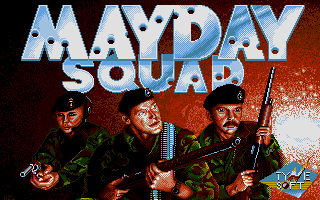
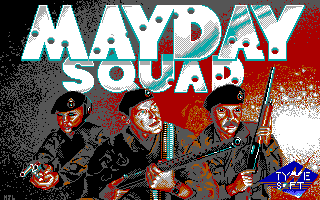
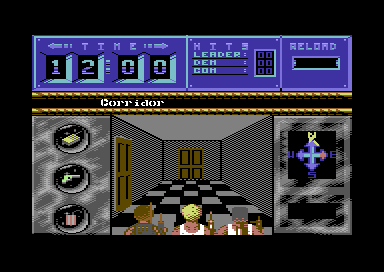
Mayday Squad uses a behind-view, fixed-screen approach, with the embassy explored as a succession of discrete areas rather than one flowing space. That structure suits the game’s room-by-room searching and makes each new screen feel like another small tactical problem.

Story
The setup is direct: the Red Legion has seized the Lutonian Embassy and kidnapped the ambassador’s daughter. Your squad has a deadline to get her out, which gives the search a clean, immediate purpose.
There is no need for a more elaborate hook here. The hostage situation works because the game turns it into practical pressure: clues matter because they point toward the rescue, and every detour carries the weight of the time limit.
Do not come expecting a story-led adventure full of character drama. The narrative is a mission briefing stretched across an embassy floor plan, but it does a solid job of keeping the stakes clear while you puzzle out where to go next.
Overall Experience
Mayday Squad has the rough-edged charm of a game that wants you to earn every bit of progress. Building a specialized trio, swapping control at the right moment, and choosing between quiet problem-solving and destructive shortcuts give it more texture than a simple hostage-rescue shooter.
Its mixed demands are also its dividing line. If you enjoy mapping out routes, conserving ammunition, and accepting that a sudden encounter can test your cursor speed, the mission has a satisfying tension. If you want steady action or a frictionless adventure, the maze navigation and abrupt combat demands may feel more punishing than exciting.
At 6.7, Mayday Squad lands as an interesting tactical-action hybrid rather than an essential classic. Give it a chance if the idea of a compact, time-pressured rescue where team selection and improvisation matter sounds appealing; just bring a willingness to learn from setbacks.


Reviews
There are no reviews yet.