 Retro Replay Retro Gaming History, Reviews & Emulation
Retro Replay Review
Gameplay
The first hour is a lesson in resisting the urge to play StarQuest: Star Warrior like a straightforward shooter. You have heavy armor and serious weapons, but charging across Fornax is a quick way to burn energy, attract attention, and discover that ammunition is not your only limit. The game is at its best when you creep through cover, identify what is actually ahead, and decide whether a quiet powergun shot is worth more than a loud blaster blast.
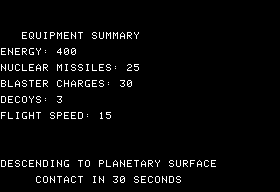
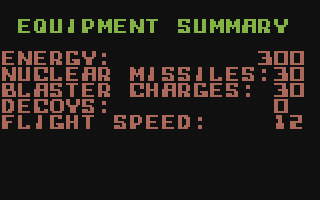
That shared energy pool is the heart of the tactics. Shields, sensors, propulsion, healing, repairs, and offense all compete for the same reserve, so a fight you technically win can still ruin the rest of the mission. A long exchange may leave your Fury alive but unable to scan safely, repair damaged gear, or escape with the mobility you planned around. It is a stern system, but it creates the kind of hard decisions that make reconnaissance feel meaningful rather than ceremonial.
The two scenarios make good use of that pressure. The diversionary operation is the stronger setup: destroy troops, vehicles, and installations, but do not casually hit civilians, and choose how long you are willing to remain before extraction. That gives you a genuine risk-and-reward calculation. Do you leave after a respectable strike, or stay to wreck another target while enemy units have more time to converge? The assassination mission is more focused, asking you to infiltrate, locate the military governor, and survive the hunt.
Its semi-real-time, command-driven structure is where patience can run thin. Actions consume time while enemies continue to move, search, and fire, so pausing to consider your options does not remove the danger. Once the rhythm clicks, that friction becomes tension: indecision has a cost. Before it clicks, you may feel as though the interface is making an already difficult battlefield harsher. The directional indicator helps prevent the missions from becoming blind wandering, and the five difficulty levels give you room to meet the game on more forgiving terms.
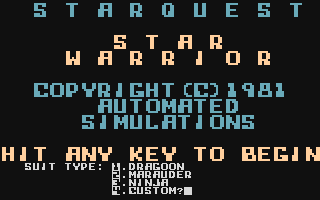
Armor choice adds welcome personality to each attempt. Configurations can lean toward protection, scouting, jumping, or flight, and disk-based editions let you build a suit within an equipment budget. That flexibility matters because terrain changes movement, visibility, and firing lines. Forests can hide you from sensors, but can also conceal an enemy until it opens fire. StarQuest rewards someone willing to learn those tradeoffs; it is much less inviting if you want immediate, frictionless tactics.
Graphics
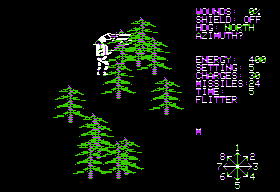
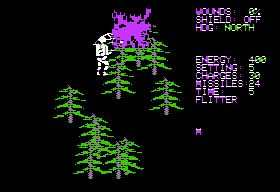
Combat is viewed from above across a large outdoor battlefield, with about a square kilometer visible at once. You move through terrain, civilian structures, military fortifications, and hostile positions rather than a succession of abstract battle boards, which suits the game’s scouting-heavy missions. Infantry, gun emplacements, tanks, and skimmers give the map a useful range of threats to spot and prioritize.
The camera’s broad view is practical for plotting routes and checking terrain around your Fury, though it also means careful target identification matters. That is especially important in the diversion mission, where firing on civilians damages your result.
Story
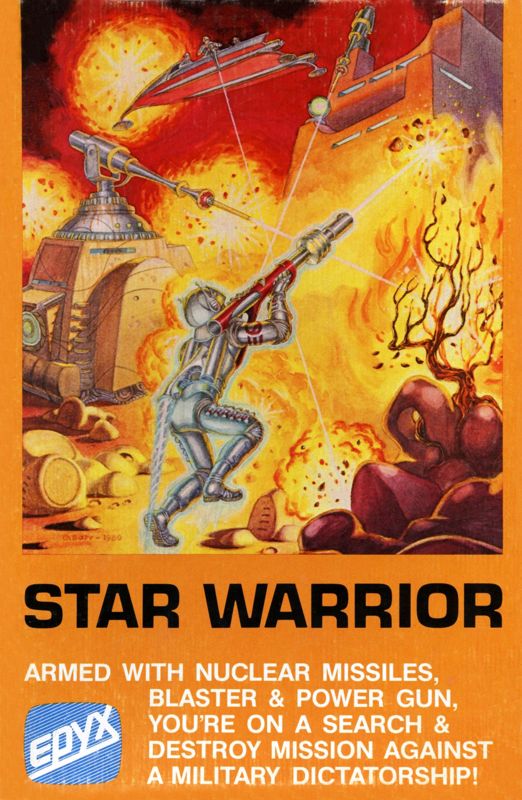
There is not much room here for elaborate character drama, but the setup is effective because it immediately gives your actions moral and tactical boundaries. Fornax has been annexed by the Interstellar Union of Civilized Peoples, and the resistance hires the independent Furies to help spark a rebellion. You are a professional warrior following a code of honor, not a lone hero free to solve the occupation with indiscriminate force.
The diversion mission makes that premise count. Civilian casualties are not just flavor text; avoiding them directly shapes how well you perform. That restriction gives the sabotage a welcome edge of restraint, forcing you to distinguish legitimate military targets from the surrounding occupied territory instead of treating every mark on the map as loot.
The second operation narrows the conflict to the Union’s military governor. Hunting that single figure after the broader diversion gives the pair of scenarios a clean campaign-like progression: first destabilize the occupation, then remove its command. It is a compact story, but the objectives are specific enough to make the tactical work feel tied to a cause rather than a detached series of skirmishes.
Overall Experience
StarQuest: Star Warrior is a compact, demanding tactical RPG whose best moments come from plans that nearly fall apart. You scout a route, conserve energy, pick a target, then realize a noisy weapon or a delayed repair has invited more trouble than expected. That constant pressure can be punishing, but it also makes a successful extraction feel earned.
The limited scenario count is hard to ignore, and the interface asks for more patience than many modern tactical games. Yet the missions have enough variation in purpose to avoid feeling like duplicates, while the terrain, sound-aware weapon choices, armor systems, and extraction timing produce a surprising number of ways for a run to go wrong. This is a game for you if deliberate old-school systems sound exciting rather than exhausting.
At its best, it feels like a tactical problem box built around one very capable but never invincible fighter. A 6 out of 10 fits: StarQuest has real strategic texture and an unusually coherent set of pressures, but its narrow scope and demanding command pace keep it from being an easy recommendation. Give it a chance if you enjoy learning a tough system until caution turns into confidence.


Reviews
There are no reviews yet.