 Retro Replay Retro Gaming History, Reviews & Emulation
Retro Replay Review
Gameplay
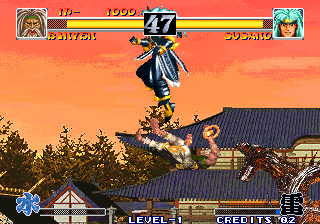
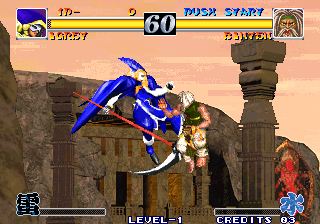
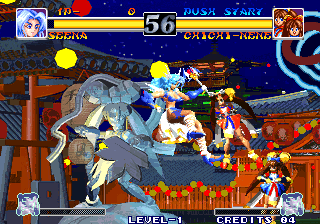
Ragnagard feels most interesting when both fighters leave the ground. This is a one-on-one fighter built around divine combatants who can hang in the air longer than you expect, so a jump is not merely an evasive hop. It becomes a route into an attack, a way to alter your approach, or an invitation for the other fighter to meet you above the floor. That aerial emphasis gives even its basic duels a stranger, more mobile rhythm than a standard grounded weapon fighter.
You have the full four-button Neo Geo layout at work, with punch and kick alongside movement tools such as dashes and quick dashes. Each god also carries a personal medieval-style weapon, from swords to bows and halberds, which helps the roster feel built for direct confrontation rather than interchangeable fistfights. Throws matter too: beyond regular and super throws, the cushion throw simply reverses both fighters’ positions. It sounds modest, but corner placement is valuable in a game where a dash or airborne attack can quickly restart the pressure.
The meter charge is Ragnagard’s sharpest gamble. You must stand still while building power, unable to move, before you can unleash a Super God move. That creates an honest decision: take the risk when you have room, or keep fighting without handing your opponent an easy opening. When it works, landing the charged attack feels earned rather than automatic.
Matches run as best-of-three rounds with a 60-second clock, and the time and energy bonuses encourage clean finishes. The frustration is that Ragnagard asks you to meet it on its own terms. Its movement and long air time are less immediately familiar than the rhythm of a conventional 2D fighter, so early rounds can feel like you are wrestling with spacing rather than confidently dictating it. Stick with it long enough for dashes, jumps, throws, and charging to become part of one plan, and the system has a satisfying, risky flow.
Graphics
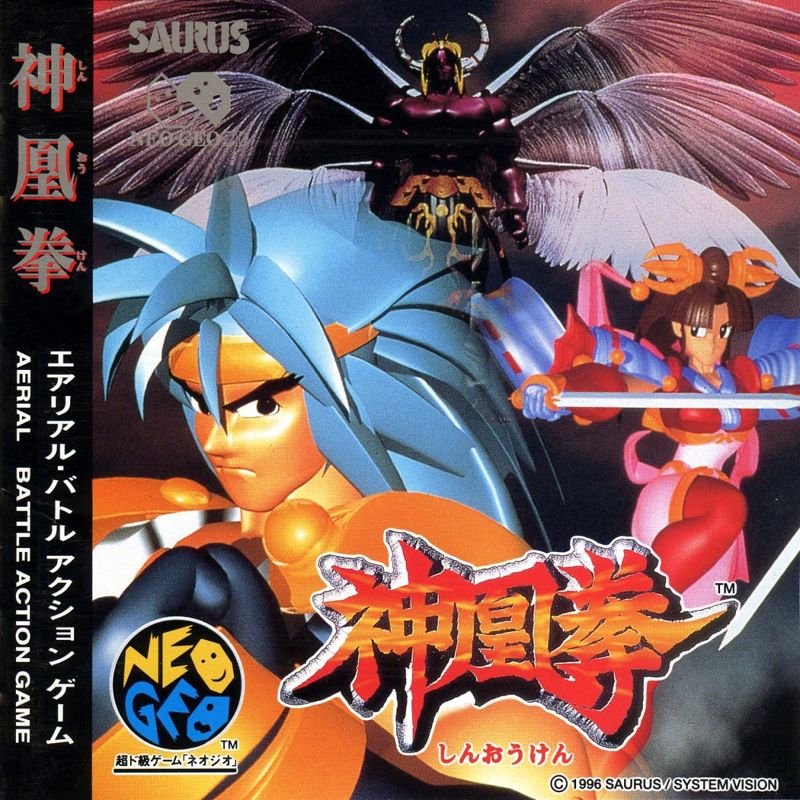
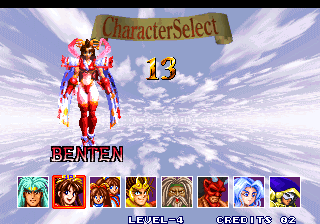
The side-view battles put eight imposing divine fighters front and center, and their medieval weapons give them an appropriately fantastical silhouette. Swords, bows, and halberds make attacks easy to distinguish at a glance, while the unusually extended aerial exchanges give the fights a dramatic, hovering look.
Story
Ragnagard keeps its premise clean and competitive: eight divine beings battle one another for power over heaven. That is enough motivation for an arcade fighter, and it puts the focus where it belongs—on choosing a god and winning the next round.
Do not come looking for a densely explained fantasy saga. The conflict functions mainly as a frame for a roster of gods armed with distinct weapons, rather than a reason to slow down between fights. In practice, the personality comes through the combat concept: a bow user, a heavy halberd wielder, and a sword-bearing rival immediately suggest different kinds of confrontations.
That directness suits the game’s arcade structure. You are not asked to untangle a complicated plot before enjoying the matches; heaven is the prize, the other god is in front of you, and two round wins move things along. For basic game and release history, see this Ragnagard reference.
Overall Experience
Ragnagard is a peculiar fighter with a real hook, not merely a standard duel game dressed in mythological clothing. Its sustained aerial action, positional cushion throws, and vulnerable meter charging give you decisions that remain interesting after the novelty of gods with huge weapons has worn off.
The payoff depends on whether you enjoy learning an offbeat combat rhythm. If you want immediate, familiar 2D fighting fundamentals, its airborne movement and deliberate charging may initially feel awkward. If you like older arcade fighters that make you earn control over spacing, you may find that awkwardness turns into character.
Give it a chance when you want a compact weapon fighter that rewards nerve. Charging in place while an opponent closes, taking to the air for longer than they expect, then converting the opening into a decisive Super God move can make Ragnagard’s matches feel unlike most of its contemporaries. It is not effortless, but its odd ideas are strong enough to make the learning curve worthwhile.



Reviews
There are no reviews yet.