 Retro Replay Retro Gaming History, Reviews & Emulation
Retro Replay Review
Gameplay
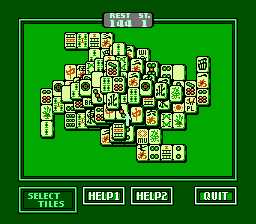
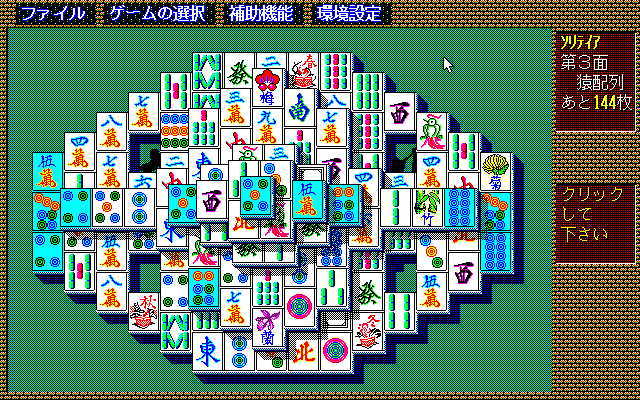
Shanghai II starts with a simple, inviting promise: find two matching tiles and remove them. Then you notice the catches. A tile must be free on at least one side, tiles sit in layers, and the pair that looks obvious may be the move that leaves another crucial tile trapped. That gradual shift from casual matching to careful board management is why solitaire mahjong has endured, and Shanghai II understands the rhythm well.
There are 144 tiles to dismantle across six animal-named patterns: tiger, scorpion, monkey, snake, panther, and dragon. The rules never become difficult to grasp, but each arrangement asks you to inspect edges, exposed stacks, and possible pairs before committing. In a good run, you begin to spot the tiles that are acting as gates for the rest of the board. In a bad one, you clear a tempting pair too quickly and spend several minutes realizing you have made the endgame far tighter than it needed to be.
The unlimited undo is the feature that makes Shanghai II welcoming rather than punishing. You can test a line of thought, reverse it when it goes wrong, and learn why another pairing was safer. Hints are useful when your eyes have gone stale, though leaning on them too often robs the puzzle of its best feeling: suddenly seeing a route through a pile that seemed hopeless a moment earlier.
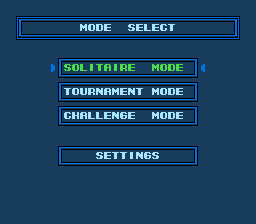
If you want less contemplation, the timed mode turns that same board-reading into a brisker challenge. It is a smart option because the standard game is at its strongest when played patiently, while the clock creates a separate reason to revisit familiar layouts. The fundamentals are narrow, but the constant balance between clearing what is available now and preserving what you need later stays compelling.
Graphics
Shanghai II is built around stacked mahjong tiles viewed from above, so the important visual task is seeing which pieces are exposed and which are buried. The six boards are named for animals, giving you distinct puzzle setups to work through rather than a single repeated arrangement.
Story
There is no narrative campaign pulling you from one puzzle to the next. Shanghai II is a pure board-clearing game, and its sense of progress comes from reducing a dense stack of tiles to nothing.
That absence suits the format. You are not asked to remember characters or plot beats between sessions; you can sit down, study a layout, and let the puzzle itself carry the experience. The animal names attached to the six patterns add a little flavor, but the real drama is always in whether your next match opens the board or closes it off.
For some gamers, that stripped-back approach will feel dry. If you need a story reward behind every level, Shanghai II will not manufacture one. Its reward is the clean finish: the final available pairs disappearing because you planned well enough to make them possible.
Overall Experience
Shanghai II earns its 7.8 because it takes a familiar solitaire mahjong formula and gives it the practical tools that make repeated play enjoyable. Hints keep a stalled session moving, undo lets you experiment without restarting in frustration, and the timer offers a sharper alternative to the slower default pace.
The first hour can feel deceptively gentle, especially if you are simply matching whatever is free. Give it time and the boards start asking better questions. Which identical tiles are safe to remove? Which layer needs to stay open? When should you undo instead of stubbornly searching for an answer that is no longer there? That is where the game finds its staying power.
It will not convert anyone who finds tile matching inherently sedate, and the limited set of six patterns means the package is deliberately compact. But if you enjoy puzzles that reward observation, restraint, and occasional backtracking, Shanghai II is a very easy recommendation. Fans wanting another entry from the same line can also look at Shanghai II: Dragon’s Eye.


Reviews
There are no reviews yet.