 Retro Replay Retro Gaming History, Reviews & Emulation
Retro Replay Review
Gameplay
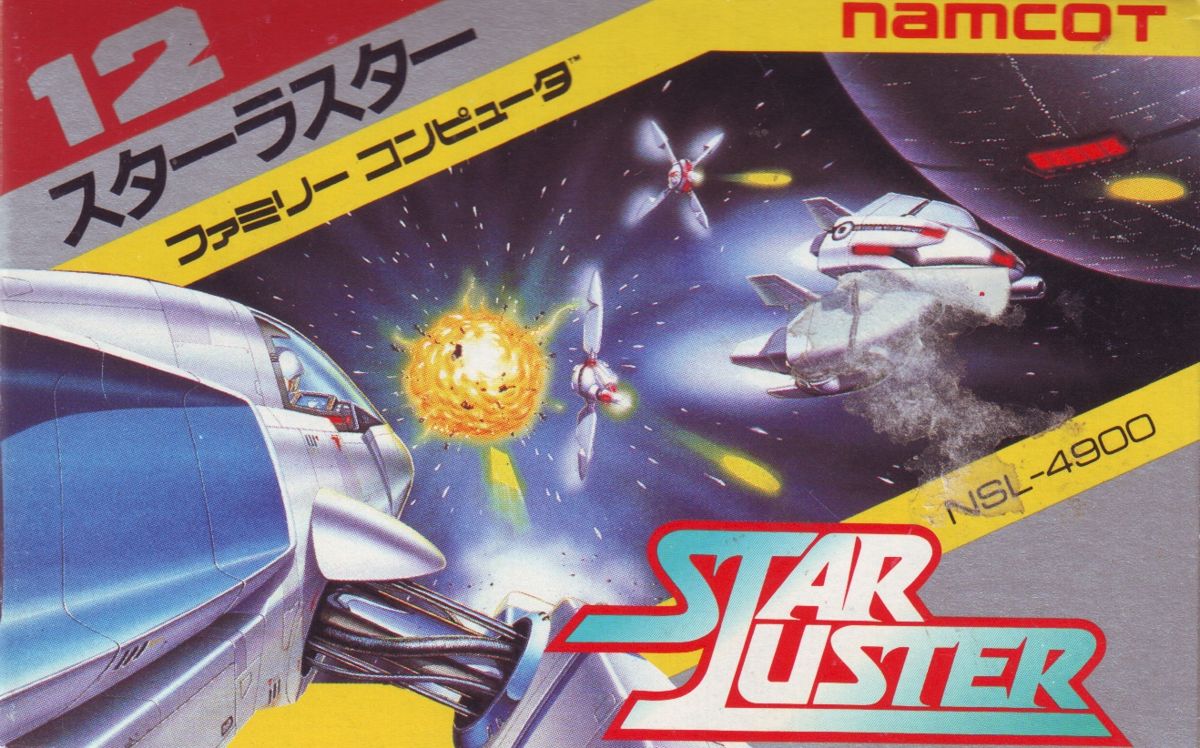
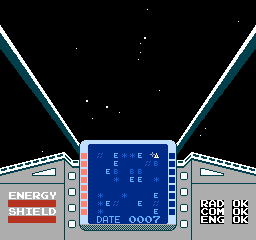
The first few minutes of Star Luster can feel more deliberate than a typical arcade space shooter. You are in Gaia’s cockpit, selecting destinations from an interplanetary map, warping into sectors, and hunting down enemy ships when you arrive. Then the larger problem becomes clear: enemy clusters are not waiting politely for you. Left alone, they can reach and destroy planets and bases. That turns every jump into a judgment call.
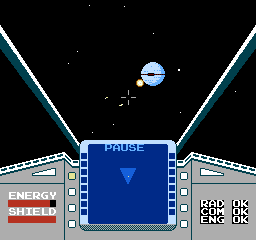
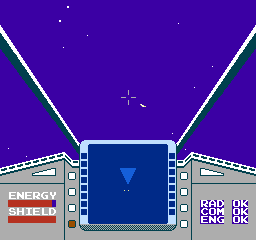
The actual fights are built around laser fire and photon torpedoes, but the smart part is how those attacks sit inside a resource game. Moving and firing consume energy, so reckless shooting can leave you in a bad spot far from a base. Bases are your lifeline for replenishing energy and repairing damaged radar, computer, and engine systems. The rechargeable shield offers some breathing room—hits drain it, while avoiding fire lets it recover—but it does not remove the need to fly carefully.
That mix of cockpit combat, route planning, and triage gives the game a pleasingly anxious pace. A sector clear is satisfying because it buys the universe time, not merely because another wave has disappeared. Frustration can set in when your priorities go wrong: commit too long to one fight or fly inefficiently, and the wider map can punish you. Still, the pressure has purpose. You learn to think a step ahead instead of treating every contact as an immediate shooting gallery.
Training and Command mode make good introductions because they ease you toward the demands of Adventure mode. Adventure is the real test, with more enemy groups to handle and a greater need to protect the map successfully. The optional hunt for keys across seven planets, leading to a hidden final planet, gives thorough runs an extra long-term goal without changing the central challenge: stay mobile, stay supplied, and do not let the enemy dictate your route.
Graphics
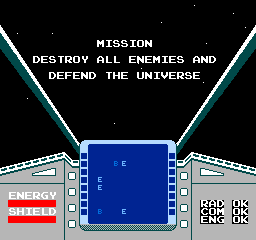
The view stays inside Gaia’s cockpit during combat, while the interplanetary map gives you the broader strategic picture between warps. It is a clean, functional contrast: the map is where you make the hard decisions, and the cockpit is where you have to carry them out under fire.

Story
The story is direct: Dan Heinick pilots Gaia against Battura and its minions, who are trying to control the universe. It is a classic arcade-era setup, but it works because the threat has a practical consequence on the map. Planets and bases are not just backdrop; they are the places you are trying to keep from being wiped out.
Do not come in expecting a character-driven campaign. The narrative mainly gives your patrol a clear purpose, then lets the changing enemy situation supply the drama. When an enemy cluster is closing on something you need, the game creates urgency without stopping to explain itself.
The hidden-final-planet objective adds a little mystery to Adventure mode. Collecting keys from seven planets is a strong incentive to explore the full conflict rather than simply survive the most obvious route. For more background on the game, its Star Luster history and release information is useful context.
Overall Experience
Star Luster is most rewarding when you accept that the shooting is only half the job. Its strongest moments come from checking the map, realizing a base needs saving, and gambling that you have enough energy to get there, fight effectively, and make it back to safety. That is a more thoughtful loop than its straightforward premise suggests.
Its age shows in the severity of its demands. The game asks you to absorb several connected systems—energy, repairs, shields, enemy movement, and destination choices—and it can be unforgiving when you make poor calls. But the easier modes give you room to learn before Adventure raises the pressure. Stick with it past the initial adjustment, and the systems start to click together.
Give it a chance if you enjoy space combat with genuine strategic responsibility attached to it. If you only want constant action, the map management may feel like an interruption. If you enjoy being forced to choose what to save and what to risk, though, Star Luster delivers a focused and tense old-school mission loop that remains compelling well beyond a single dogfight.


Reviews
There are no reviews yet.