 Retro Replay Retro Gaming History, Reviews & Emulation

Retro Replay Review
Gameplay
MiG Alley Ace gets to the point fast: you enter a Korean War air battle with a squadron behind you and try to shoot down more enemy aircraft before your side is wiped out. That sounds simple, but the first hour has a satisfying edge because every loss matters. A failed scenario costs a life, and enough losses send you back to the beginning, so you cannot treat each sortie as a consequence-free arcade round.
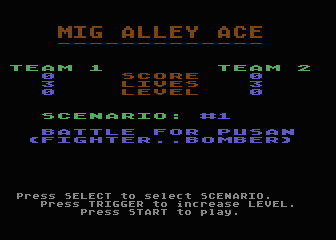
The five scenarios draw from actual wartime encounters, giving the action a welcome sense of purpose without burying you in simulation procedure. The key twist is that kills are not the whole story. Destroying an enemy plane earns victory points, yet the other side may avoid the penalty if its pilot bails out or ditches. Once that starts to click, you stop judging a fight solely by the number of aircraft falling from the sky and start watching the scenario result more carefully.
There is also a useful fallback when your aircraft is destroyed: if your squadron still has surviving planes, you take control of one of them. That keeps an encounter moving and makes the squadron feel like more than spare lives, though it also means a battle can turn sour quickly once your side starts shrinking. Time limits can produce a neutral result, adding another reason not to waste the whole mission chasing a single target.
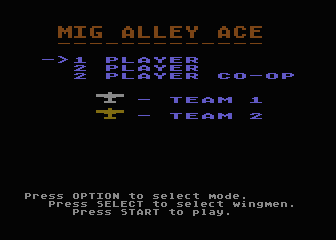
Split-screen is the feature that gives MiG Alley Ace its longest legs. Cooperative flying lets two people share the pressure of keeping a squadron alive, while head-to-head play turns the same rules into a direct contest. If you have a second player nearby, this is plainly the way to spend time with it; the tension of a close result is more immediate when your opponent is right there.
Graphics
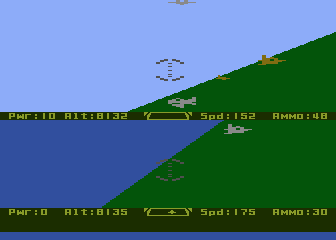
The game uses a first-person flight view, putting your attention on the air battle rather than a detailed strategic map. Its split-screen mode divides that view between two pilots, a practical fit for cooperative and head-to-head sessions.
Story
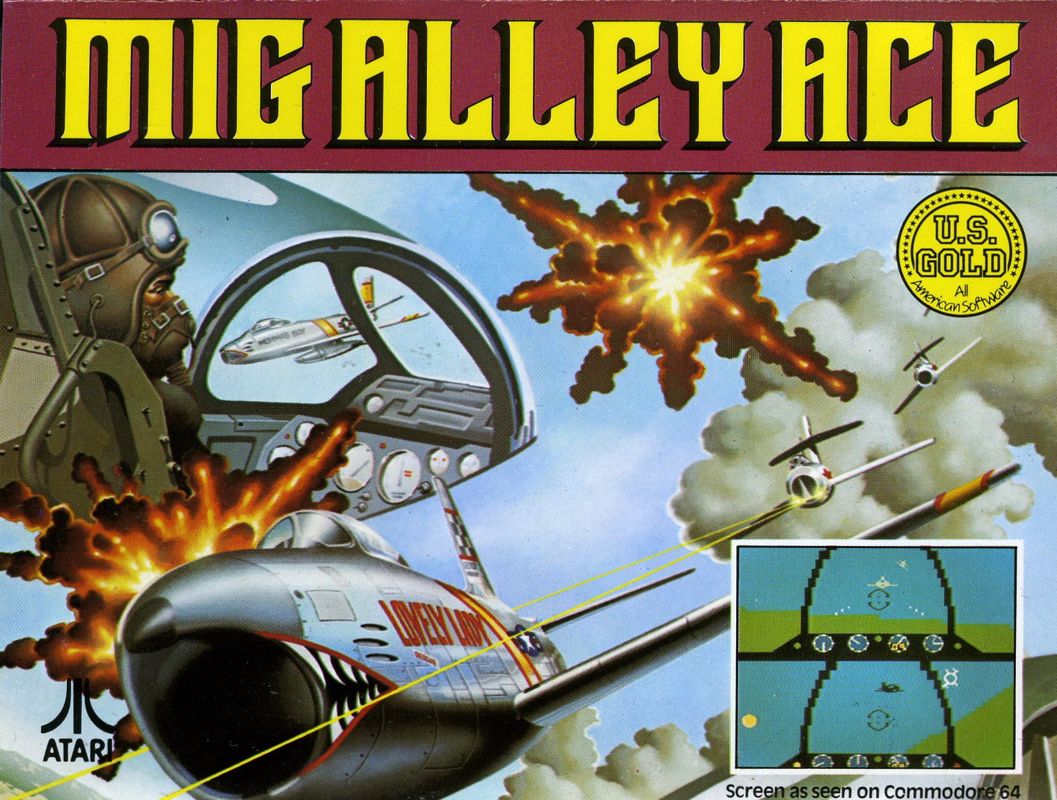
This is not a character-driven war story. Its drama comes from the historical frame: MiG Alley, the area over North Korea near the Chinese border where large-scale jet-versus-jet fighting took place during the Korean War.
That context does more than decorate the box. Flying as the American F-86 Sabre against the Soviet MiG-15 Fagot gives each engagement a recognizable real-world rivalry, and the scenarios based on actual encounters make the score chase feel tied to a particular conflict rather than an invented arena.
Do not come expecting plot turns between missions. The narrative is the changing fortune of your squadron: aircraft lost, points earned, victories claimed, or a neutral result as the clock runs out. For more game-specific background, the MiG Alley Ace history page is a useful companion.
Overall Experience
MiG Alley Ace is a compact early flight-combat game whose strongest idea is not just dogfighting, but making each scenario result count. The scoring rules and limited lives give even brief engagements a little sting, and the squadron handoff prevents one destroyed plane from automatically ending your chance to recover.
Frustration can set in if you want a broad campaign or a richly told account of the Korean War; this is built around five repeatable scenarios, and its ambitions stay focused there. Yet that focus works in its favor when you want quick, purposeful aerial competition instead of a long simulation commitment.
Give it a chance if you enjoy old-school aviation games with real historical grounding and can play with a friend. Solo sorties have enough score pressure to stay engaging, but split-screen cooperation or rivalry is where the design feels most alive. If this setting leaves you wanting a later take on the same theater, Mig Alley is a related game worth exploring next.

Reviews
There are no reviews yet.