 Retro Replay Retro Gaming History, Reviews & Emulation
Retro Replay Review
Gameplay
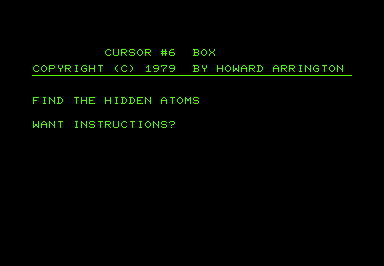
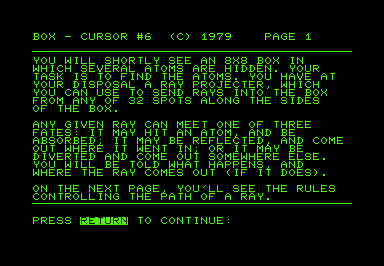
Box begins with the kind of puzzle that can make you feel foolish for five minutes and clever for the next twenty. A grid hides several atoms, and you send rays inward from its edges to learn what is lurking inside. A clean hit is easy enough to understand, but deflections, reflections, detours, and misses force you to think about paths rather than simply poke at squares. The pleasure comes from turning those partial clues into a map you can trust.
The first hour is likely to be spent learning not to overreact to a single result. One ray rarely solves anything by itself. What starts to click is the value of comparing several entries and exits, then using the overlaps to rule out possible atom positions. That makes Box feel closer to a compact logic problem than an action game, and it rewards slowing down rather than firing rays until something obvious happens.
Points add welcome pressure because every ray costs you according to its outcome. You are not merely trying to locate all the atoms; you are trying to do it without wasting expensive tests. That tension gives even a small grid some bite, although it can also make an early bad assumption frustrating. If you enjoy puzzles where careful notes and disciplined deduction matter, that friction is part of the challenge rather than a deal-breaker.
Being able to choose the number of hidden atoms is a smart touch. Fewer atoms should make the board easier to reason through, while a fuller grid raises the odds that your rays will create confusing interactions. Box does not need more than that adjustment: its rules produce enough variation on their own, and the fixed-grid format keeps every round focused.
Graphics
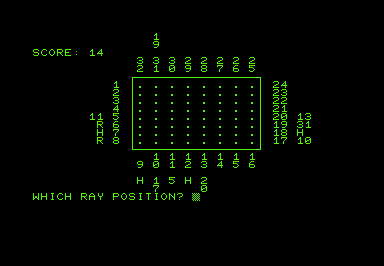
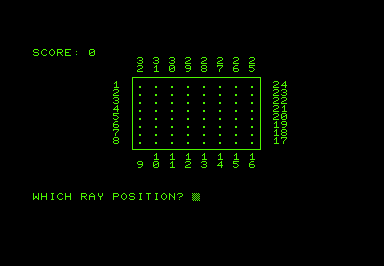
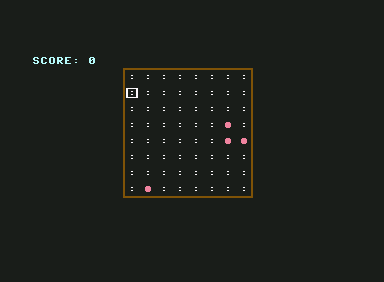
Box is built around a grid viewed from above, with rays entering from the edges and their results reported as you test the board. That plain layout suits the puzzle: you spend your time watching the grid, tracking where a ray went in, and comparing that clue with the next one.
Story
There is no character drama or unfolding adventure here. The hidden atoms are the entire mystery, and each board creates its own small case to solve.
That stripped-down approach works because the tension comes from uncertainty. Until you commit to your answer, every odd ray result can either support your theory or expose a flaw in it.
The ending of a round is therefore a reveal of your own reasoning. You either found the atom locations efficiently, or you learn that the pattern you believed in was wrong. For a puzzle this compact, that is enough of a payoff.
Overall Experience
Box is a focused adaptation of a strong board-game idea: a few rules, a hidden layout, and a lot of room for inference. It does not try to distract you from the central puzzle. Instead, it asks whether you can make better use of evidence than your last attempt.
Give it a chance if you like logic puzzles that reward patience more than reflexes. The best sessions will come when you are willing to test a theory, reconsider it after an unexpected deflection, and resist the urge to treat every shot as a random gamble.
The payoff is modest but real. Solving the grid efficiently creates that satisfying moment when scattered clues suddenly form a complete answer. Box will not convert anyone who needs constant motion or narrative momentum, but it remains a neat, thoughtful challenge for a gamer who enjoys working a mystery all the way through.


Reviews
There are no reviews yet.