 Retro Replay Retro Replay gaming reviews, news, emulation, geek stuff and more!


Retro Replay Review
Gameplay
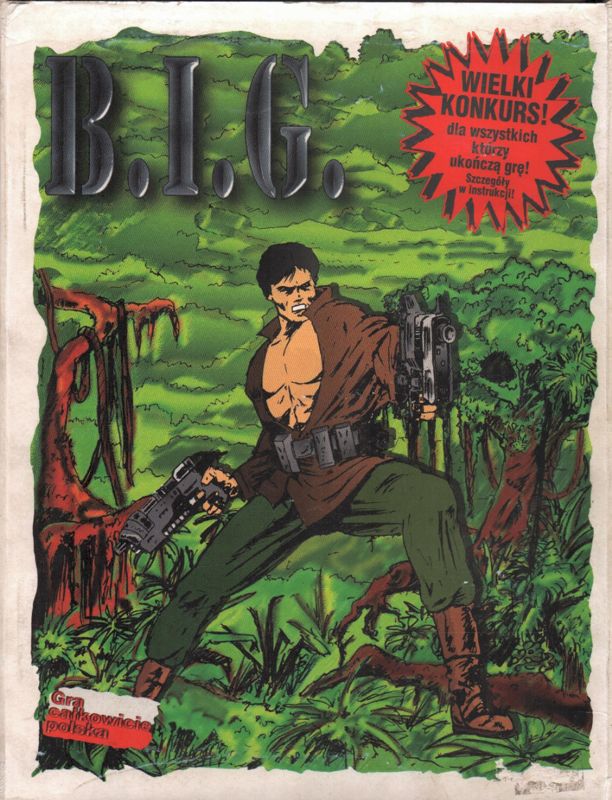
B.I.G. starts with a clear, high-pressure mission and quickly puts the useful stuff in your hands: movement options, weapons, hostile territory, and equipment that can change how you cross it. The comparison to Flashback is helpful because this is not a loose, bouncy platformer. You are meant to move carefully, make use of crouching and crawling when the situation calls for it, climb ladders, and treat each piece of enemy-base machinery as something that may matter.
The weapon list gives the action more variety than a standard run-and-gun. Starting with a sword and reaching as far as a bazooka creates room for different responses to the humans and robots that oppose you. More importantly, the special equipment sounds like the real hook. A magnetic belt enabling long jumps, a masking field, a time accelerator, and an energy shield give you reasons to think about the next obstacle instead of relying on one familiar attack.
That same density can be the source of friction. Visibility is affected by objects, and the base is packed with switches, computer terminals, elevators, magnetic cards, and teleportation platforms. If you enjoy stopping to work out what a device does and how it connects to a route, that is the point. If you want a clean, uninterrupted action game, B.I.G.’s puzzle-element structure may feel like it repeatedly puts the brakes on.
Three difficulty levels are welcome because the game combines combat, platforming, and environmental problem-solving in the same spaces. Give it a chance if you like action adventures where careful progress is part of the challenge. The best moments should come when a previously awkward barrier becomes manageable because you understood the environment or found the right piece of equipment.
Graphics
B.I.G. uses a side-view perspective suited to its platforming and base exploration. That viewpoint should make its ladders, elevators, terminals, teleportation platforms, and enemy encounters easy to place in relation to your character as you work through the hostile facility.

Story
The setup is enjoyably direct: the fanatic group Apocalypse has seized a convoy of nuclear warheads and intends to ignite a global nuclear conflict. You are the president’s best agent, sent into an enemy base in a foreign country to begin its self-destruction before humanity pays the price. It is classic sci-fi action-adventure material, and it gives the infiltration a stronger purpose than a simple escape or treasure hunt.
What makes the premise more than a mission briefing is the ability to speak with every neutral character. Their dialogue has real voice acting, and your character can record conversations with a voice recorder. That is a smart fit for an infiltration game: information can feel like something you collect and keep, rather than text you skim once and forget.
Do not come in expecting the plot to replace the action. B.I.G.’s story is built around a single urgent operation, but the nuclear threat, enemy-base setting, and conversations with non-hostile characters give the journey enough context to make its devices and detours feel connected to the mission.
Overall Experience
B.I.G. is most interesting when you meet it halfway. Its combination of deliberate side-view movement, a broad weapon selection, special traversal gear, and environmental devices gives it more texture than a straightforward shooter. The first stretch has a strong pull because the mission is immediately understandable while the base promises plenty to investigate.
The trade-off is that this is likely to reward patience more than momentum. You will be dealing with enemy types, routes, visibility concerns, and pieces of equipment rather than simply charging through rooms. For some gamers, that is exactly the old-school adventure-platformer itch: progress feels earned because you had to pay attention. For others, the same structure will feel cumbersome.
It is worth a look for fans of Flashback-style action adventures who want a DOS game with more gadgets, more base infrastructure, and a small investigative layer through recorded conversations. B.I.G. may not be the easiest game to settle into, but its mix of combat and problem-solving has enough personality to justify the effort if that particular style speaks to you.


Reviews
There are no reviews yet.