 Retro Replay Retro Replay gaming reviews, news, emulation, geek stuff and more!
Retro Replay Review
Gameplay
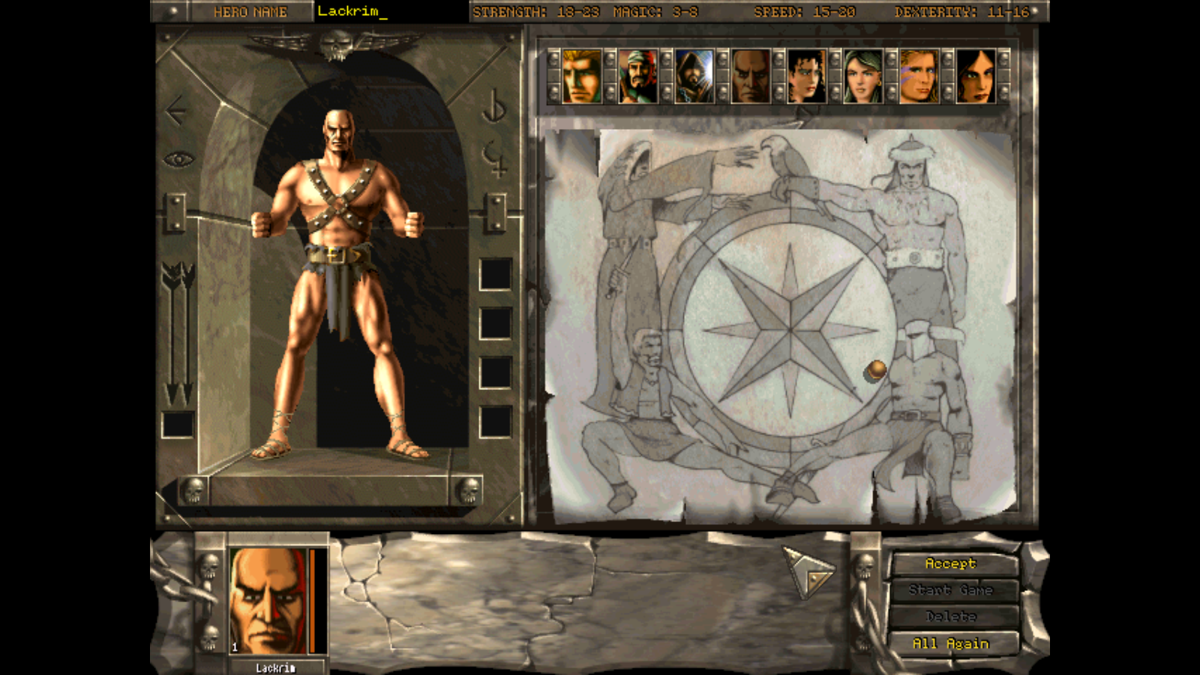
The first hour has a particular kind of promise: you are not handed a fixed hero, but asked to assemble a three-person expedition before entering the dungeon. Gates of Skeldal’s character creator is more thoughtful than it first appears. Four core classes sit around an octogram, and placing a marker between neighboring classes creates hybrids such as a Wizard-Ranger. That restriction matters. You cannot simply mash together every strong option, so choosing a party feels like making a plan rather than checking boxes.
From there, it settles into a first-person, turn-based crawl where your decisions have room to breathe. Strength, Magic Use, Agility, and Dexterity form the foundation, while proficiencies, defenses, and experience can shift over time. Combat benefits from that slower rhythm: you can consider positioning and approach rather than rushing through encounters. Splitting the party also gives the dungeon more texture. Sending groups to separate switches or approaching enemies from different angles turns a practical system into a useful tactical tool.
There is friction here, and it comes from the same deliberate design that makes the game satisfying. You need to pay attention to party construction and dungeon problems instead of expecting the game to smooth everything over. But once the systems click, the six-person potential roster gives you meaningful room to experiment. The included map editor is an especially generous addition for anyone who finishes the main journey and wants to build dungeon challenges of their own.
Graphics
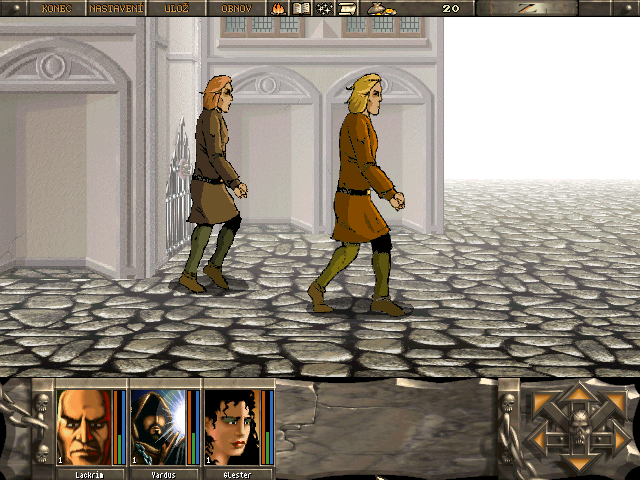
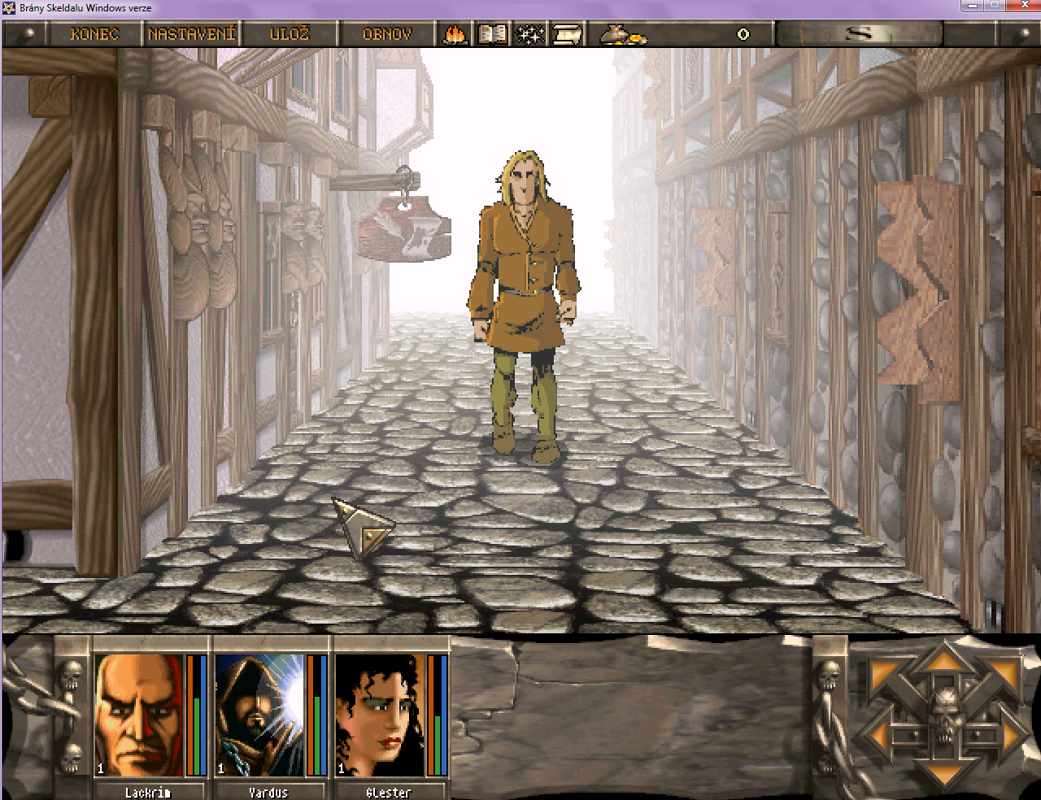
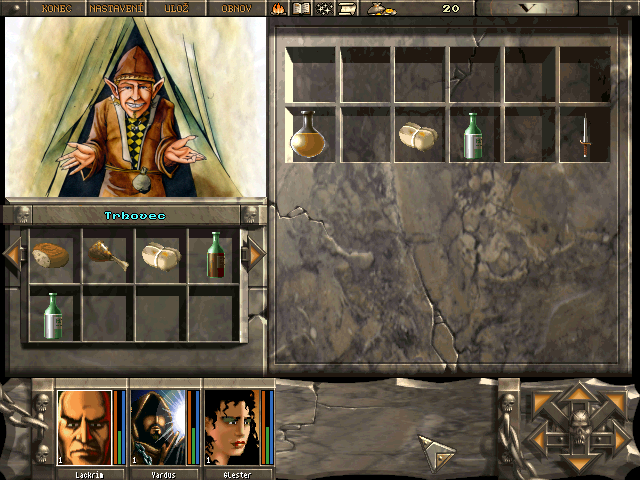
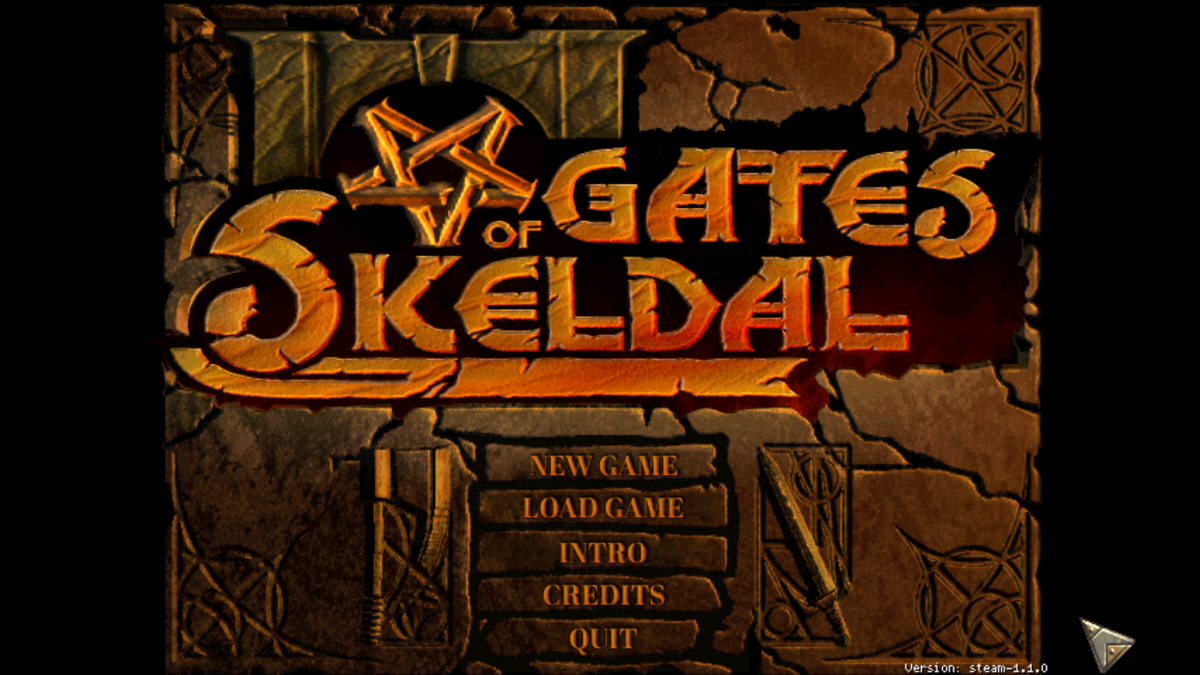
Gates of Skeldal uses a first-person dungeon view, with character portraits determining the paper-doll figure shown in the inventory. The seven starting portraits make party creation feel a little more personal, even before class choices and statistics begin to differentiate your group.
Story
Rovenland begins as an ancient island where gods once rested after creating the world, which is a suitably grand foundation for a dungeon RPG. Wizard Freghar senses an evil growing in the south and summons three adventurers through the Krow-kane ritual. It is direct fantasy setup, but it gives your newly created party an immediate reason to leave safety behind.
The destination is the Tower of Skeldal, where five renegade mages are trying to open gates to Zohar, a forbidden dimension. That is a clean, focused objective: reach the tower and stop a disaster before it breaks loose. The game does not need a tangled premise to motivate a crawl; the threat is clear and the location has enough mystery to pull you forward.
Later recruits bring their own backstories and agendas, adding some character-level interest to a quest that starts with blank-slate heroes. Because you begin by making the central party yourself, these NPCs have a useful role beyond filling slots: they introduce personalities into an expedition whose original members are defined by your decisions.
Overall Experience
Gates of Skeldal is worth your time if you enjoy RPGs that make party building and dungeon problem-solving part of the adventure’s core pleasure. The hybrid class system is the standout idea, while turn-based combat and split-party puzzles ensure that your choices continue to matter after character creation.
It will frustrate anyone looking for a breezy, fast-moving fantasy ride. This is a game that asks you to stop, assess your group, and work through obstacles methodically. For the right mood, that measured pace is not a flaw; it is the reason the dungeon feels like a place you are actually navigating rather than merely passing through.
The payoff is a focused old-school crawl with more flexibility than its basic setup suggests. Build a balanced trio, leave room for the recruits you meet, and do not be afraid to use the party split when the dungeon starts demanding coordination. If that sounds inviting, Gates of Skeldal remains an easy recommendation.

Reviews
There are no reviews yet.