 Retro Replay Retro Gaming History, Reviews & Emulation
Retro Replay Review
Gameplay
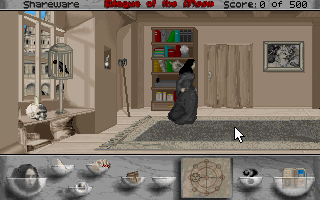
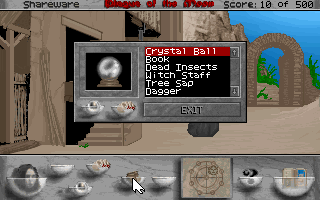
Plague of the Moon starts by putting you in Alucarda’s shoes at her least powerful. She has a clear reason to move—avenge Margaret—but no witchcraft to lean on at the outset. That makes the opening feel grounded in classic adventure-game routine: look closely at the environment, examine what seems important, collect objects, and work out which puzzle each item belongs to.
The point-and-click structure is the main course. Progress depends on observation and deduction, so the satisfying moments come when a scattered group of clues finally suggests a use for something you have been carrying. If you enjoy slowing down, probing a location, and treating every object as a possible answer, that rhythm can be absorbing. If you want constant momentum, the same pace can turn frustrating when a puzzle’s intended connection refuses to reveal itself.
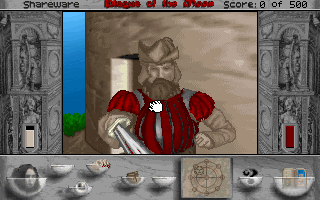
The Sierra-style score system adds an old-fashioned sense that careful play matters. It encourages thorough examination rather than a quick rush from one solution to the next. Alongside the adventure sections, first-person fighting breaks up the puzzle-solving. That shift gives the game a harsher edge than a purely conversational or inventory-driven quest, though its strongest draw remains the methodical act of figuring out what to do next.
Graphics
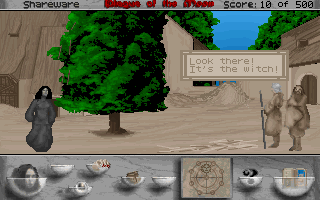
Plague of the Moon uses a third-person view for its adventure sequences, then switches to first-person for combat. That change in viewpoint makes the two sides of the game immediately distinct: exploration is about surveying the environment, while fights put you directly in the confrontation.
Story
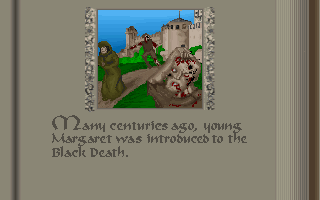
This is revenge fantasy with a particularly bleak spark. Margaret turns to a pagan cult and demonic rites after encountering the Black Death, gains sorcerous power over years, and is eventually condemned by the Bloody Judge amid executions carried out for profit and pleasure. Burning at the stake does not end her story; instead, she curses the land and calls on her daughter to avenge her.
Alucarda is a strong starting point for this kind of adventure because her purpose is simple and personal. You are not handed a vague mission to save the world. You begin with a daughter’s anger, a dead mother’s demand, and a world already marked by cruelty and occult consequences.
The suggestion that Alucarda’s vengeance may change gives the premise more room than a straight hunt for punishment. That is the thread worth following: not merely whether she can gain the witchcraft she lacks at the beginning, but what that power and her mother’s legacy do to the reason she set out in the first place.
Overall Experience
Plague of the Moon is built for the kind of evening when you want to sit with a puzzle instead of being hurried along by the game. Its combination of inventory-led investigation, score-aware exploration, and occasional first-person combat is unmistakably rooted in a 1994 DOS adventure sensibility. The reward is the feeling of untangling a dark little world on your own terms.
That also means patience is not optional. You need to be willing to inspect the environment carefully, hold onto odd objects, and accept that progress may come in bursts rather than a steady stream. The game will likely click most with anyone who already has affection for classic point-and-click design and its demand for attention.
For that audience, the revenge story and occult premise give the puzzle work a useful emotional spine. You are not just collecting objects because an adventure game requires it; you are gradually equipping Alucarda for a quest born in fire, grief, and a curse. It is a niche, deliberately paced ride, but its commitment to that dark old-school formula is its reason to play.


Reviews
There are no reviews yet.