 Retro Replay Retro Gaming History, Reviews & Emulation


Retro Replay Review
Gameplay
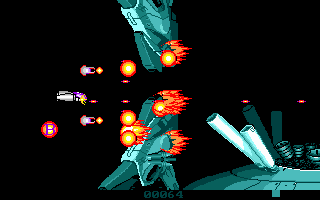
RS-2 starts with the kind of clean arcade pressure that makes you immediately lean closer to the screen. You pilot a ship through side-scrolling stages, shoot through incoming enemies, collect lettered yellow balls, and try to arrive at the boss with enough health to learn its tricks. It is simple on the surface, but the opening minutes quickly establish that careless flying will not last.
The power-up system is more interesting than it first appears. Shooting the jukebox-shaped enemies releases pickups, and the first two you collect attach two pods to your ship. After that, each letter changes what those pods fire: K sends out half-moon shots, B fires target-seeking fireballs, S gives you scatter fire, and L equips plaid laser beams. Because grabbing another copy of the same letter does not improve its strength, you are choosing a tool rather than climbing a familiar upgrade ladder. That keeps the focus on which shot suits the immediate wave, not on hoarding power.
The catch is that RS-2 demands memorization with very little mercy. Collisions and bullets drain one health bar; when it empties, your ship crashes and the run ends. There are no extra lives and no continues to soften that result. Enemy entrances need to be learned, and bosses are especially cruel on a first visit. The first boss, for instance, can rise in a way that seems to invite you underneath, then abruptly stomps downward. It is a nasty trick, but surviving it on a later run delivers the particular satisfaction this genre was built on.
If you enjoy shooters as repeatable drills, RS-2 has a sharp hook. You will gradually replace panic with anticipation, recognize where danger enters, and make better use of each pod weapon. If your patience runs out when a game asks you to replay long stretches to understand a boss, its one-run structure can turn that same discipline into a wall.

Graphics
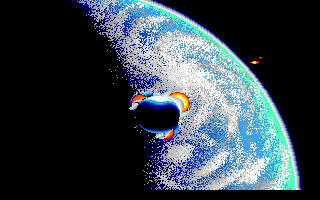
RS-2 uses a 2D side view, with the player ship and its two attached pods carrying the action through scrolling stages. The most memorable concrete touch is the act-opening picture that foreshadows the boss ship ahead, giving each impending showdown a face before it arrives. Yellow lettered power-ups and the unusual jukebox-like enemies that release them also make the important targets easy to pick out.
Story
Story is kept to a bare sci-fi framework rather than a detailed campaign. You move from act to act toward enemy boss ships, and the preview image at the start of each act is the game’s clearest bit of buildup: it tells you that something larger is waiting at the end.
That sparseness fits the game’s arcade priorities. There is no need to pause for exposition when the real drama comes from reaching a boss with enough health left to decipher its movement. The bosses carry the conflict more effectively than any spoken setup could here, because their behavior is what you remember after a failed run.
Do not come to RS-2 for characters or plot turns. Its story function is to put a series of hostile machines in your path and make each act feel like a march toward a confrontation. For a 1990 DOS shooter built around patterns and endurance, that is enough context to keep the action moving.
Overall Experience
RS-2 is a stern, compact shooter that earns its best moments through repetition. The first attempt can feel unfair because the game is willing to punish a reasonable reaction to a boss feint. But once you know the trap and dodge it cleanly, the game’s hostility starts to feel deliberate rather than random.
The pod weapons give you enough variety to keep retries from becoming completely mechanical, while the refusal to stack duplicate upgrades prevents an easy snowball into safety. Every pickup matters, but none will rescue sloppy movement. That creates a focused arcade rhythm: learn the wave, select a useful weapon, preserve health, and prepare for the boss you were warned about.
I would recommend it to shooter fans who enjoy old DOS games at their most demanding and are happy to practice routes. RS-2 does not offer much forgiveness, yet its directness is part of the charm. It knows exactly what it wants from you: attention, memory, and the willingness to come back after an ugly crash.


Reviews
There are no reviews yet.