 Retro Replay Retro Gaming History, Reviews & Emulation
Retro Replay Review
Gameplay
Dead Force starts with a strong proposition: you are not a wandering hero gradually stumbling into a conflict, but a fourteen-year-old crown prince expected to lead Canaan’s army against an invading force. The whole game commits to that idea. There are no detours from the war; its campaign is made from large-scale battles, so you spend your time studying the overhead field and deciding how to move your forces through it.
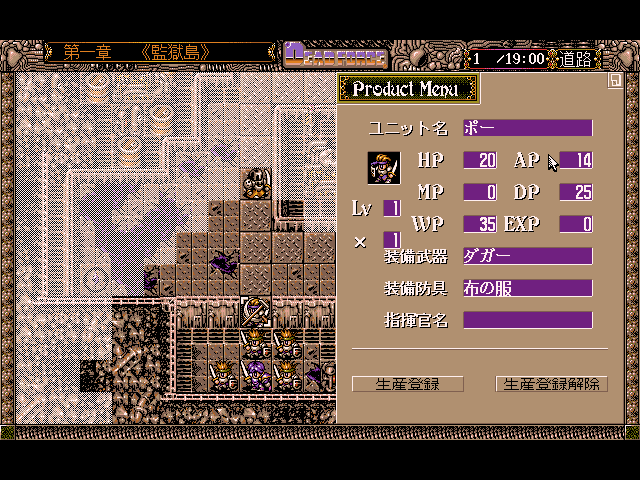
Each unit appears as a single character icon, yet behaves like an individual RPG character with its own hit points, equipment, and level. That combination gives movement real weight. A unit is not just a disposable marker on a map, and you have reason to consider who should take a risky position rather than simply pushing every piece forward. Turn-based movement also leaves room to pause and think through a turn instead of reacting on reflex.
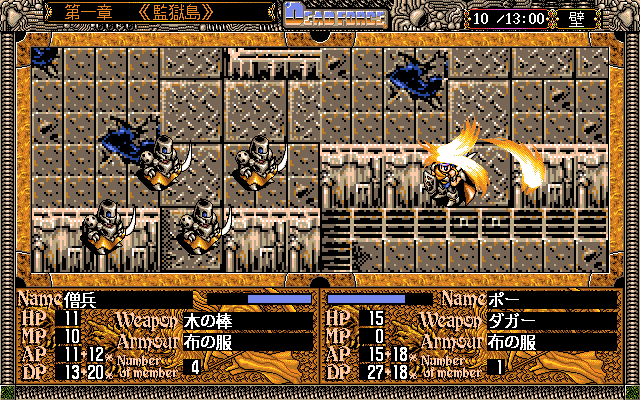
The important caveat is that adjacent units trigger battles that resolve automatically on a separate screen. If you love tactical RPGs because you want to pick commands during every fight, that can become frustrating: the payoff for your setup is watching rather than directly executing it. On the other hand, if positioning and long-term unit management are the parts you enjoy most, the automatic clashes keep the emphasis where Dead Force wants it—on army command.
That focus makes the first hour easy to understand but not necessarily easy to master. You can grasp the basic loop quickly: move, engage, assess the outcome, and adjust. What should start to click over time is the value of preserving and developing individual units, since equipment, levels, and damage all belong to them. Dead Force asks for a measured, strategic mindset, and it is likely to reward that more than aggressive improvisation.

Graphics
The game uses overhead battle screens where every soldier is represented by a single character icon, then cuts to a separate screen when combat begins. That clean division suits a tactics game: you can concentrate on unit placement on the map, then watch the automated encounter play out once two opponents meet.

Story
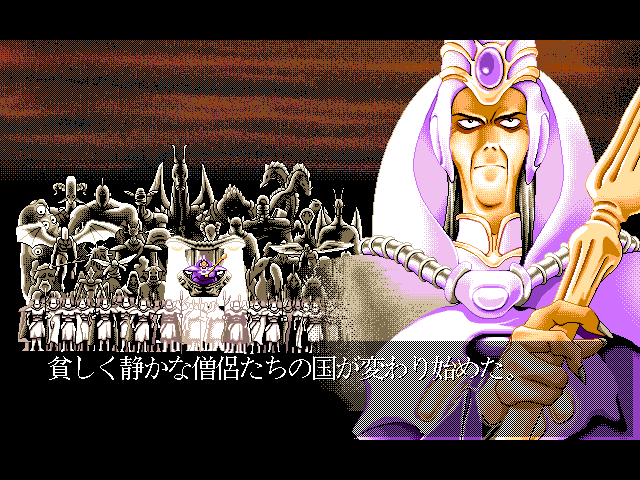
Lorelei is divided by the Karma mountain range between rural, peaceful Canaan in the east and monk-led Dardila in the west. A meteor lands in Dardila and gradually turns its monks evil, ending the peace and touching off the war. It is a direct fantasy setup, but it gives the conflict a clear geographical and moral shape from the outset.
The stronger hook is Marion’s position in the middle of it. He has only just turned fourteen when Dardilan forces overrun Canaan, and he must command an army while his country is already losing ground. That is a solid fit for a battle-only tactical RPG: the campaign’s military focus reflects the burden placed on its protagonist.
Don’t come expecting the premise to take a break from warfare for a broad travelogue or a collection of side pursuits. Dead Force frames its story through the ongoing campaign and keeps returning to the central task of reversing Canaan’s defeat. For you, that means the narrative stakes are clearest when a hard-fought battle makes the prince’s responsibility feel less theoretical.
Overall Experience
Dead Force is a focused tactical RPG rather than a sprawling one. Its distinctive choice is to treat every part of the game as a battle while still giving its units RPG-style growth and equipment. If the thought of leading an army across turn-based maps sounds better than exploring towns and manually selecting attacks, that concentration is a real strength.
Automatic combat is the dividing line. It can make victories feel like the outcome of good preparation, but it can also leave you wanting more influence once fighting begins. Go in ready to own the plan rather than every exchange. That is the mindset that lets its strategic layer breathe.
For FM Towns fans with patience for older tactical design, Dead Force has a clear reason to exist: it turns a young prince’s crisis into an uninterrupted sequence of military problems. The story setup is straightforward, the unit management has meaningful stakes, and the large-scale battles give the game a particular pull. It is worth a chance if you want strategy to be the whole meal, not a side activity between role-playing scenes.


Reviews
There are no reviews yet.