 Retro Replay Retro Gaming History, Reviews & Emulation
Retro Replay Review
Gameplay
Frogs vs. Storks gets its hook into you fast because the central rule is so easy to understand and so awkward to master: move a frog one space, and a stork immediately mirrors that move in the opposite direction. You are not reacting to enemy AI or waiting for a foe to make a mistake. You are moving both sides of the board yourself, then living with the consequences. That twist makes even a tiny route through the lilies feel like a chess problem in which every helpful move carries a threat.
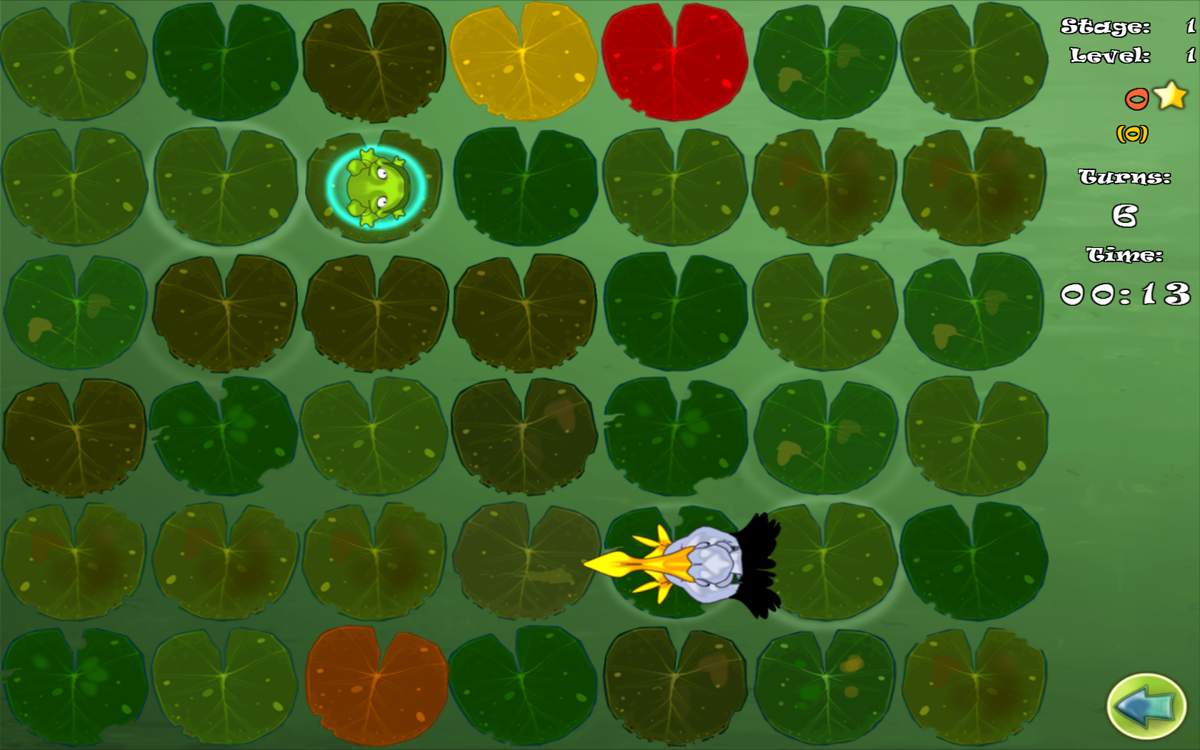
At first, guiding frogs from orange lilies at the bottom to yellow safe spaces at the top sounds straightforward. Then you realize that a stork wrapping around the board edges can appear where you least want it, and that reaching safety with one frog does not end its danger while the others remain behind. The game steadily builds pressure by adding more frogs and storks, and moving only one selected frog each turn forces you to think about the order of operations rather than simply spotting a path.
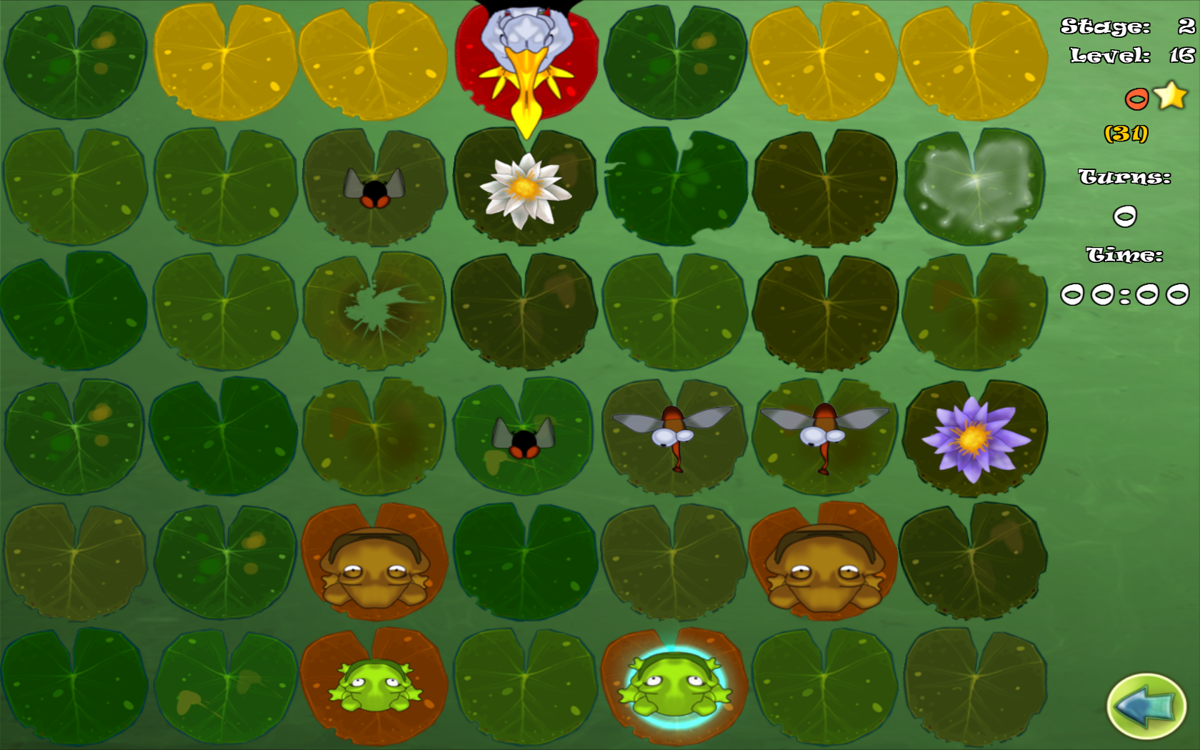
The hazards are where the puzzles start to become properly devious. Water that doubles movement and broken lilies that return a frog or stork to its starting position can rescue a ruined plan, but they can also make a careless turn worse. Flies and eggs add points to chase, although they are secondary to getting everyone home. The lazy frog, which must be pushed by another frog, is the sort of complication that will either delight you or test your patience; it demands more deliberate setup than the rest of the cast.
Difficulty rises sharply once boards ask you to manage more than five frogs, doubled stork movement, and several threats at once. Fortunately, unlimited attempts are exactly the right safety net for a puzzle game built around experimentation. You can make a bad move, learn how the mirrored motion changes the board, and restart without punishment. Random generation also stops solutions from becoming rote, though it means success comes from understanding the rules rather than memorizing a fixed sequence.
Graphics
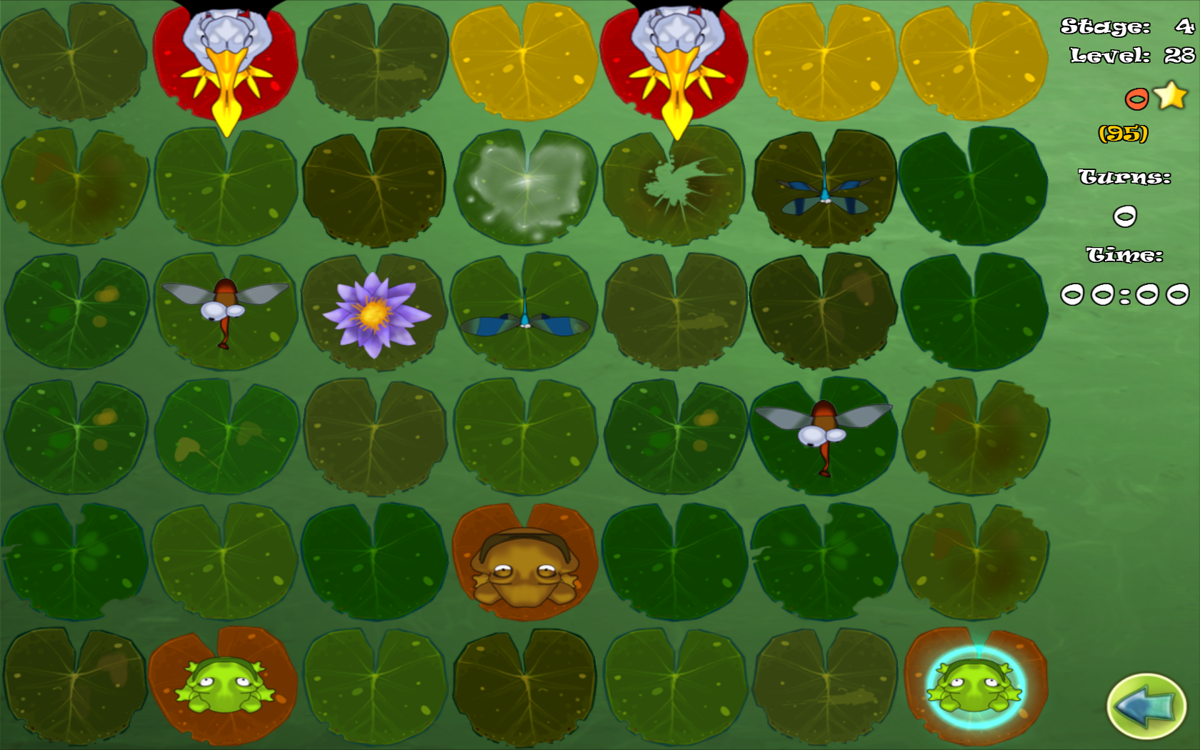
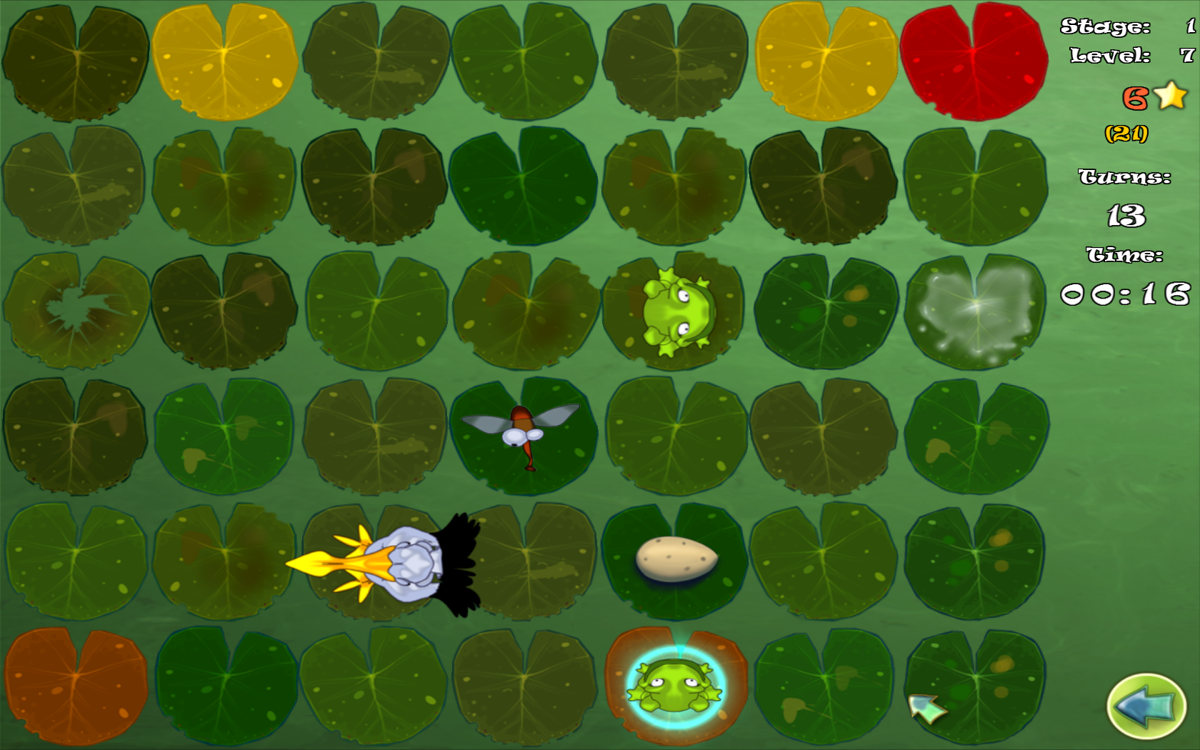
The action is shown from a top-down view on a compact six-by-seven lily-pad board. Orange starting lilies at the bottom and yellow goal lilies at the top make the objective immediately clear, while the small board keeps frogs, storks, water, broken pads, and pickups in one readable space.
Story
This is a light premise rather than a story-driven adventure: frogs need to cross the lily board and avoid storks long enough to reach safety. That is all the game needs, because the real drama comes from watching your own mirrored movement put a predator into position.
There is a pleasing little tension in the premise. A frog may be nearly home, but it is not truly safe until every frog has reached a yellow lily. That rule turns a successful-looking rescue into an unfinished job and gives each remaining move more weight.
The storks work especially well as puzzle antagonists because they are not portrayed as unpredictable hunters. Their movement is tied directly to yours. If one catches a frog, it feels less like bad luck than a plan you failed to account for, which suits a game that wants you to reconsider each turn.
Overall Experience
Frogs vs. Storks is for you if a small, rules-heavy board can hold your attention longer than a large game full of distractions. Its best moments arrive when a board looks hopeless, you notice that a broken lily can reset the right piece, and a few careful mirrored moves suddenly open a route. The satisfaction is cerebral and earned.
It can also be frustrating in a very particular way. Since you control the storks indirectly, every move can feel dangerous, and later boards with many frogs demand patience with individual selection and sequencing. If you want quick reflex challenges or a forgiving puzzle that lets you improvise without consequence, the escalating complexity may wear thin.
For fans of turn-based logic puzzles, though, the core idea is strong enough to carry the game. The compact board, wraparound stork movement, useful hazards, and unlimited retries create a clean loop of planning, failing, and improving. It is a modest puzzle game with a genuinely clever central constraint, and the payoff is worth the occasional head-scratching restart.


Reviews
There are no reviews yet.