 Retro Replay Retro Replay gaming reviews, news, emulation, geek stuff and more!
Retro Replay Review
Gameplay
The first decision does more than pick a favorite character. Following Akira or Cutey Honey makes one of them your lead while your best friend departs with the other, so the adventure starts with an actual commitment rather than a cosmetic character select. It is a smart way to make a huge crossover feel like a journey with a chosen point of view.
From there, Gōshōden uses the comfortable language of a Japanese RPG: travel across a world map, manage a party, gain levels, and settle fights in turns. That familiarity makes it easy to enter, especially if you want the focus to stay on meeting characters from Devilman, Cutey Honey, Mazinger Z, and Susa no Oh rather than learning an elaborate battle system.
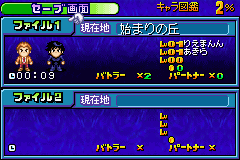
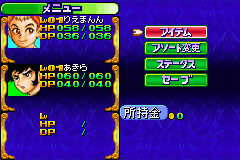
The Assort System is where the game has its own angle. Your active Battlers fight directly, while assigned partners remain in support and enhance their abilities. Experimenting with those pairings should be the satisfying part of party management, since a character’s usefulness is not limited to whether they occupy a front-line slot. If you enjoy nudging a party toward stronger combinations, this system gives you a reason to keep reconsidering the roster.
There is a trade-off: the RPG framework is simple, and the two story paths share the same main events. Do not expect radically different campaigns from the initial companion choice. Still, the choice of lead character and the flexibility of support assignments give the game enough texture to rise above a completely automatic fan-service tour.
Graphics
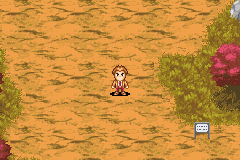
The top-down Game Boy Advance view keeps the RPG action grounded in a compact, traditional format. Its strongest visual draw is simply the chance to see a broad group of Go Nagai creations gathered in one game, from Devilman and Cutey Honey to Mazinger Z.
Story
The setup is wonderfully direct: a strange anonymous letter brings two modern-day teenagers to a park, both lose consciousness, and both awaken in an unfamiliar world. It is a clean portal-fantasy opening, but the crossover cast gives it immediate flavor.
Choosing Akira or Cutey Honey as the protagonist’s companion gives the opening a useful emotional split. Your best friend leaving with the other hero means the decision carries more weight than just deciding which famous face accompanies you first.
At its heart, the story is built around bringing together heroes from different Go Nagai works before a final confrontation decides that world’s fate. The shared major events on both routes make this more of a single crossover tale with two perspectives than a pair of sharply separate stories. That is a limitation for repeat runs, but fans may still enjoy comparing the leads.
Overall Experience
Gōshōden is most rewarding when you treat it as a compact Go Nagai crossover RPG with a little extra room for party tinkering. The joy is not in overturning genre conventions; it is in choosing a side at the start, meeting familiar heroes, and finding useful Battler-and-partner pairings.
If you already like turn-based handheld RPGs, the simple leveling and world-map structure will feel welcoming rather than bare. The Assort System is the feature that earns the game a closer look, because it turns a licensed roster into something you can actively shape.
The shared plot beats make the Akira and Cutey Honey routes less distinct than they initially sound, so the payoff depends heavily on how much you value the source characters. For Go Nagai devotees, that is likely enough: this is an affectionate meeting place for several major creations. For anyone with no connection to that catalog, it is a competent but fairly conventional RPG.


Reviews
There are no reviews yet.