 Retro Replay Retro Gaming History, Reviews & Emulation
Retro Replay Review
Gameplay
The opening puts you in Anna Zirski’s boots with a job that has immediate stakes: track down criminals hiding in a Motavian town before their intrusion into Mother Brain disrupts food production. That is a stronger starting point than a vague treasure hunt. You have a purpose, a confined crisis, and a reason to pay attention to every person you meet.
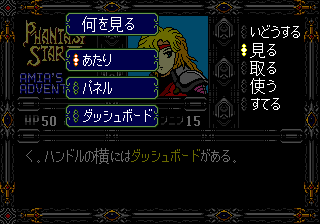
Most of the game’s momentum comes from old-school text-adventure detective work. You explore locations, look around carefully, talk with characters for clues, and take items that may unlock the next problem. When its chain of clues clicks, the structure should feel satisfyingly deliberate: information becomes a lead, a lead points toward a place or object, and that object moves the investigation forward.
It can also demand patience. Progress depends on examining places and pursuing conversations rather than charging ahead, so you need to enjoy methodical searching and holding onto a detail until it becomes useful. If you want an adventure that rewards paying attention more than quick reflexes, Anna’s case has a solid pull.
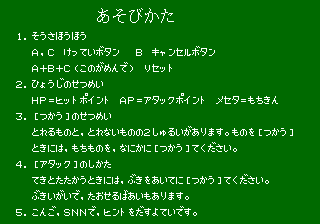
Combat breaks up the investigation, but it is a rougher fit. Weapons can come from items you pick up, and each attack’s power is multiplied by a random dice roll; enemies follow the same rule. Winning means emptying an opponent’s HP, yet luck can make any confrontation feel less controlled than the surrounding puzzle-solving.
Graphics
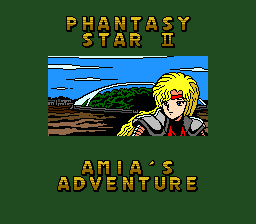
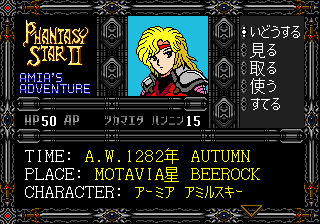
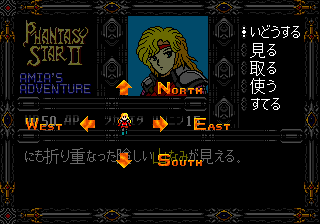
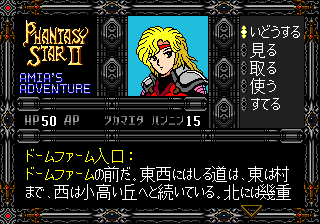
This is a first-person text adventure, so Motavia and its confrontations are chiefly encountered through written locations, characters, and situations rather than through animated action scenes.
Story
Anna is a counter-hunter, a specialist who pursues hunters that have crossed into criminality. That profession gives her a sharper role than a generic adventurer: she is entering town to make arrests, not simply stumbling into danger.
The hacker plot is a good match for Phantasy Star’s science-fiction world. Unauthorized access to Mother Brain is not merely a technical crime here; it threatens the region’s food production. That connection gives the case public consequences and makes the fugitives feel like a real problem worth chasing.
As one of the character-focused adventures set before Phantasy Star II, the game’s real story value lies in spending time with Anna before the larger saga continues. Go in wanting a compact prelude centered on her assignment, its suspects, and the clues needed to close the case.
Overall Experience
Amia no Bōken is a narrow, purposeful side trip for someone who wants Phantasy Star lore delivered as a text investigation rather than as a conventional action-driven quest. Its strongest quality is how cleanly the premise feeds the play: investigate the town, question people, gather tools, and corner the criminals behind a crisis.
The tradeoff is clear. Randomized combat can interrupt the satisfying logic of exploration, and the pace rests on your willingness to search thoroughly. You should not expect every obstacle to yield instantly; the pleasure comes from working through the case one clue at a time.
Give it a chance if Anna’s role and Motavia’s pre-Phantasy Star II history interest you, especially if you enjoy classic text adventures with a bit of combat risk mixed in. Skip it if you need fast action or dislike progress that depends on careful examination and inventory-based problem solving.


Reviews
There are no reviews yet.