 Retro Replay Retro Gaming History, Reviews & Emulation
Retro Replay Review
Gameplay
The hook here is not flashy conquest; it is the uneasy feeling that every order matters. You oversee a faction across one large map of China, where strongholds, terrain, and rival powers turn a simple advance into a question of timing and supply. Sending a general forward may open a useful route, but it can also leave another position without the commander or resources it needs.
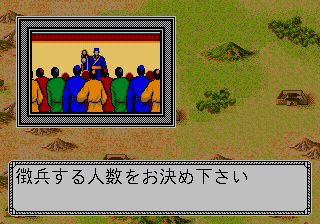
That broad command structure gives Sangokushi Retsuden its best moments. You issue straightforward orders—move, attack, or retreat—then distribute money and food to keep the campaign functioning. The rules sound plain, but the decisions stack up quickly. A retreat is not merely failure when it preserves a general for a better opportunity, and an attack carries more weight when you have considered the wider map rather than chasing one stronghold at a time.
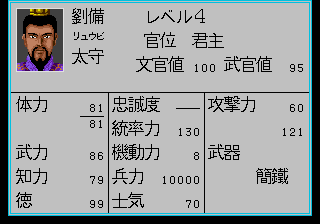
Generals gaining levels through experience adds a welcome reason to care about who handles each assignment. It encourages you to think beyond the immediate turn and build capable leaders over a campaign. Battles then shift into side-view action sequences between generals, giving confrontations a distinct break from the overhead planning.
The friction will be part of the appeal for some and the obstacle for others. This is a methodical strategy game built around repeated evaluation of positions, commanders, food, and money, rather than quick tactical thrills. If you enjoy sitting with a map and working out the safest useful move, that pace becomes satisfying; if you want constant action, the campaign management may feel demanding before it feels rewarding.
Graphics
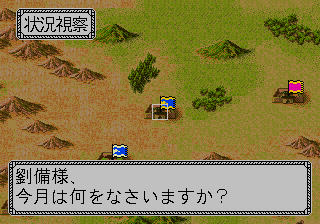
The main strategic view is a large map of China filled with strongholds and geographic features, while battles cut to side-view action between opposing generals. That split gives you a clear visual change between planning the war and watching individual clashes play out.
Story
The historical setting does much of the narrative work. Sangokushi Retsuden is set during the Three Kingdoms period, and its war is framed through competing factions fighting across China rather than through a small, isolated conflict.
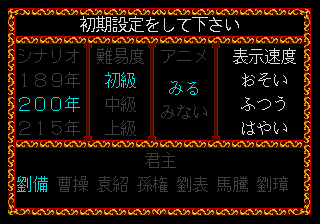
Three scenarios begin in 189, 200, and 215 CE, so you can enter the era from different points in its long struggle. Choosing among multiple commanders for each scenario also lets you approach the same historical backdrop from different positions of power.
Do not come expecting the focus to be on a single protagonist’s journey. The story emerges from the campaign: which faction you guide, which strongholds change hands, which generals gain experience, and when a retreat saves a broader plan. For a Three Kingdoms strategy game, that commander-focused framing fits the material well.
Overall Experience
Sangokushi Retsuden: Ransei no Eiyūtachi is for the gamer who enjoys turning a map full of uneasy borders into a plan. Its large-scale campaign, resource demands, and general management create a sturdy strategic loop, and the different scenarios give the war more than one point of entry.
The strongest payoff comes when you stop treating each fight as an isolated problem. A general’s development, the food and money available to your faction, and the position of neighboring strongholds all belong to the same calculation. That is where the game starts to click: success feels earned because you have held several pressures together at once.
It is not the easiest recommendation for someone who wants a fast, battle-first Three Kingdoms game. But patient turn-based strategy fans, especially anyone happy to weigh retreat against attack and build a campaign around their commanders, should find real satisfaction in its deliberate scale. The option for up to three simultaneous factions also gives its political map a welcome competitive angle.


Reviews
There are no reviews yet.