 Retro Replay Retro Gaming History, Reviews & Emulation
Retro Replay Review
Gameplay
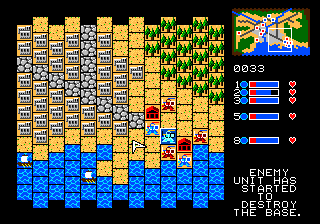
Warrior of Rome gets to its point quickly. You direct individual units around square map spaces in real time, pursuing each level’s objective rather than settling into a sprawling empire-building routine. One scenario may ask you to destroy pirate ships, and the moment-to-moment question is straightforward: which unit can get there safely, and what happens if an enemy reaches it first?
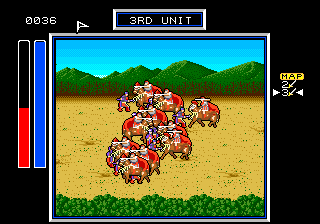
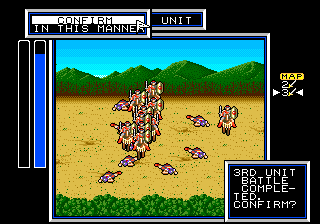
Combat being automatic changes the texture of the game. Once opposing units meet, you watch their battle in a separate window instead of micromanaging every strike. That can feel hands-off at first, especially if you prefer tactical games where every clash is under your direct control. But it makes preparation matter more: movement, positioning, and each unit’s standing orders carry the weight that manual fighting would normally hold.
The retreat option is Warrior of Rome’s smartest wrinkle. A unit can flee a losing fight, rest, and recover to full strength, so a setback does not always mean a permanent loss. You need to think ahead about whether to press an attack or order a withdrawal before the situation turns ugly. Building a palisade and laying traps also let you play more defensively, which gives the limited set of objectives a little more tactical shape.
Frustration can set in when you want more control over the fights themselves, because the game asks you to live with the result once units engage. Still, its rules are easy to understand and become more interesting when you stop treating every encounter as a fight to the finish. It rewards patience more than aggression.
Graphics
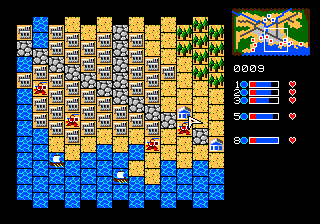
The maps use a top-down view with units shown as icons on square fields. That makes the important information easy to scan: where your forces are, where enemies stand, and how close a dangerous meeting is.
When combat begins, the action moves to separate battle windows. The shift gives clashes their own moment, even though the map remains the place where the decisive planning happens.
Story
This is Ancient Rome as a tactical backdrop, not a character-driven tale. The focus stays on military tasks and the pressure of completing each map’s goal.
The pirate-ship objective gives one example of how the setting informs a scenario: you are directing forces toward a concrete Roman-era problem rather than simply wiping every enemy from the board. That helps each mission feel like a task with a purpose, even when the storytelling stays lean.
With only four levels, Warrior of Rome feels concise rather than epic. Go in for a short run of focused historical skirmishes, not a grand Roman saga with a large cast or elaborate dramatic arc.
Overall Experience
Warrior of Rome is a modest but thoughtful early real-time strategy game. Its first hour can seem almost too simple—move units, meet enemies, watch them fight—but the defensive orders and retreat-and-recover loop give it more bite than that first impression suggests.
The limited number of levels keeps it from becoming a deep long-term campaign, and the lack of direct combat control will divide people. If automatic battles sound like a nuisance, that objection is fair. If you enjoy setting a plan in motion and accepting the consequences, though, the game has a distinct tension.
Give it a chance if you want a compact strategy game where prudent withdrawals can be as valuable as victories. Warrior of Rome will not overwhelm you with complexity, but it asks for sensible command decisions and delivers a satisfying little lesson in preserving your army.


Reviews
There are no reviews yet.