 Retro Replay Retro Gaming History, Reviews & Emulation


Retro Replay Review
Gameplay
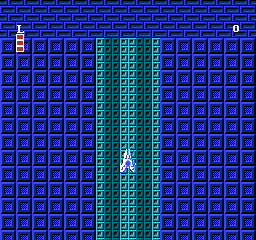
The first stretch of Ginga Denshō: Galaxy Odyssey has a neat sense of momentum. You begin in a vertically scrolling ship shooter, firing at incoming enemies and watching for the two capsule types they leave behind: one restores oxygen and the other adds money. That means shooting is not simply about clearing the screen. Every destroyed enemy can be the difference between continuing safely and running short on the resource that governs the whole adventure.
Landing at locations and entering dungeon areas is where the game separates itself from a pure arcade shooter. You are not only pushing toward a high score or the end of a stage; you are making a larger trip through dangerous territory, earning money, and trying to improve your odds. Shops let you spend that money on weapon upgrades, defensive items, and energy, giving the repeated fighting a concrete purpose. The progression is simple, but it makes the game feel like an expedition rather than a string of disconnected shooting sequences.
The catch is oxygen. While walking through outer space, your supply continually drains, and the way to refill it is by collecting oxygen capsules from defeated enemies. That is an effective source of pressure, but it can also be punishing: you are forced to keep engaging enemies when you may simply want to press onward through a dungeon. If you enjoy old games that make resource management inseparable from combat, the tension will likely be the hook. If you dislike being at the mercy of drops, frustration can set in fast.
The upgrades give you a reason to persist through that pressure. Better weapons, protection, and energy are not ornamental rewards when survival depends on maintaining momentum and oxygen. Galaxy Odyssey asks you to think in terms of preparation as much as reflexes, even though its action is built around a scrolling shooter foundation.

Graphics
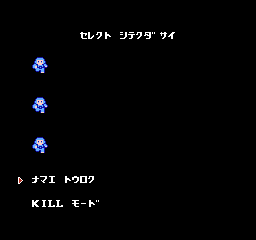
The game alternates between vertically scrolling ship combat and on-foot dungeon exploration, so you spend time looking at two distinct kinds of spaces rather than one repeated shooting backdrop. The scrolling battle view keeps enemy encounters and capsule drops directly in front of you, while the dungeon sections shift the focus to navigating locations on foot.

Story
The premise is direct and effective: a devastating disease is killing humans, and its cure is believed to lie somewhere in the galaxy’s dungeons. You play a space cadet sent to recover the potion before the crisis destroys humankind. It is a classic save-the-world setup, but it gives the game’s mixture of travel, combat, and dungeon delving a clear destination.
What helps is that the objective is not vague. You know why you are landing at strange locations and entering hazardous areas: the cure is out there, and the expedition has to reach it. That clarity suits a game whose moment-to-moment demands are already busy with shooting, oxygen, and money.
Galaxy Odyssey also came from Imagineer’s Wave Jack series with an accompanying audio cassette and book intended to explain its narrative. That broader package suggests an attempt to make the adventure feel larger than the action on the cartridge, even as the game itself keeps its central mission easy to grasp.
Overall Experience
Ginga Denshō: Galaxy Odyssey is most interesting when its parts start feeding one another. Shoot enemies to obtain oxygen and money, use money to improve your equipment, land and explore, then survive long enough to continue the search for the cure. It is a modest but distinctive loop, and it has more texture than its basic shooter opening initially suggests.
Its biggest strength is also its sharpest point of resistance. The oxygen system makes the journey feel urgent, but because recovery is tied to enemy capsule drops, it can make exploration feel precarious in a way that will not suit everyone. You need some patience for an older, demanding structure and a willingness to treat supplies as seriously as firepower.
Give it a chance if the idea of a 1980s sci-fi action game with shooter combat, dungeon excursions, and light RPG-style upgrading sounds more exciting than a clean, uncomplicated blast-fest. The payoff is not lavish storytelling or relaxed exploration; it is the satisfaction of learning how to keep a fragile expedition alive while steadily building the tools needed to finish it.

Reviews
There are no reviews yet.