 Retro Replay Retro Gaming History, Reviews & Emulation

Retro Replay Review
Gameplay
The first hour does an admirable job of getting you to actually play Magic instead of merely study it. Lands produce mana, mana pays for spells, and colored costs quickly teach you that having resources is not the same thing as having the right resources. That is familiar territory for longtime players, but the redesigned interface, opening demonstration, and added tutorial support give newcomers a much clearer path into the game’s turn-by-turn logic.
What starts to click is the rhythm of planning a turn around your hand and available mana. A spell can look perfect until you realize you cannot pay its color requirement, and a promising position can become awkward when your draws do not line up. That friction is part of Magic rather than a flaw in this adaptation; the game succeeds because it lets you learn those lessons through matches instead of burying you under explanation.
The campaign structure keeps that learning process moving. After the main campaign’s opponents, a second campaign revisits them in stronger form, which is a sensible test of whether you have absorbed the fundamentals. Puzzle battles appear as unlockable side missions after AI victories, adding focused problems to solve rather than only another string of standard duels. When you want a less structured session, one-off matches let you face AI or other players.
Archenemy is the standout change for groups. Three human or AI players team up against an especially powerful enemy, turning a normally head-to-head card game into a more unruly cooperative challenge. It is a welcome counterpoint to the campaign’s regular duels, though it will naturally suit anyone who enjoys coordinating around a shared threat more than carefully controlling every decision alone.

Graphics
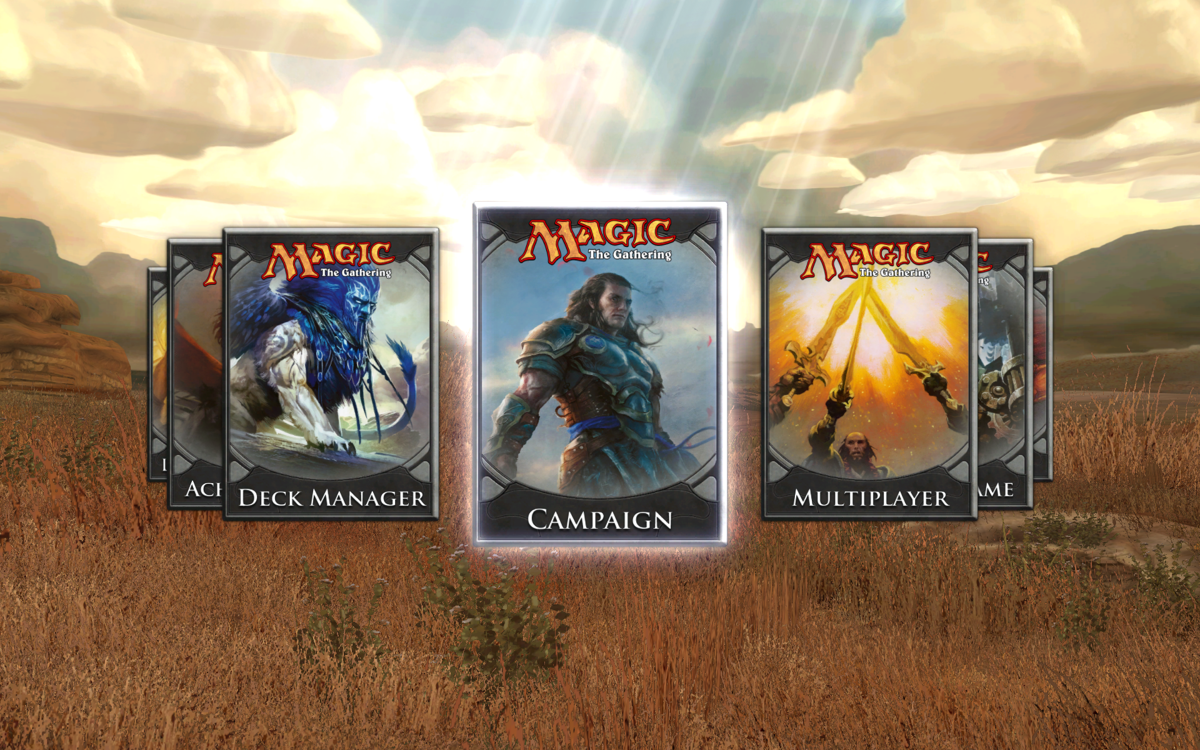
The most concrete visual improvement is the redesigned interface. Because you spend every match reading cards, tracking lands, and deciding what to cast, a clearer layout matters more here than decorative flourishes; the updated screen design directly helps the game feel less forbidding when you are learning its systems.
Story
This is a campaign framework built around successive Magic battles, not a story-heavy adventure. The important sense of progression comes from beating AI opponents, unlocking puzzle side missions, and returning to face stronger versions of familiar challenges.
That light touch fits the game’s purpose. You are here to learn decks and win matches, while the campaigns supply direction and escalating tests rather than asking you to invest in a large narrative. For game-specific background and release history, see the Duels of the Planeswalkers 2012 overview.
If you need a card-game campaign to carry you through plot turns and character drama, this will feel spare. If a sequence of increasingly demanding duels sounds like enough motivation, it stays focused on the right thing: getting you back to the next hand.
Overall Experience
Magic: The Gathering – Duels of the Planeswalkers 2012 is a good, practical version of a famously complicated card game. It respects the underlying rules—mana colors, spells, decks, and alternating turns—while making the entry point friendlier through tutorials and a more approachable interface. That balance is its greatest strength.
Veteran Magic players may appreciate the fast route to AI battles, multiplayer, puzzles, and Archenemy, but the game is most valuable for someone who has been curious about Magic and wants guidance before confronting the game’s full depth. The campaign does not just hand you isolated lessons; it gives you repeated chances to see why resource choices and card requirements matter.
At the same time, this is still Magic, so it asks for patience. You will have games where the cards in hand and the mana you need do not cooperate, and stronger campaign opponents make those fundamentals harder to ignore. That can be frustrating if you want every loss to feel immediately solvable, yet it also makes improvement satisfying.
With three campaigns, integrated puzzles, solo matches, multiplayer, and the three-versus-one Archenemy mode, there is enough variety to keep the core rules from becoming a dry lesson. It earns its 7.5 by being an accessible, featureful teaching ground for Magic that still preserves the satisfying tension of choosing how to spend each turn.



Reviews
There are no reviews yet.