 Retro Replay Retro Replay gaming reviews, news, emulation, geek stuff and more!


Retro Replay Review
Gameplay
The first hour has an easy hook. You begin with a boy troubled by a dream of a mysterious girl, then get the wonderfully direct payoff of seeing that same girl turn up as a new classmate. It is the kind of setup that makes you want to keep checking every conversation and location, not because the game is throwing systems at you, but because you want to know why this coincidence happened.
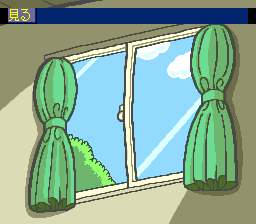
Interaction follows the familiar Japanese adventure routine: choose verbs such as Look, Talk, and Move, then select items from menus when the situation calls for them. That makes the game approachable if you like methodically exhausting options. You are not learning a complicated interface; you are reading the scene, speaking to people, inspecting what seems important, and trying the obvious item when progress stops.
That simplicity can also be the sticking point. Menu adventures live or die on your patience for repeated inspection and conversations, and this one does not appear interested in disguising that old-fashioned structure. If you need constant action or broad player freedom, the routine may feel thin. If you enjoy the slower rhythm of testing verbs until a plot thread loosens, its directness is more comforting than restrictive.
Graphics
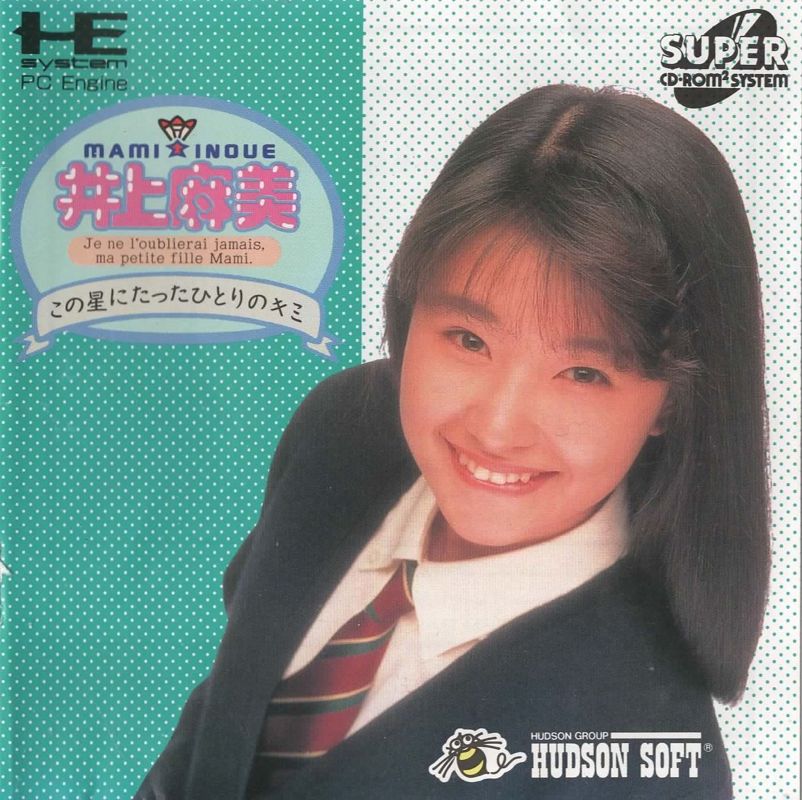
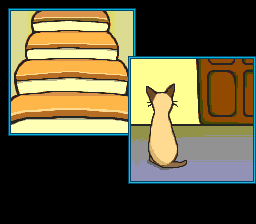
The game combines cartoony backgrounds and characters with digitized photos of Mami Inoue. That contrast is its most distinctive visual trait: the actress’s photographic image stands apart from the illustrated world around her, making her feel deliberately unusual from the start. It is not anime-styled, despite the school-age setup and time-travel premise.
Story
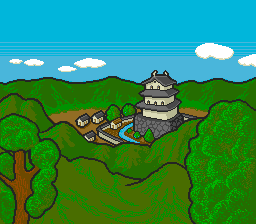
This is a compactly appealing adventure premise rather than a tale that takes long to announce its oddness. A dream girl becomes a real classmate; acquaintance turns into adventure; then a time machine carries the pair to feudal Japan. Each step pushes the story farther from everyday school life, and that escalation is the main reason to stay curious.
Mami Inoue’s starring role gives the game a particular early-1990s celebrity-game flavor, but the setup does not rely only on that novelty. The central mystery has a human scale at first: why did this boy dream about her, and what does her appearance mean? Starting there helps the later time-travel turn feel like an expansion of the same question instead of a completely separate premise.
The feudal Japan detour is the story’s clearest promise of adventure. It gives the game a destination beyond classroom mystery and makes the simple command-driven play feel attached to a changing scenario. Anyone wanting dense characterization or a heavily branching narrative may find the outline modest, but the story has enough of a strange, pulpy arc to carry a short-form adventure.
Overall Experience
Mami Inoue: Kono Hoshi ni Tatta Hitori no Kimi is most enjoyable when you meet it on its own old-school terms. You poke at menus, follow the conversation, and let a peculiar dream premise become a time-travel yarn. Its pleasures are gentle and specific rather than mechanically deep.
The digitized-photo lead is more than a footnote: paired with the cartoony artwork, it gives this otherwise simple adventure a memorable oddity. Hudson’s straightforward interface also means the game is unlikely to intimidate anyone already comfortable with classic Japanese menu adventures.
Give it a chance if a school mystery that jumps to feudal Japan sounds more enticing than a demanding puzzle box, and if you appreciate the archival charm of celebrity-led CD-era games. The payoff is the journey’s escalating weirdness, not sophisticated interaction. For everyone else, it remains an interesting artifact with a solid opening hook and a very narrow comfort zone.


Reviews
There are no reviews yet.