 Retro Replay Retro Replay gaming reviews, news, emulation, geek stuff and more!

Retro Replay Review
Gameplay
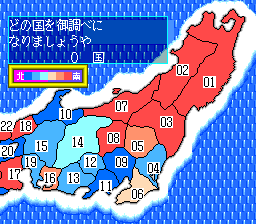
The first hour of Taiheiki asks you to think like a ruler before it asks you to think like a battlefield commander. Choosing the Northern or Southern forces gives the campaign immediate political weight, and the turn-based structure encourages you to consider where your leaders and vassals stand, which armies need attention, and which provincial rulers might become useful allies. It has the broad, map-level pull associated with historical simulations: a decision can matter because of what it does to the whole war, not just because it wins ground right now.
Diplomacy is a major part of that tension. You can deal with other provincial rulers and sign agreements, so military expansion is not the only concern on a given turn. That makes Taiheiki more engaging when you settle into its rhythm. You are balancing relationships against army movement instead of treating the map as a string of isolated tactical puzzles. Anyone who enjoys planning several turns ahead will find plenty to chew on.
Combat shifts to a separate top-down grid where soldiers move in turns. The important caveat is that individual battles resolve automatically, with outcomes determined by participant attributes. That can be frustrating if you want to personally outmaneuver every opponent in a close fight; Taiheiki places more faith in preparation and the quality of the forces you commit. Once that clicks, the battles feel like the consequence of your larger command decisions rather than a separate action-heavy minigame.
Graphics
The battle screens use a top-down grid, making troop positions and turn-by-turn movement straightforward to follow. It is a functional fit for a game built around moving armies and judging engagements rather than fast visual action.
Story
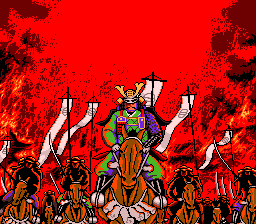
Taiheiki draws its conflict from the 14th-century Japanese epic of the same name, centering on the struggle between the Northern Court and Emperor Go-Daigo’s Southern Court. The Northern side begins under the Hōjō clan, while the historical shadow of Ashikaga Takauji’s betrayal gives the setting a strong sense of unstable loyalties.
That is a much richer foundation than a generic medieval conquest scenario. The two sides are rooted in a specific political crisis, and the game lets you take command of either one. Choosing a faction therefore changes more than a map color: you are stepping into one side of an imperial conflict shaped by rulers, vassals, and provincial power.
Don’t come to Taiheiki expecting a character-driven adventure. Its storytelling comes through the historical situation and the choices you make while managing a side in the war. For strategy fans, that is often enough; the drama lies in whether your political arrangements hold long enough for your armies to matter.
Overall Experience
Taiheiki is for the gamer who enjoys the slow burn of grand strategy. It gives you a campaign where diplomacy, leadership, and army management sit beside tactical movement, and it resists the temptation to make every battle a hands-on contest. The payoff is a stronger sense that you are directing a faction through a larger historical struggle.
Its limitations are also clear. Automatic battle outcomes can make a defeat feel less immediately correctable than in a tactics game where every attack is yours to choose. If direct battlefield micromanagement is the main reason you play strategy games, that distance may wear thin. Patience with systems, planning, and uncertain political outcomes is essential.
For the right mood, though, Taiheiki has real character. It takes a complicated period of Japanese history and turns it into a contest of alliances, command, and territorial pressure. Give it a chance if you want an older historical strategy game that values the wider war over individual heroics; skip it if you need constant tactical control to stay invested.


Reviews
There are no reviews yet.