 Retro Replay Retro Gaming History, Reviews & Emulation


Retro Replay Review
Gameplay
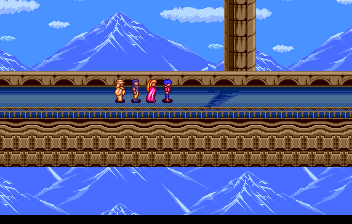
The first stretch of Tenshi no Uta II gets you moving quickly. Fate’s patrol turns into a flight from disaster, and the urge to find answers for Rhianna gives the linear journey a clean, uncomplicated push. It is the sort of RPG where you settle into a route, take the next story cue, and deal with whatever random enemies interrupt the trip.
Combat is turn-based and character growth is automatic, so your attention stays on making choices in each encounter rather than building elaborate character setups. That simplicity can be relaxing when you want a classic Japanese RPG without a lot of system management. The small kindness of restoring full health after a level-up also takes some sting out of long runs and makes growth feel immediately useful.
The tradeoff is that the game is firmly built around conventions that can test your patience. Random battles break up travel, progression is linear, and there is little indication here that the combat aims to reinvent the genre. If you enjoy the steady cadence of fighting, recovering, leveling, and pressing onward, that rhythm starts to click. If you need frequent detours or deep control over party development, frustration can set in before the story has time to pay off.
The day-and-night cycle adds a bit of texture to the journey without changing its fundamental shape. Along with the modest gameplay tweaks from the first Tenshi no Uta, it makes this feel like a refinement rather than a radical sequel. That is a strength for someone who wants more of the earlier game’s formula, and a warning for anyone hoping the sequel dramatically changes course.
Graphics
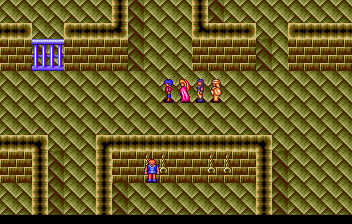
This is an anime-styled fantasy RPG seen through first-person and diagonal-down viewpoints. Its graphics and general play closely resemble the first Tenshi no Uta, so it carries the look of an early-1990s Japanese RPG rather than trying to distinguish itself with a major visual overhaul.
Story
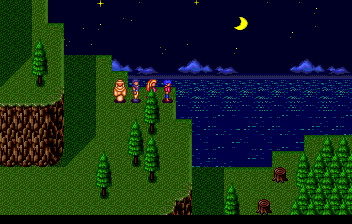
Fate is not a prince or a chosen savior at the outset; he is a young patrolman protecting the land around his village from monsters. That grounded opening gives the disaster that follows some weight. When monsters attack and burn the village, his escape with Shion and the newly discovered Rhianna turns a routine job into a personal quest.
Rhianna is the story’s central mystery. Found in a nearby tower with only her name intact, she has no explanation for who she is or why she was there. Fate’s promise to help recover her memory gives the adventure a direct emotional objective, and it is more inviting than a vague mission to save the world.
The sequel is set in the same universe as Tenshi no Uta but does not continue its predecessor’s story directly. Returning characters may reward established fans, while newcomers are not asked to know the earlier plot to understand Fate and Rhianna’s journey. The premise is conventional fantasy RPG material, yet it has enough personal urgency to carry a linear adventure.
Overall Experience
Tenshi no Uta II: Datenshi no Sentaku is easy to recommend to a specific kind of RPG fan: someone who likes the unadorned structure of older Japanese role-playing games. You get a focused quest, familiar turn-based battles, and growth that does not demand homework. Its opening gives you a reason to care, then the game asks whether you are happy to live in that traditional loop.
It is less persuasive as a broad recommendation. Random encounters and linear progression are not merely background details; they are core to the pace. The game asks for tolerance of repetition, and its automatic character growth leaves less room to rescue a stale battle routine through experimentation.
Still, the payoff can be worthwhile if you want a companion piece to the first game or a clean slice of early-1990s fantasy RPG design. The sequel’s tweaks make the journey a little friendlier, especially the level-up healing, while its separate story means you can follow Fate, Shion, and Rhianna without treating prior knowledge as mandatory. Go in for the comfort of the format, not for a reinvention of it.


Reviews
There are no reviews yet.