 Retro Replay Retro Gaming History, Reviews & Emulation
Retro Replay Review
Gameplay
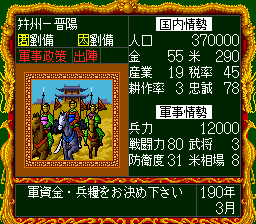
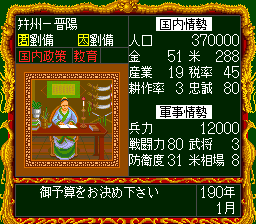
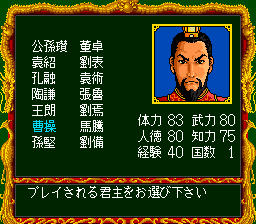
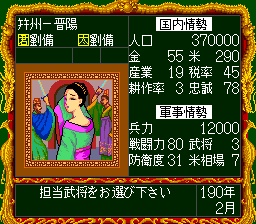
The first hour asks you to think like a ruler before it lets you feel like a conqueror. You pick from several warlords and take charge of one province, where provisions, population, army strength, officer training, and edicts all compete for attention. If you come in hoping to immediately replay famous battles, the deliberate administrative opening may feel stiff. If you enjoy the anxious arithmetic of making a fragile domain ready for war, it has a strong pull.
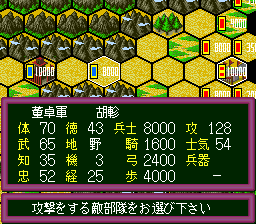
What distinguishes Tenka wa Ware ni from a strategy game that simply alternates a map and a battle screen is the way it steps down through scales. An invasion leads to a large tactical fight on a hex grid, where divisions move in turns. When divisions make contact, you enter a smaller battle mode and position the units within that division. That is a lot of structure around a single confrontation, yet it gives military decisions a satisfying sense of consequence: committing a division is not just bumping two counters together.
Diplomacy matters because brute force is not your only route forward. Pacts, agreements, and opportunities to gain allies can change how exposed your province feels, and the management layer makes it hard to treat war as free. The downside is plain: this is a slow, rules-heavy strategy game with several management chores between major fights. Patience is required, especially since there is no scenario selection to skip straight to a preferred point in the wider conflict.
There is, at least, a separate battle mode on the main menu for historical engagements. It is a welcome option when you want the tactical side without taking responsibility for a whole province first. Still, the full campaign is where the game’s layered battles mean the most. The tactical results hit harder after you have paid for provisions, developed officers, and decided whether diplomacy bought you enough breathing room.
Graphics
This is a top-down, manga-licensed strategy game, and its most concrete visual strength is functional: the large battles use hexagonal grids, while division clashes shift to smaller battle screens. That change in scale gives you a clear visual separation between maneuvering armies across a field and arranging the units inside a direct engagement.
Story
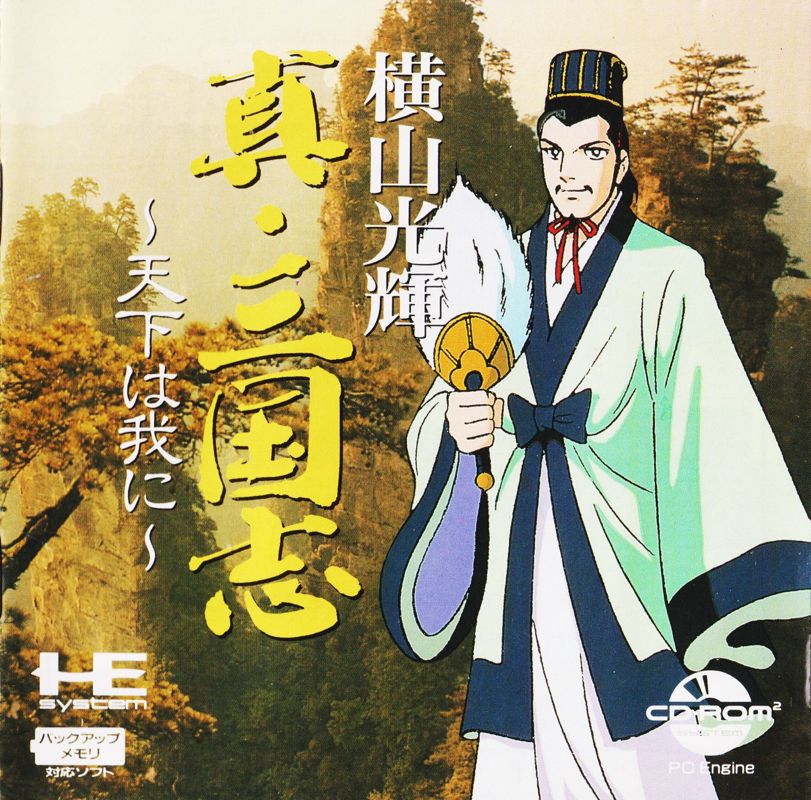
The game draws from Mitsuteru Yokoyama’s Sangokushi manga, which follows Eiji Yoshikawa’s retelling of Romance of the Three Kingdoms. That puts it firmly in the familiar sweep of the Three Kingdoms era: rival warlords, unstable alliances, and a long struggle for control rather than a small, self-contained campaign.
It largely follows the broad storyline of the classic novel and the historical era behind it, while incorporating some plot elements and characters added in the Yoshikawa and Yokoyama versions. For a fan of this lineage, that is a meaningful distinction. You are not getting a detached historical sandbox with no connection to the famous telling of the period; the license roots the campaign in a particular interpretation of Three Kingdoms.
The story is also carried by your strategic choices rather than separated into a selectable list of scenarios. Choosing a warlord determines the province you start with, then your own handling of people, armies, and alliances shapes the path toward unification. That makes the material feel less like a history lesson and more like a sustained test of whether you can keep a realm alive long enough to matter.
Overall Experience
Tenka wa Ware ni is for the strategy fan who likes to earn a battle before fighting it. Its province management can be demanding, but that demand is the point: food, officers, population, diplomacy, and military readiness all make conquest feel expensive. When you finally invade, the move from national policy to hex-grid tactics to smaller division combat creates a satisfying chain of responsibility.
Its biggest frustration is also inseparable from its character. You cannot choose a specific campaign scenario, and the game expects you to work through a broad strategic framework rather than serving up only the headline confrontations. The standalone historical battle mode softens that commitment, but anyone allergic to administration and gradual buildup may still find the pace punishing.
Give it a chance if the Three Kingdoms period and old-school grand strategy sound like a good match, especially if you enjoy diplomacy being as important as battlefield strength. The payoff is not speed or simplicity. It is the feeling of guiding a warlord from provincial survival to meaningful military action, with every tactical clash tied back to the state you built.


Reviews
There are no reviews yet.