 Retro Replay Retro Gaming History, Reviews & Emulation

Retro Replay Review
Gameplay
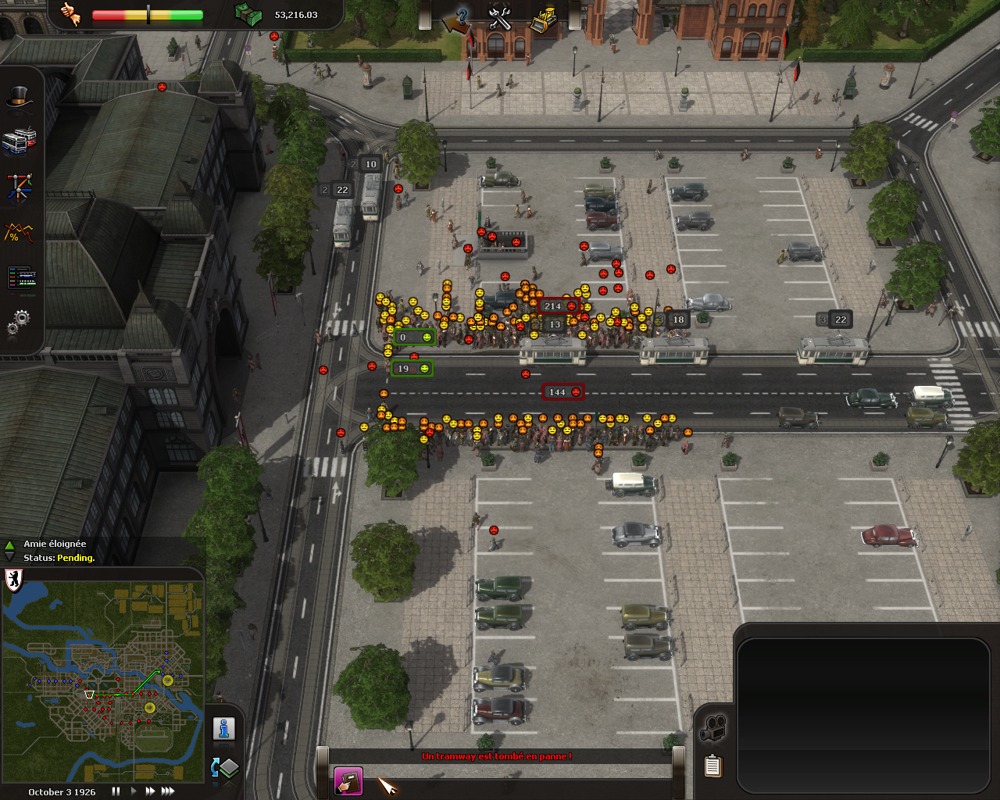
The first hour of Cities in Motion has a satisfying model-railway quality. You place stops, purchase a vehicle, set up a line, and get the immediate reward of seeing a public network start to connect the city. It is easy to understand the basic loop, but the game does not let you stay comfortable for long. More passengers, traffic jams, breakdowns, fires, and changing demand turn a handful of routes into a living operation that needs attention.
What makes it more interesting than simply laying down the biggest network possible is its insistence on compromise. You do not reshape these cities to suit your preferred plan. If dense streets make a tram route impractical, you need to work around the constraint with buses or find another transport option. That limitation can be frustrating when you can plainly see the route you wish you could build, but it gives your decisions weight. A good solution feels earned because it fits the streets rather than erasing them.
Finances keep every expansion honest. Fares, advertising, vehicle purchases, and network upkeep all compete for your attention, while the city’s seven social groups have different transport preferences. You cannot just react to crowding with expensive new infrastructure and call it a day; you need to consider who is travelling, where they want to go, and whether the line can pay for itself. Menus handle the practical work of placing infrastructure, buying vehicles, checking statistics, and adjusting prices, which makes the game approachable even when its management demands become more serious.
Four campaigns across twelve scenarios provide structure, including period-specific situations such as Berlin in 1925. Optional missions add extra targets when you want more than basic survival, and the real-time clock can be paused or accelerated when the network gets busy. Free play is the better home for experimentation, but the scenarios are useful for teaching you to solve problems under pressure. This is a game for the planner who enjoys revisiting a route again and again until a messy city finally moves smoothly.

Graphics
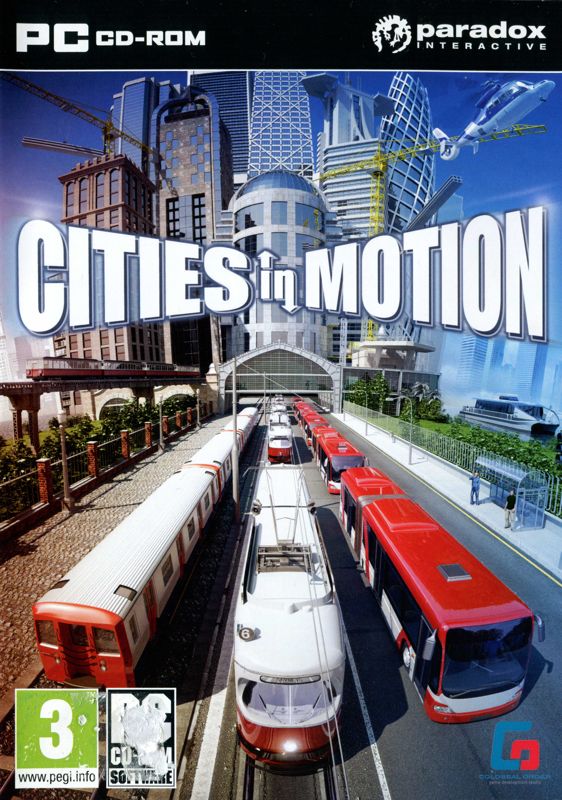
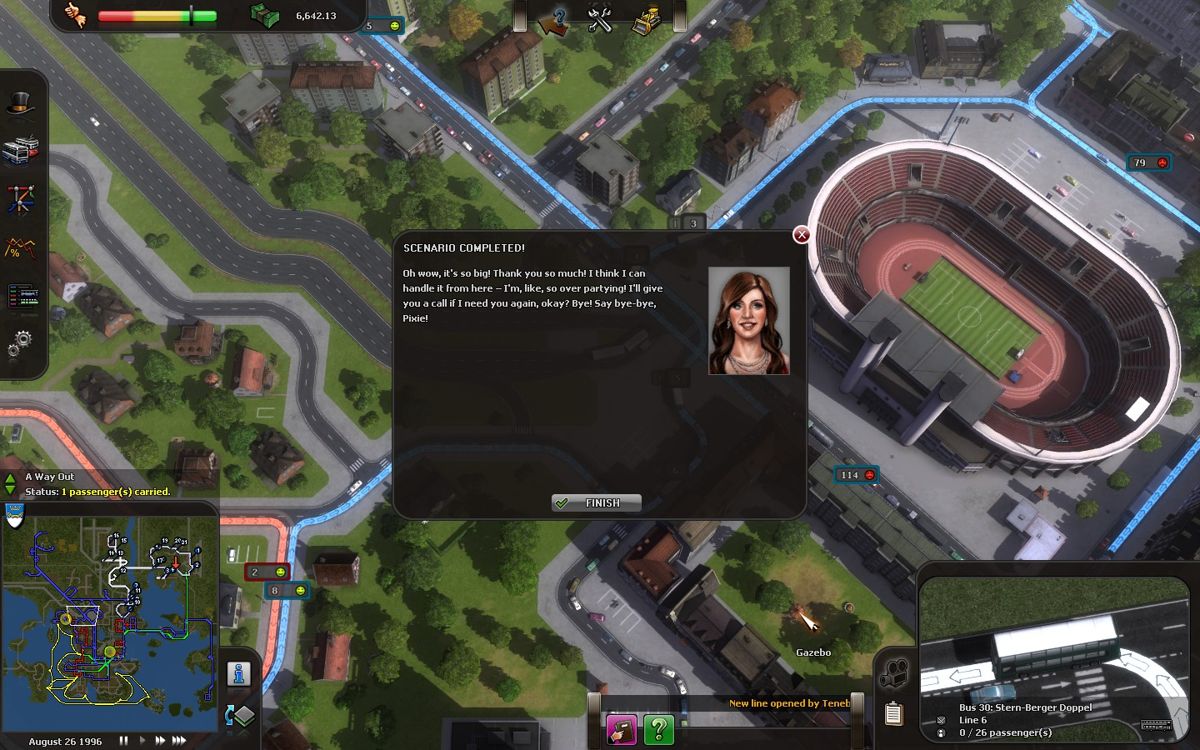
The cities are viewed from a diagonal, free-moving overhead camera, putting the emphasis on streets, stops, and the paths vehicles take through the network. Different eras bring a selection of roughly 30 transport vehicles, from familiar buses, trains, and subways to water buses and helicopters, so expanding the network has a pleasing sense of variety.
Story
There is no character-driven tale pulling you through Cities in Motion. Its campaigns tell their stories through the problems placed in front of your transport company: a particular city, a particular time period, a network that needs to serve growing or awkward demand, and the financial consequences of your choices.
That lighter framing works because the cities themselves create the drama. A successful line can become overwhelmed; an apparent shortcut can be impossible because the existing streets will not accommodate it; a new vehicle may solve one connection while straining the budget somewhere else. The most memorable moments are self-made, when a plan that has been failing for months of game time finally starts carrying people efficiently.
The four locations also stop the game from feeling like the same map with different labels. Vienna, Helsinki, Berlin, and Amsterdam give the campaigns and free-play sessions distinct places in which to wrestle with the same central problem: moving a varied population without letting congestion and costs take control.
Overall Experience
Cities in Motion understands that public transport is not glamorous when it is working properly—and that is exactly why getting it right feels so good. The payoff is not a single spectacular moment, but the steady satisfaction of seeing lines connect, passengers find rides, and a budget survive another expansion. Its best sessions make you think like an operator rather than a conqueror.
The fixed cities and inability to clear your own path will test anyone who wants unrestricted construction. Here, stubborn streets are part of the puzzle. If you can accept that restriction, the range of vehicles and the need to account for different passenger groups give each decision more texture than a simple traffic-fixing exercise.
Give it a chance if you enjoy deliberate management games where observation matters as much as building. Pause time, study the statistics, resist the urge to solve every problem with the most expensive option, and let your network grow in response to the city. It is a solid, thoughtful transport sim whose frustrations are often the same constraints that make a well-run system rewarding.


Reviews
There are no reviews yet.