 Retro Replay Retro Gaming History, Reviews & Emulation


Retro Replay Review
Gameplay
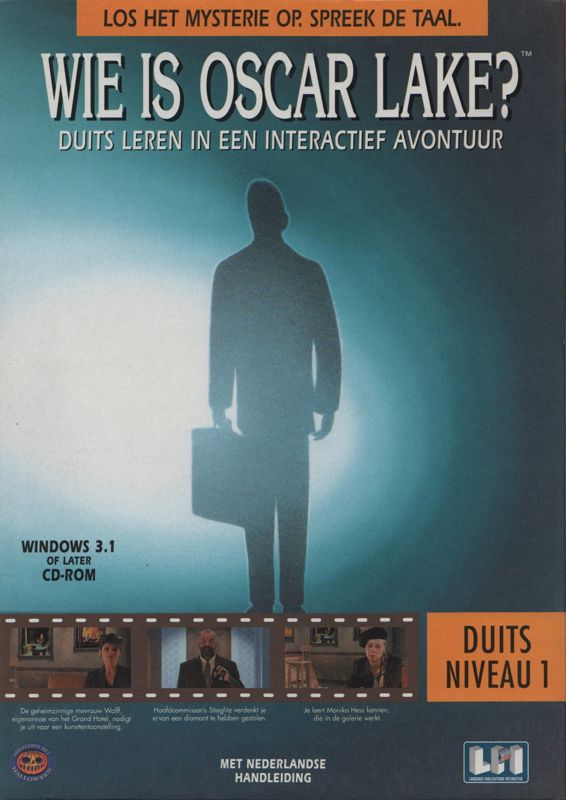
The first hour earns your attention by making confusion part of the drama. You play a traveller accused of taking a priceless diamond, and the police believe you are Oscar Lake, a thief with a reputation. Because every conversation happens in the language you are learning, even a simple exchange has tension: did you understand the question, and did you choose an answer that keeps the investigation moving?
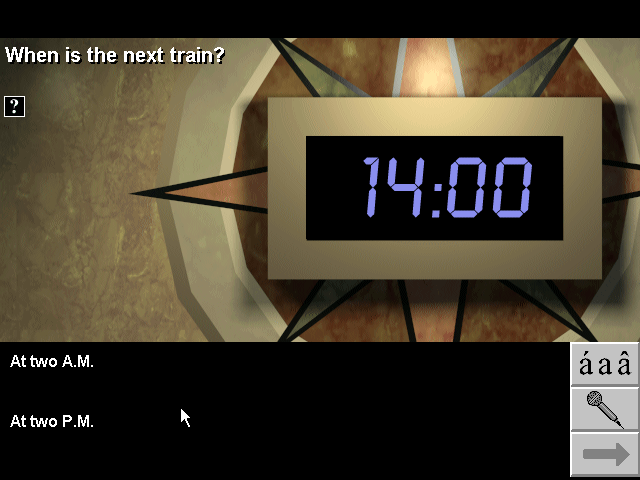
This is a point-and-click adventure built around investigation and interactive dialogue rather than reflexes. Conversations offer several responses, and those choices can push the case toward different outcomes and endings. That branching structure is the game’s strongest idea. It gives language practice a consequence that flash cards cannot provide, since a wrong or incomplete understanding can leave you pursuing a less helpful line of inquiry.
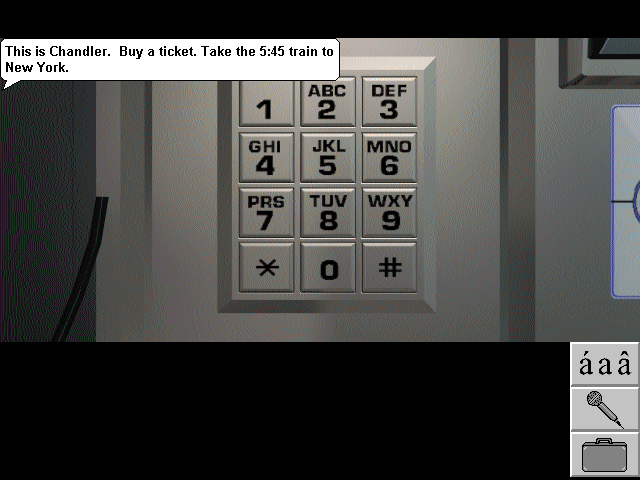
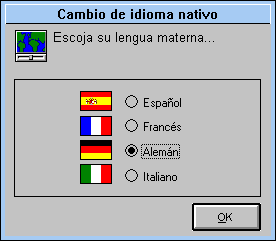
The educational tools are sensibly integrated for anyone willing to meet the game halfway. A built-in dictionary can rescue you when a key word stops a conversation cold, while recordings and native-speaker pronunciation let you compare what you say with what you hear. With more than 1,200 vocabulary words in play, this is substantial practice rather than a brief novelty. Frustration will set in if you want to race through the mystery without pausing to learn, but that slower pace is exactly why the format can stick.
Graphics
FMV sequences put people on screen rather than relying entirely on static adventure-game scenes, giving the language exchanges a more direct, face-to-face feel. That matters here: watching and listening to a speaker makes the dialogue feel less like text pasted onto a puzzle.
Story
The stolen-diamond accusation is a clean mystery hook, and the case has a personal urgency from the outset. You are not a detached detective hired to solve somebody else’s problem; clearing your name is the only way out of a serious misunderstanding.
The story’s real usefulness comes from how naturally it motivates conversation. Asking questions, following up on suspicions, and defending yourself are all things the protagonist has a reason to do, so foreign-language dialogue is not an interruption between plot beats. It is the plot’s working material.
Do not expect the mystery to outrun the language-learning premise. The different conversational outcomes and multiple endings add replay value, but the story is primarily a frame for comprehension and communication. If you enjoy detective fiction mainly for elaborate twists, that balance may feel thin; if you need a reason to keep practicing phrases, it is an effective one.
Overall Experience
Who is Oscar Lake? is most compelling when you treat it as a game that turns study into a small personal crisis. The best moments come when a phrase you struggled with becomes useful in an interrogation or when a conversation choice lands because you finally understand the nuance behind it.
It is not a universal recommendation for adventure fans. Its pace depends on reading, listening, checking words, and sometimes repeating yourself aloud, so it asks for more patience than a conventional point-and-click mystery. Yet that same commitment makes its detective structure more than window dressing: your progress is tied to what you can genuinely understand.
Give it a chance if you are learning one of its supported languages and want a more active alternative to drills. The combination of investigation, branching dialogue, dictionary help, and pronunciation practice has a clear purpose, and the payoff is the rare educational game that lets you feel your growing vocabulary changing the outcome of a case.


Reviews
There are no reviews yet.